Why Does My Drinking Fountain Leak Underneath In Calgary?
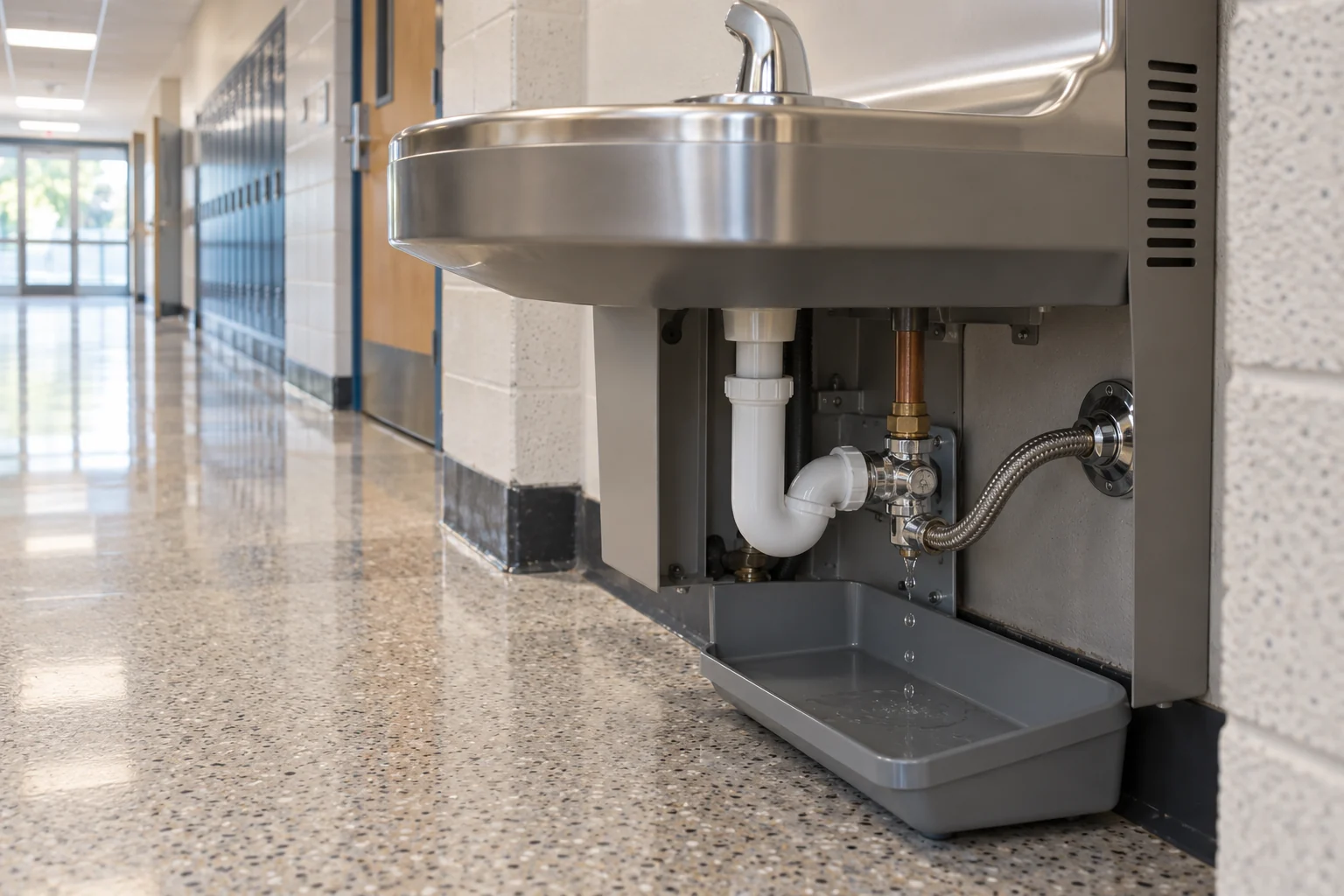
A drinking fountain leaking beneath its cabinet in Calgary may have a loose or failed supply connection, a drain or trap leak, an overflow, or water escaping from an internal cooling or dispensing component. The wet spot alone does not identify the source. Close the fountain to users, keep the area dry enough for safe passage, and note when water appears. A leak that starts only when someone drinks points to a different set of possibilities than a drip that continues while the fountain is idle.
Check the pattern without dismantling the unit
Staff can record the first visible water, whether the basin drains slowly, and whether the cabinet is wet near a supply or drain connection. They should not reach into a wet powered cabinet, remove panels, or pull the unit away from the wall to investigate. A custodian may wipe the floor for safety while preserving a photo of the original pattern. Tell the plumber whether wiping is followed by immediate water or only by water after use.
Supply-side and drain-side symptoms differ
A supply leak can continue even when nobody uses the fountain. A drain leak often appears after use, although trapped water may emerge later. Water running down the cabinet can make the bottom fitting look guilty when the origin is higher. The contractor should inspect the actual connection and test it after repair. Simply tightening the easiest visible nut can hide a damaged seal or shift stress to another part.
Consider the unit’s internal parts and power
Some fountains include chillers, bottle fillers, filters, and sensors. Their internal components may need manufacturer-specific service. If water reaches an electrical component, keep the unit unavailable and arrange qualified evaluation. Do not repeatedly power it on to reproduce the symptom. The plumbing contractor can report where building connections end, while the equipment provider handles device-specific faults and return-to-use instructions.
Keep the drinking-water connection protected
The supply may include a filter or backflow arrangement. Do not bypass a failed component with an improvised hose. Calgary’s business cross-connection guidance explains why drinking-water protection matters when equipment is attached. Ask what part failed and whether the repair affects a protection device. If other fixtures share the branch, coordinate any shutoff with the building manager and tell occupants which fountain is unavailable.
Test and reopen deliberately
After repair, ask for a check under the conditions that produced the leak: idle, active dispense, and drain where applicable. Inspect the cabinet and adjacent floor after the test. The site should address wet materials, cleaning, electrical checks, and any water-quality or equipment requirements before reopening. Put a clear out-of-service sign on the unit until a responsible person removes it. A dry cabinet on the first look is useful evidence, but it is not the whole reopening decision.
Describe The Fountain, Not Just The Puddle
- Identify the wall-mounted fountain, pedestal unit or combined bottle filler and fountain.
- Give the asset label, model and location visible without opening the cabinet.
- State whether the basin drains, overflows or leaves water sitting after ordinary use.
- Note whether the bottle filler and drinking spout show the same problem.
- Record whether the first wet spot was beneath the cabinet, at the wall or below a visible drain connection.
A combined unit can have more than one water path. A bottle-filler leak may appear at the fountain cabinet even when the drinking spout was not used. A chiller can introduce another equipment boundary. Give the Calgary drinking fountain leak repair contractor the full configuration so the visit does not start with an assumption that every unit is a simple basin and trap.
Use The Leak Timing To Choose The Investigation
| Ordinary observation | Useful inspection question |
|---|---|
| Water appears while idle | Is a supplied connection or internal water component releasing water? |
| Water appears after dispensing | Did the basin, drain joint or another active component leak? |
| Basin fills and spills over | What is preventing normal drainage? |
| Floor is wet but cabinet origin is unclear | Could water have travelled from another fixture or higher connection? |
The table helps describe what to inspect; it is not a diagnosis or an instruction to cycle the fountain. If the original pattern was cleaned up, tell the contractor when that happened. A dry floor at arrival can hide an intermittent drain leak. Conversely, a puddle remaining after the unit is closed may be old water rather than proof of a continuing release. Keep the observation and the conclusion separate.
If only one part of a combined installation seems affected, do not invite users to test the other part. The site operator should keep the restriction clear while the contractor determines which supplies, drains and powered components are involved. An out-of-service sign should identify the unit, and staff should direct occupants to the site’s available alternative drinking-water point.
Ask Which Provider Handles The Failed Part
A building pipe, external trap and proprietary cooling component may need different service. Have the plumber name the building connection examined and tell the operator whether manufacturer equipment service remains. A repair to the wall fitting does not address an internal chiller fault. The commercial emergency plumbing overview helps facilities staff arrange the building-side response while the equipment provider handles its own components.
For a changed building connection, discuss the actual work using Calgary’s plumbing permit information. For affected drinking-water protection, consult the business cross-connection guidance with the qualified contractor. Neither page determines the flushing, filter or equipment instructions for every fountain model.
Leave A Fountain-Specific Repair Record
The record should name the failed interface, the repaired component, the dispensing and drainage conditions checked, and any remaining cabinet or floor moisture. Include which equipment functions were not examined. The site operator can then arrange the missing water-quality, cleaning or electrical checks where relevant before public use resumes. Keep that decision with the fountain’s operator and the appropriate equipment specialists.
After reopening, a recurrence should be linked to the same asset number and original repair. Record whether it follows use of the bottle filler, the drinking spout or an idle period. That detail gives the service team a better starting point than “fountain still leaks,” especially where several units share a building branch. Close the affected unit again if water returns; repeated floor wiping is not a repair.