Why Does My RO System Leak Under The Sink In Calgary?
An under-sink reverse osmosis leak can involve tubing, fittings, filter housings, the storage tank or other nearby sink plumbing. Stop using the affected system and use only a clearly identified safe isolation control. Do not loosen filter bowls or pull tubing while the installation may remain pressurized; arrange assessment of the actual source.
Map The RO Components Without Disconnecting Them
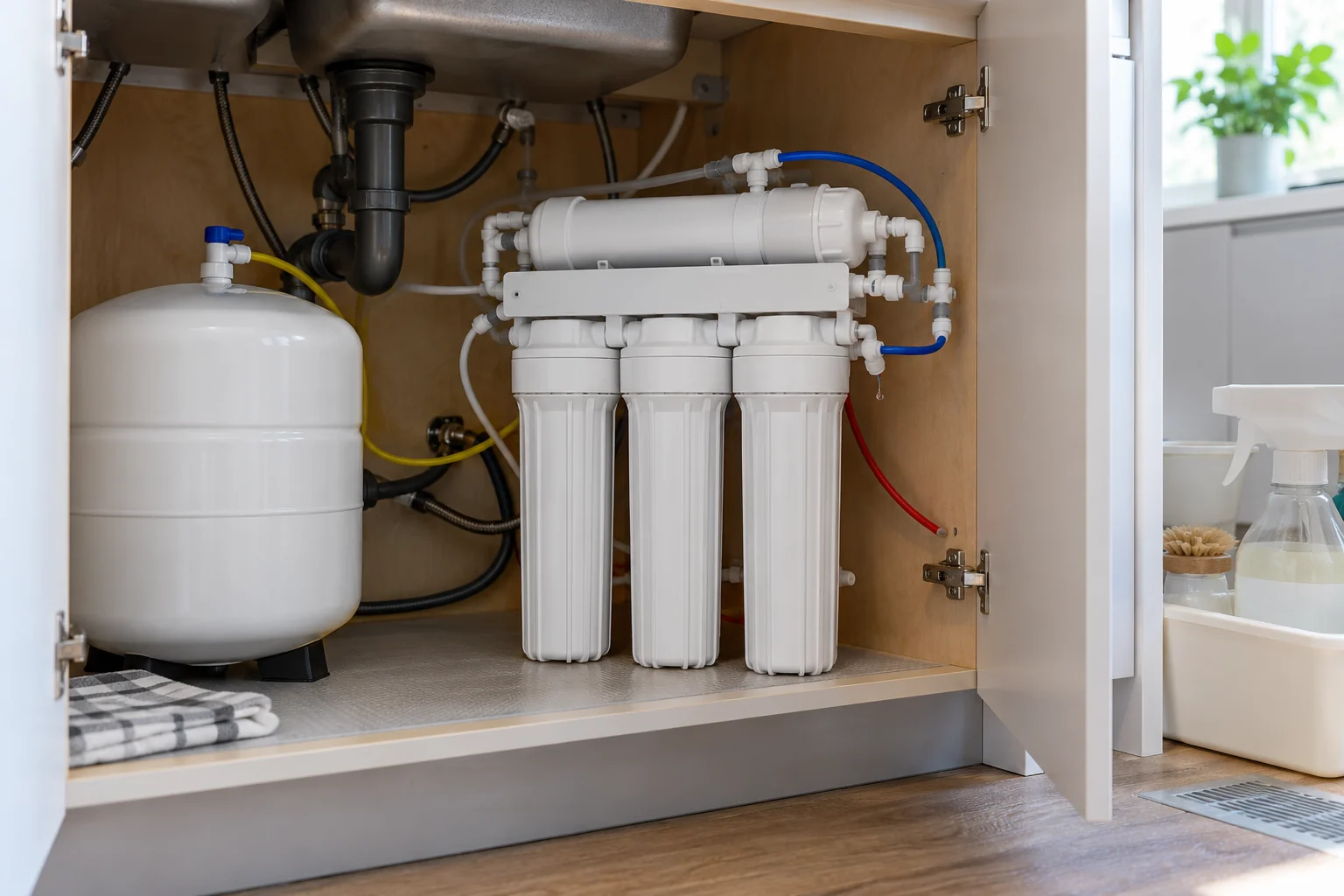
RO tubing can carry water between several closely spaced components. A drip hanging from one tube may have travelled from a fitting above it. Report the highest or earliest wet point you can see safely and leave the component names uncertain if necessary. Do not release connectors or move the system to make the route easier to follow.
Include Recent Filter Or Plumbing Work
Record which filter was changed, whether the storage tank was moved and what instructions were followed, if known. Keep packaging or a service record that is already available. That history helps compare the intended parts with the actual installation. It does not prove that the last person to work under the sink caused the leak, so keep the account factual.
Treat Stored Pressure Separately From Supply
Closing a feed control can change incoming water without emptying the storage tank or establishing that every connection is depressurized. Leave components closed and connected until the appropriate service procedure is followed. Do not loosen a filter housing to discover whether pressure remains. Ask the technician to explain the isolation and handling requirements for this particular model.
- Record the highest visible wet point without releasing pressurized connectors.
- Note any recent filter change or movement of the storage tank.
- Tell the technician which feed control was used and whether water stopped.
- Ask for model-specific steps before drinking-water use resumes.
Keep The Sink Cabinet Clear Of Hazards
Under-sink cupboards sometimes contain cords, small appliances and cleaning products beside plumbing. Keep hands away from wet electrical items and do not reach around them to inspect the RO tank. Remove only safe loose belongings from dry access. Tell the technician about the cabinet contents and tight clearances before someone attempts to move connected equipment.
Use The Model Instructions For Isolation
The unit’s manual should match the manufacturer and model, not merely the number of visible filter housings. Different equipment can use different valve and storage arrangements. Explain which control you used and what changed afterward. If the instructions are missing or the valve is stiff, seek advice instead of trying multiple controls or applying extra force.
| Visible clue | What to report | What not to assume |
|---|---|---|
| A housing is visibly wet | Describe the earliest wet point and recent filter work. | Do not loosen the bowl while supplied or stored pressure may remain. |
| Tubing appears to carry a drip | Report its location without pulling the tube. | Do not assume the lowest visible drip identifies the source. |
| Sink use preceded the puddle | Mention nearby sink and dishwasher connections. | Do not rule out ordinary under-sink plumbing without examination. |
| The tank remains connected | Provide the model and controls already used. | Do not equate closing an incoming feed with emptying the stored water. |
A leaking RO component belongs in RO leak repair. If the sink drain or ordinary supply hose is the source, the service overview can help identify that separate repair.
Distinguish RO Plumbing From Sink Drainage
A sink drain, faucet supply or nearby dishwasher connection can release water into the same cabinet. Tell the contractor whether ordinary sink use preceded the moisture and whether the RO was operating or unused. Do not run the fixtures again to compare them. The inspected source determines whether the treatment unit needs work or a separate under-sink connection is responsible.
Ask About Suitability Before Drinking-Water Use
Request the model-specific instructions for returning the unit to drinking-water use after service. The work can involve more than stopping a visible drip, especially when components have been opened or replaced. Do not invent a flushing or sanitizing procedure from another unit’s guide. Keep the restriction in place until the appropriate steps for the actual repair have been explained.
An RO fitting can wet a cupboard, flooring or items plugged in beneath the sink. Alberta’s flood cleanup and utility-safety guidance gives general water-damage precautions; the model-specific RO repair determines when drinking-water use resumes.
Record Which Component Was Addressed
Keep the component finding, replacement details and any outstanding work together. If the system leaks again, describe the new location rather than assume the same housing or fitting failed. Also retain records of moisture that reached flooring or neighbouring materials. The RO repair may address the supplied source while a separate moisture response remains necessary.
Label The Cabinet Layout For The Technician
A simple description can replace uncertain component names. Use “three filter housings on the left, storage tank on the right, first water seen above the middle housing” if that is what you observed. The technician can identify the parts from the installation. Do not rename a visible drip as a failed filter without examination.
- Record the model from an existing manual or safely visible label.
- Describe the earliest wet point and any recent filter or under-sink work.
- Name the control already used and the change in visible flow.
- Identify ordinary sink connections that share the wet cabinet.
- Keep the tank and tubing positions unchanged until service.
After repair, ask for a component-specific record. “Middle housing connection addressed” is more useful than “RO checked,” provided that is the technician's confirmed finding. Obtain the return-to-service instructions for the actual work rather than guessing a rinse duration.
If a puddle returns, compare the new first wet point with that record. A later drain leak in the same cupboard is not automatically the earlier RO problem. Give the next contractor both observations and let the inspection distinguish a repeated fault from a different source.
When arranging help, give the crew the RO model, recent service, first wet fitting and any change after isolation. Ask which finding, test and remaining restriction will be recorded. Request service or call (587) 333-7742.