Why Does My Tankless Heater Show An Error In Calgary?
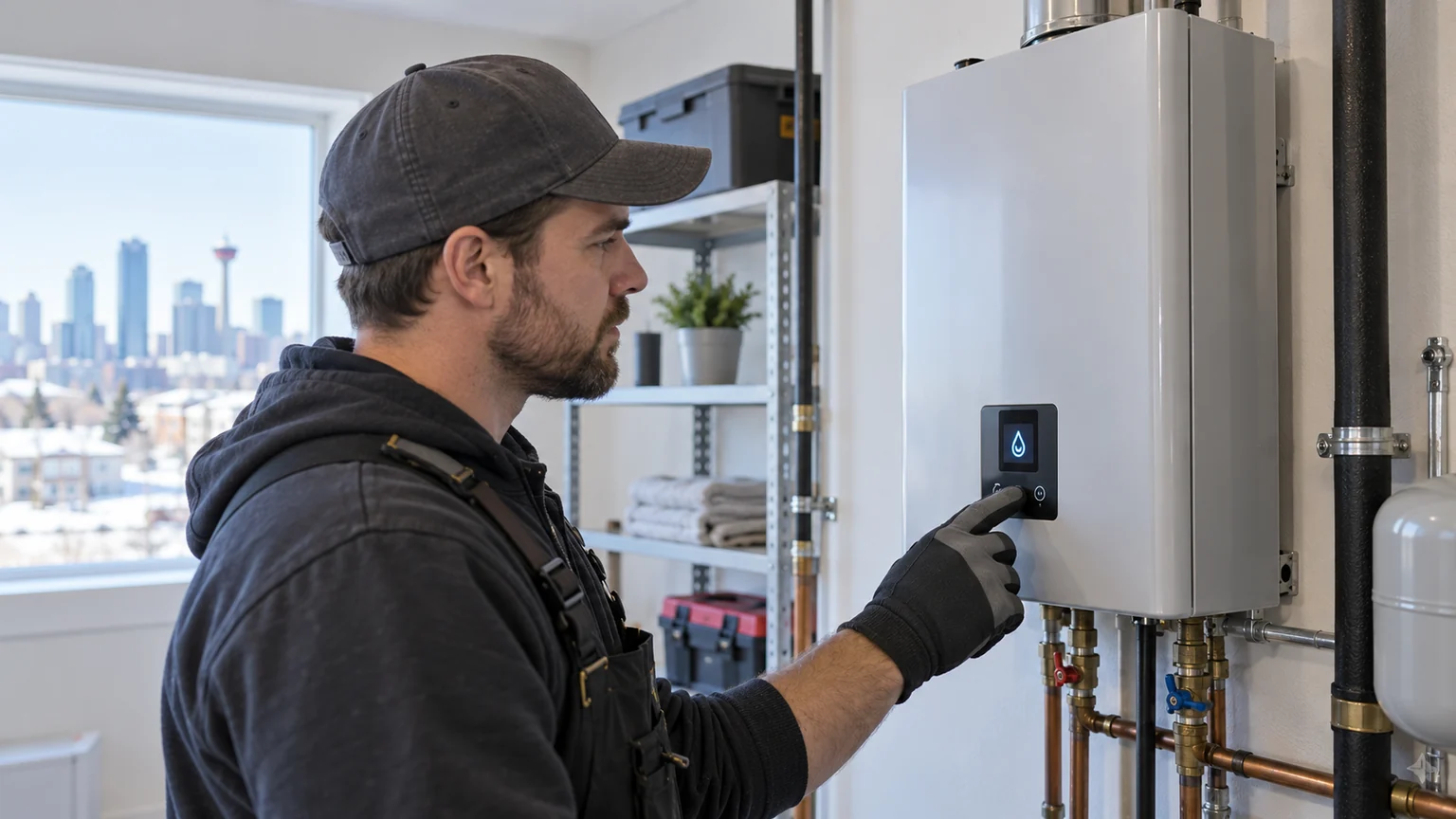
A Calgary tankless heater shows an error when its controls detect an operating problem and report a model-specific message. Depending on the unit, examples include failed ignition, loss of flame, insufficient water flow, a venting problem or detected water leakage. The code identifies a reported condition, not necessarily the failed part. Record the exact message and model, avoid repeated resets, and arrange service that checks the underlying cause.
What The Appliance Is Reporting
The Rheem tankless troubleshooting guide gives examples of ignition, flame, water-flow, venting and leak-detection messages for its covered units. Failure to ignite concerns an unsuccessful burner start; lost flame concerns a flame that did not remain established. Neither proves the named control must be replaced.
The same guide describes a maintenance reminder, which differs from a shutdown fault. Match the exact display to the installed model instead of treating every symbol as a failed heater. Report accompanying loss of hot water; do not clear alarms or alter venting to hide the message.
Record the Exact Code and Equipment
Similar-looking displays can have different meanings across models. Write down the code exactly, including letters or symbols, and provide the model from existing documents or a safely readable label. A remembered description such as ignition error may not match the actual displayed message.
Do not remove panels or enter a wet equipment area to obtain identification. The technician can gather information appropriately during assessment. A code is useful evidence, but it is not a complete diagnosis or an instruction to replace a component without checking the equipment.
Describe the Operating Pattern
Tell the service team whether the code appeared during a shower, at start-up or while the unit was not supplying an outlet. Mention whether every hot-water fixture lost service or only one. A local fixture complaint can coexist with an appliance message, so keep the observations separate.
Record whether the code recurred after earlier service or a control action already taken. Do not keep resetting the unit to see how long hot water returns. A brief return of service may hide the display while leaving the condition unresolved.
Treat Safety Symptoms Before Routine Troubleshooting
If there is a suspected gas leak, wet electrical equipment or another immediate threat, stay clear and use the appropriate emergency assistance. Do not inspect fuel connections, alter venting or bypass a protective control as a way to obtain hot water.
A visible water leak deserves water heater leak assessment alongside operating diagnosis. The code does not establish where the water comes from, and stopping the visible leak does not explain the operating message. Each complaint needs its relevant source finding and check.
A Tankless Error-Code Handover Checklist
- Exact display: Keep the original code and any safely taken photograph, rather than translate it into a guessed component failure.
- Model identification: Provide manufacturer and model information so the appropriate document can be selected.
- Start of the complaint: Record the activity and outlet involved when the code first appeared.
- Affected fixtures: State whether the loss of service is household-wide or limited to a particular outlet.
- Earlier actions: Tell the technician about resets, service visits or changes already made, without repeating them as another test.
- Other symptoms: Report leaks, unsafe temperature or access concerns separately and at the start of the call.
The checklist preserves useful information while avoiding a generic repair procedure. If the code disappears before the visit, retain the original record. An absent message at one moment is not proof that a recurring condition has been resolved.
Compare the Meaning of a Message and the Diagnosis
| Information | What it establishes |
|---|---|
| A displayed code | The appliance reported a particular condition for its identified model |
| A generic online code list | Only context that may not apply to the installed equipment |
| A code disappearing after reset | The display changed, not necessarily that the cause was repaired |
| A model-specific assessment | Findings that can support a suitable repair or further diagnostic step |
| A verified return to operation | A check matched to the identified fault and completed work |
Ask the technician to explain which observations support the diagnosis beyond the message itself. A repair recommendation should link to the actual equipment and assessed condition rather than turn a code description directly into a parts order.
Use Manufacturer Documents Carefully
The Rheem homeowner resource centre provides model-specific documents, while other manufacturers supply their own instructions. Use the correct source to identify the unit and retain appropriate records. Do not generalize an instruction from a different heater just because the code number looks similar.
Water heater service assessment can address the operating complaint. Ask what was established, what remains uncertain and whether another diagnostic step is needed before repair. If access or conditions limit the check, those limits should remain in the record.
Plan the Interim Hot-Water Restrictions
Explain essential household needs and ask what use must remain stopped while assessment continues. Do not create an improvised hot-water arrangement or alter controls to bypass the fault. Urgent need for service does not establish that uncertain equipment can be restarted safely.
For shared systems, communicate the restrictions through the responsible manager. Another resident may restart equipment without knowing the original message or hazard. A consistent handover helps keep temporary control separate from a completed repair.
Build a Recurrence Record for an Intermittent Code
If the code returns after service, report the new event against the earlier record. The code, outlet and operating stage may be similar or different, and those details can affect the next investigation. Do not treat every message as a repeat of the same component fault or erase the display through another reset before noting it safely.
- Keep the exact original and new messages with dates and the household activity associated with each.
- Retain the repaired-component finding so the next technician knows what changed and what was outside the previous visit.
- State whether the appliance regained service briefly or remained consistently available before the recurrence.
- Include any new leak, temperature or access concern as a separate symptom.
- Ask which additional diagnostic question the next visit is intended to answer.
For shared equipment, coordinate the record through the responsible manager rather than allow separate residents to perform different control actions. The current diagnosis should use the appliance information and observed history, with restrictions communicated consistently. A precise recurrence record is more useful than a general complaint that the heater keeps breaking.
Verify the Original Operating Complaint
After work, ask how the fault and relevant use conditions were checked. A working tap once may not answer an intermittent code that previously returned during ordinary operation. Keep the exact message, repaired component and test scope for any future recurrence.
Photograph the exact error code and model label from a safe position and note whether hot water returns or the same code recurs. Do not reset repeatedly or open covers to chase a code whose meaning depends on the manufacturer. The City of Calgary home maintenance guidance covers general upkeep; the model documentation and technician’s findings determine this repair. For a Calgary tankless-heater error, call (587) 333-7742 or request service.