Why Does Water Rise From My Floor Drain In Calgary?
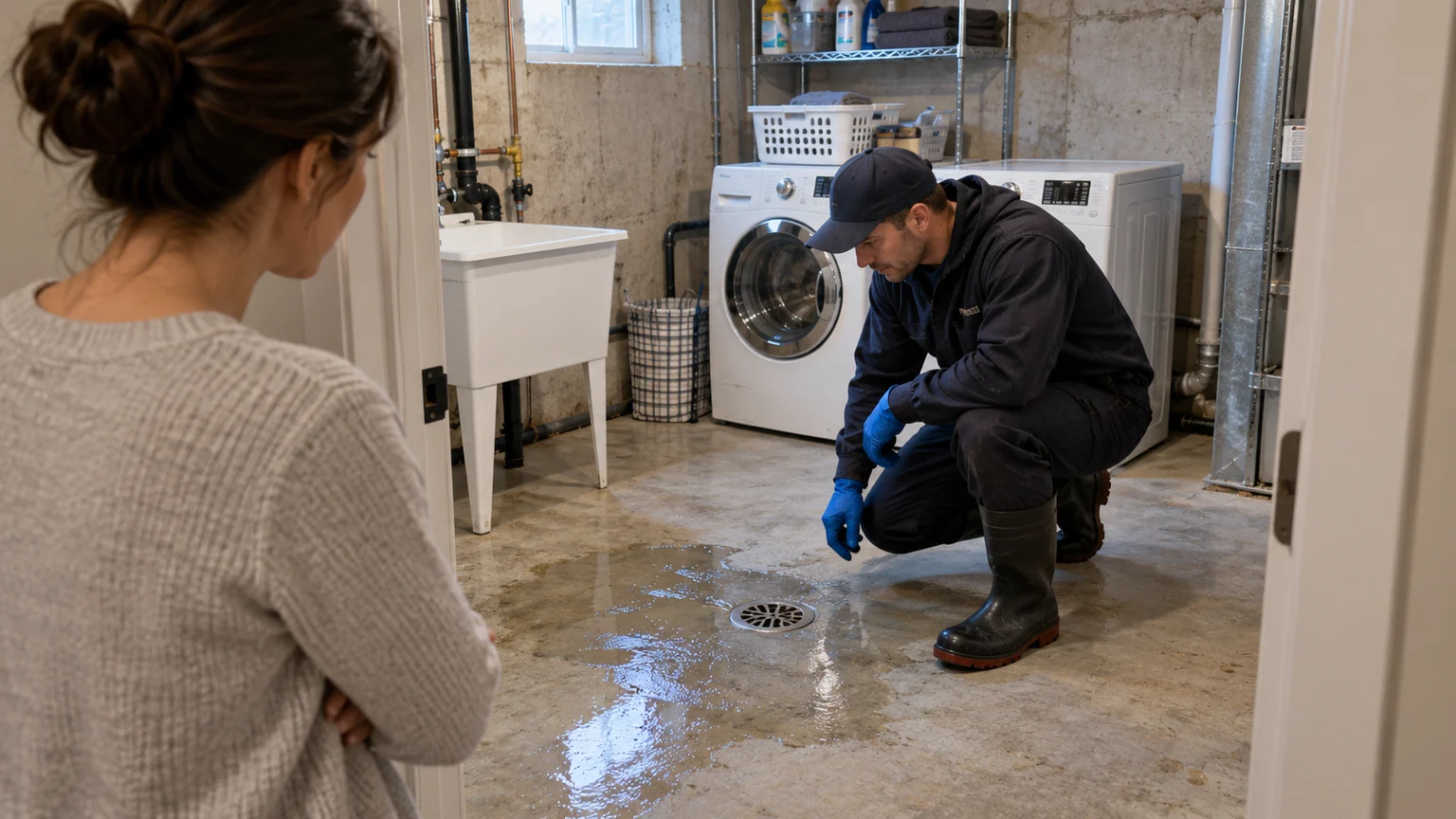
Water rising through a basement floor drain can mean the connected drainage route cannot carry incoming wastewater, but the source must be assessed. A blocked private sewer, another shared restriction or a possible municipal issue may be involved. Stop adding water to affected fixtures and keep away from the return. The floor drain may be the lowest outlet, not the location of the original fault.
Notice what happened immediately before the rise
Was laundry draining, a toilet flushing or a shower running? Does the drain rise only during one activity, or does water enter without household use? These details help trace the connected route. They do not establish pipe ownership or prove a particular blockage material, so report the sequence without assigning a cause prematurely.
If other fixtures gurgle or drain slowly, include them in the description. A basement floor drain can reveal a restriction farther along a common line. In a multi-unit building, wastewater from another suite may contribute even after you stop using your own fixtures. Notify the property manager when shared drainage is possible.
Treat the return as potentially contaminated
Keep people and pets away from the affected floor. Do not assume that transparent water is safe merely because it lacks a strong odour. Drainage water can have contacted waste and the inside of the sewer. Avoid tracking it into clean rooms, and do not walk through it to reach electrical equipment or a breaker panel.
If water is near energized equipment or the space cannot be entered safely, stay out and arrange the appropriate emergency assistance. Plumbing assessment identifies and controls the drainage source; evaluating contaminated materials and safe occupancy is a separate task. Do not let restored drainage stand in for a cleanup assessment.
Stop adding water and arrange the right investigation
Pause showers, laundry, dishwashing and other fixtures connected to the affected route. Repeatedly pouring water into the floor drain to test it can increase the spill. Do not loosen a cleanout cap yourself while the line may be holding wastewater. Share the location of known access points with the responding team.
The City of Calgary sewage backup guidance directs residents to 311 to help consider private plumbing versus possible municipal infrastructure. Mention simultaneous trouble at neighbours or other units. For the indoor plumbing fault, floor drain backup assessment can investigate the route rather than treating the visible grate as the entire problem.
Clearing and prevention need an identified cause
A cable clearing may restore flow, but recurrence can indicate remaining deposits or pipe damage. Depending on access and visibility, camera inspection may help document the line after preparation. Ask which route was assessed and how the findings connect to water returning at the basement floor.
A backwater valve may be relevant to some properties, but its existence or suitability cannot be inferred from a floor drain backup alone. If one is installed, tell the plumber where it is and whether it has been maintained. Backwater valve assessment is a distinct question from clearing a blocked drain.
An Incident Checklist for the Basement Drain
When water first rises, focus on information that can be gathered without entering the affected space. A useful checklist supports source assessment while keeping residents away from contamination and electrical hazards. It is not a reason to remain in the basement to watch the water level.
- Activity: Note whether laundry, a shower, a toilet or another fixture was discharging just before the event.
- Other openings: Record gurgling, slow drainage or return at a bathtub or toilet if already observed.
- Shared symptoms: Ask management or report to 311 if other suites or nearby properties have similar trouble.
- Access: Identify a known cleanout from existing knowledge, but do not open a backed-up cap yourself.
- Hazards: Report water near equipment, unsafe stairs or an inaccessible exit route at the start of the call.
- History: Provide previous backup reports and any known sewer or backwater-valve work.
Do not convert a missing observation into a negative finding. Not seeing another fixture overflow does not establish that its branch is unaffected, and a clean-looking return does not establish that it can be handled as fresh water.
Three Separate Decisions After the Water Stops Rising
| Decision | Evidence needed |
|---|---|
| Can affected fixtures be used? | A plumbing assessment and instructions based on the drainage finding and completed checks. |
| Does the sewer need more investigation? | Recurrence history, inspection coverage and any remaining deposits or structural concern. |
| Can the basement return to normal use? | Appropriate assessment of contamination, wet materials, safe access and exposed equipment. |
One visit may address only part of this list. A plumber restoring flow should explain that outcome without it becoming an indoor cleanup clearance. Equally, cleanup work does not establish the condition of an uninspected sewer route.
For a rental or condominium, keep instructions available to everyone using connected fixtures. If a common line is still restricted, one resident's shower or laundry can undermine another resident's efforts to stop adding wastewater. Coordination can limit the event while the underlying source is investigated.
Retain the original fixture pattern and the final findings together. If a future return occurs at the same grate, compare what preceded it rather than assuming it is necessarily the same fault. A recurring location can reflect the lowest outlet even when the restriction or contributing activity differs.
Include whether the basement has newly added fixtures, because a changed connection can affect the route receiving household wastewater.
What to record once the emergency is controlled
Write down the activities that preceded the event, which openings were involved and any instructions from 311 or the plumber. Save images taken from a safe location and keep inspection records. If a restriction was cleared but its cause remains unknown, note the recommended follow-up instead of describing the whole line as repaired.
Ask what fixture use is permitted and whether any areas still require contamination assessment. A clear boundary between source control and cleanup prevents misunderstandings about what the visit accomplished. Calgary Emergency Plumbing can help investigate water returning through a basement drain: call (587) 333-7742 or request service.