Why Does The Main Shutoff Valve Leak In Calgary?
A Calgary main shutoff valve can leak when the seal around its moving stem no longer holds water inside, when the valve body is damaged, or when an adjacent pipe connection leaks. On a gate valve, that stem seal is called packing. Water can also travel along a pipe from another source. Do not tighten or force the handle by guesswork; arrange assessment and the upstream water control needed to repair the confirmed leak.
Why The Stem Seal Matters
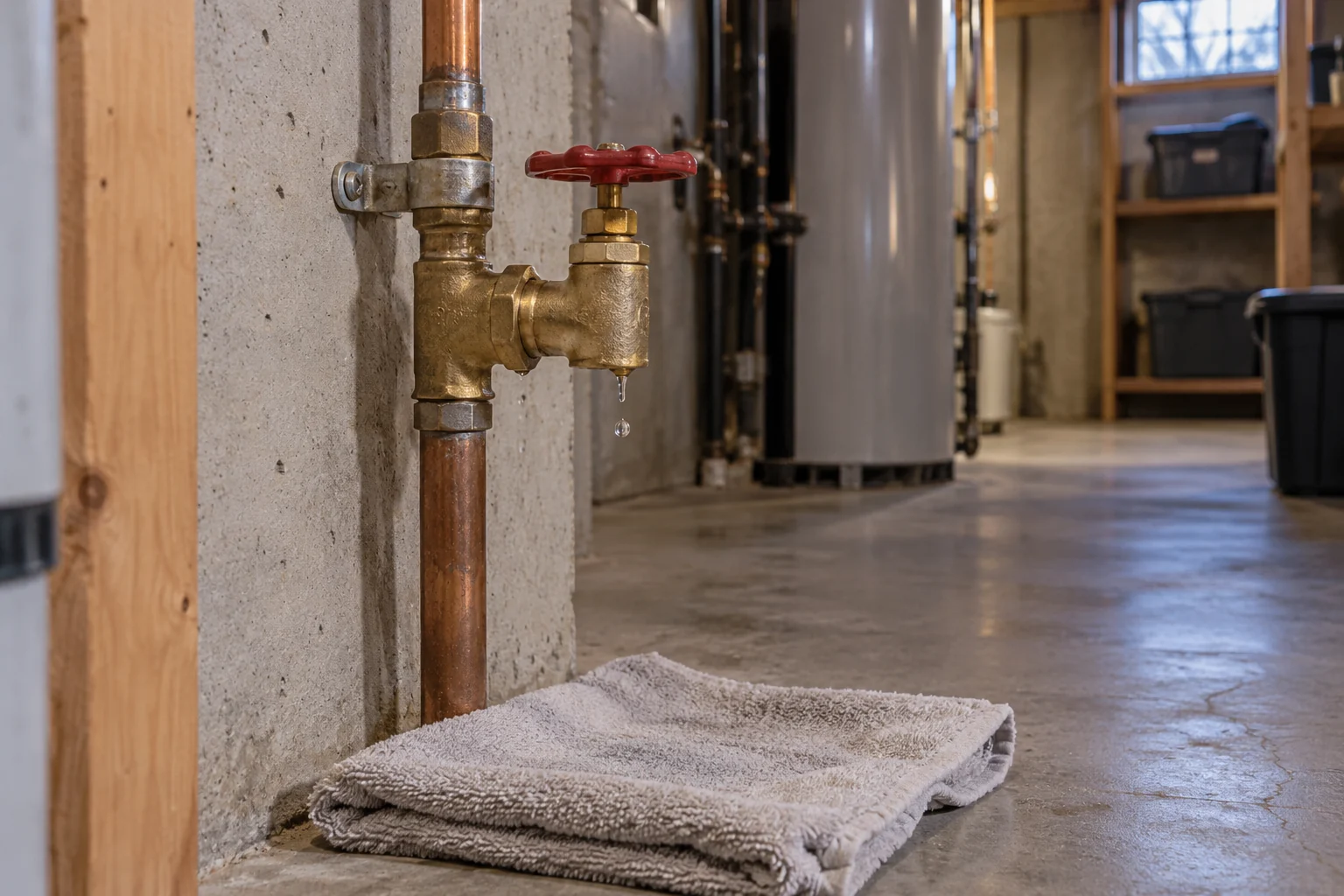
The handle moves a stem through the valve assembly. In the gate-valve designs covered by the NIBCO bronze gate-valve manual, packing seals that stem. The manual distinguishes packing leakage from body damage and reserves its procedures for qualified personnel.
This example does not identify your main valve. A quarter-turn control can have a different sealing arrangement. Ask the plumber to locate the first leak point and identify the valve before selecting work. Tightening the nearest nut can leave the actual source untouched.
Locate the visible wet point safely
From a dry position, note whether water appears around the handle area, valve body or adjacent joint. A wider photograph can show the arrangement without requiring you to touch wet pipework. Water running along a pipe may make the nearest control look responsible when the source is elsewhere. Describe what is visible, not what you assume failed internally. If the room includes electrical hazards or unsafe access, report that before trying to collect a closer observation.
Stop operating a reluctant or leaking handle
A valve that leaks when moved or resists normal operation should not be forced with extra leverage. That can damage the control or nearby piping and increase the release. Say how the symptom changed when the handle was touched, if that already occurred. Do not cycle it repeatedly to reproduce the event. For main shutoff valve repair, the control's condition and its ability to isolate the supply both matter to the assessment.
Distinguish leakage from ineffective isolation
A valve can have a visible leak, fail to stop downstream water or present both problems. Ask the plumber to assess the relevant symptoms rather than assuming one explains the other. Water remaining in pipes can also continue dripping after a working valve closes. Our article on water after closing a Calgary main valve covers that distinction. A handle position is not a complete test, and visible dryness does not prove an old control can reliably close.
Ask how upstream control will be arranged
The main valve cannot always isolate the section needed to repair itself. Another appropriate control arrangement may be required. The explanation of repairing a main valve with upstream isolation covers this access question. Calgary's water interruption guidance explains the City service boundary. Do not operate an unfamiliar outdoor valve or dig around its cover to avoid coordination. In a shared building, management may need to arrange common isolation. Identify who can authorize access and communicate any interruption to affected occupants.
Keep immediate containment within safe limits
A small container beneath an accessible drip may collect visible water, but it does not establish that the valve can remain unattended or that hidden materials are unaffected. Do not put yourself beside wet electrical equipment or under a damaged ceiling to place it. Explain whether water is spreading and whether the control remains safely reachable. An active release may require prompt advice even if the leaking part is small or the original fixture problem seems to have stopped.
Clarify the repair and restoration checks
Ask which part was confirmed faulty and what work is proposed. After repair, the plumber should explain the identified control, operation and checks appropriate to the job. Do not interpret a replacement handle or reduced drip as proof that the whole supply system is restored. For water leak repair, any separate source that prompted main isolation also needs its own record. A repaired control and a repaired downstream fault are distinct outcomes.
Make future access practical
Keep the identified valve area clear and record which control serves the household supply. Share the correct information with occupants rather than encouraging periodic operation of an uncertain valve. If a restriction remains, label it and arrange the recommended follow-up. Documentation should state what was repaired and what remains outside the scope. A well-understood accessible control helps future response, but it is not a promise that every plumbing leak can be stopped safely by a homeowner in every situation.
A valve-area symptom comparison
| Visible observation | What the assessment should clarify |
|---|---|
| Wetness around the handle area | Whether the valve itself or water travelling from another point explains the symptom. |
| Water at an adjacent connection | Which joint or component is affected and what isolation is needed to work on it. |
| Valve remains dry but downstream flow does not change | Whether the control seals and whether it serves the source being assessed. |
| Valve leaks when operated and the original fault remains active | Whether both the control and a separate source need work, with appropriate upstream coordination. |
A control-repair handoff checklist
- Confirmed component: identify the valve or connection repaired rather than referring only to the wet area.
- How water was shut off: record which valve controlled the supply and whether the building manager or City was involved.
- Restoration: ask what checks were completed when use resumed and which fixture restrictions remain.
- Operation: have the identified indoor control explained for the household's actual arrangement.
- Access: maintain a clear dry approach and update any old location reference after changes.
- Separate sources: keep the original leak record if the valve problem was discovered during another incident.
The distinction between valve function and visible leakage is important. A control may be dry today but unreliable for emergency isolation, while a wet connection may require source work even if the valve closes. Ask the professional what was established rather than inferring both functions from one symptom.
Do not assume a surface tightening or replacement handle resolves every concern. The assessment should explain the actual faulty component and the work needed to restore the relevant outcome. Keep any limitations explicit where concealed surrounding piping was not assessed.
If the main is repaired while another fixture remains isolated, tell household members that its restriction still applies. A working main does not clear a faulty appliance hose or drainage route. The handoff needs to prevent someone from restoring the separate source simply because the control-area drip has stopped.
For future response, preserve the updated valve reference and responsible contact. A useful plan identifies the actual indoor control and safe access rather than asking every occupant to operate an unfamiliar handle whenever water appears.
A safe location photo after completion can help household members recognize the identified control. Keep it with the room reference and any use restriction, rather than treating the image as an instruction to repair a future leak. If access or pipework changes later, update the reference through an appropriate assessment.