Why Is Water Leaking Under My Dishwasher In Calgary?
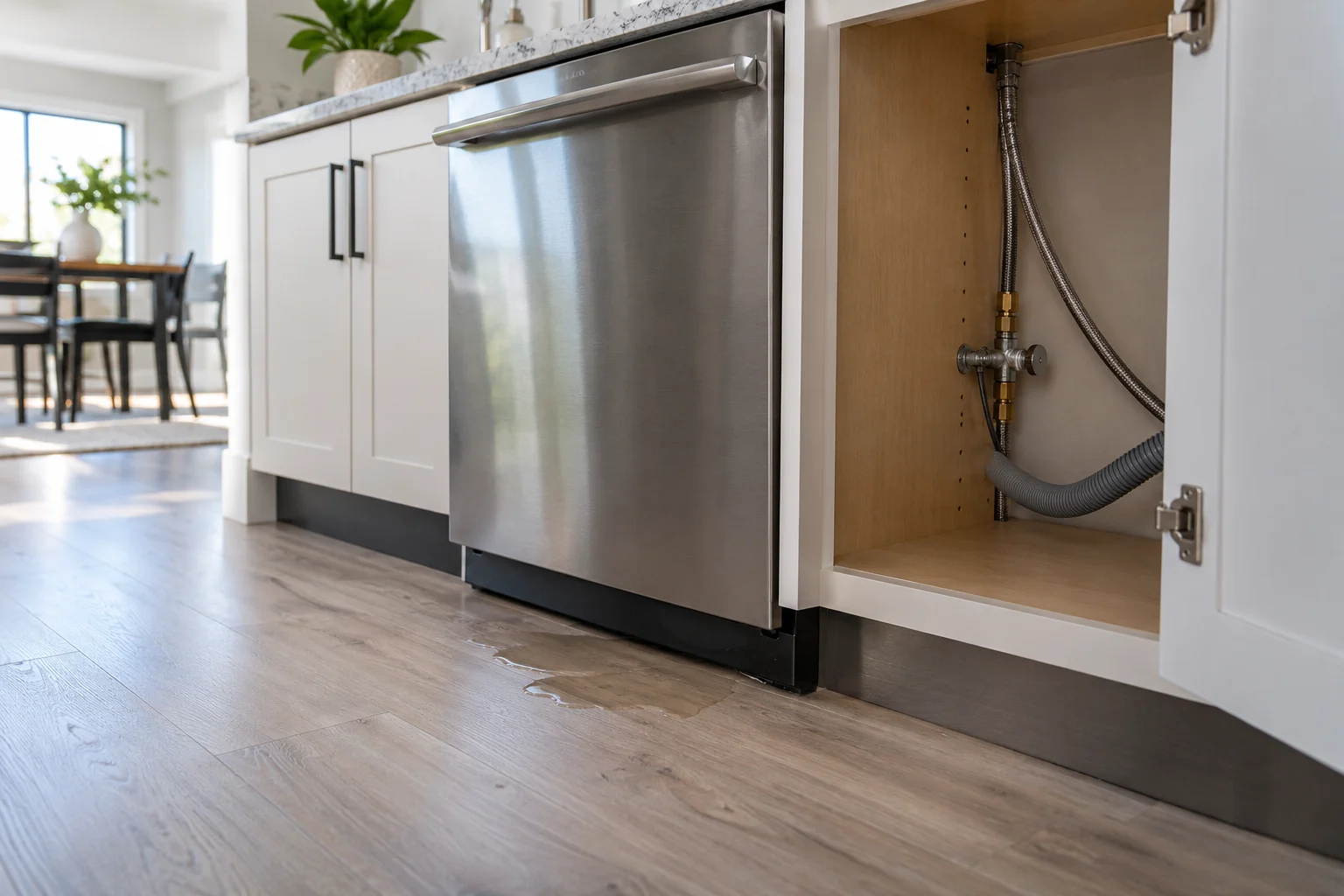
Water beneath a dishwasher can come from a supply connection, drain connection, appliance seal or internal fault, and nearby sink plumbing can also be involved. Stop dishwasher use and avoid wet electrical areas. The puddle’s position alone does not establish the cause; report when the water appeared and arrange assessment.
Describe When The Puddle Appeared
Include whether the dishwasher was unused when the water appeared. A continuous supplied connection leak and a release tied to draining need different checks. If you only discovered the puddle after a cycle finished, that uncertainty is worth stating. Do not restart the machine to obtain a better time stamp; the first visit can investigate the installation without another household test.
Include The Sink Cabinet In The Report
Tell the technician whether the sink was also used around the time water appeared. Under-sink plumbing and dishwasher connections can be close together, and water may run along a cabinet base. A photograph of accessible dry-side views can help, but do not reach around wet cords or disturb a hose. The source should be established at the connection, not inferred from the cabinet that became wet.
Do Not Slide The Dishwasher Out During A Leak
A built-in appliance may be connected through the adjoining cabinet. Pulling it forward can change the hose route or tension a line. Leave the machine where it is and describe the cabinet layout to the contractor. If a panel or access route is blocked, report that fact before the visit rather than removing installed parts or making access through a wet area.
- Stop the dishwasher and avoid another test cycle while the floor is wet.
- Note whether water appeared during filling, washing or discharge.
- Tell the technician whether the sink rose or water escaped outside the appliance.
- Ask which connection was checked and what remains outside the repair.
Treat Continuing Water As A Supply Concern
Report water that continues to arrive after the dishwasher is stopped, including whether the visible flow changes with a safely used known valve. Do not assume the machine’s power control has isolated the building supply. If the appropriate water valve cannot be reached safely, state that when requesting assistance. An active release requires source control, not another cycle adjustment.
Distinguish Suds From The Confirmed Cause
Keep the product name or packaging if an unusual cleaning product or detergent was used. Visible suds and an overflowing condition may be relevant, but they should not cause a supply connection to be dismissed without checking. Tell the contractor both the detergent history and the water location. Avoid adding more chemicals or running a cleaning cycle while the release remains unexplained.
Use dishwasher leak repair for the supplied or drain connection actually found to leak. If water came from another kitchen fixture, compare its repair in the service overview instead of treating every wet cabinet as an appliance fault.
Ask Whether Plumbing Or Appliance Service Is Needed
Ask whether the finding concerns the fixed water supply, the drainage interface or a component inside the dishwasher. If the next step is appliance service, obtain the model and observed fault information needed for that booking. If plumbing work is completed first, clarify whether appliance use is still restricted. Completing one connection repair is not necessarily clearance of the entire machine.
Check The Extent Of Cabinet And Floor Moisture
Describe swollen cabinet edges, changes in the floor or moisture in the room below. Take photographs only from safe access and keep the discovery date. The plumbing visit may stop water without determining the condition of all affected materials. Ask what separate moisture work is recommended and do not treat a clean kitchen surface as proof that the space beneath it is dry.
Water released beneath a dishwasher may reach cabinetry or electrical items. Alberta’s flood cleanup and utility-safety guidance covers water-damage precautions; the plumbing finding should still identify the supply, drain or appliance connection involved.
Resume Use After A Defined Handover
The final explanation should identify the repaired source and any remaining equipment examination. Ask which checks were made and what symptom should trigger stopping use again. Keep that information with the appliance records. If a later puddle appears, note whether it begins at the same stage and place; the previous diagnosis is evidence for the new visit, not proof of its cause.
A puddle beneath the front of the dishwasher may have travelled from a side connection or nearby sink cabinet. Describe the first place water appeared and the stage of the cycle rather than naming a seal from the final puddle. Leave the appliance stopped until the route is examined under controlled conditions.
Prepare A Kitchen Leak Timeline
Write down the observations in order, including ordinary sink use. An example is: “Sink used at 6:15; dishwasher started at 6:30; water found at the cabinet toe-kick at 7:00; first release was not witnessed.” That note preserves the uncertainty. It does not turn the last activity into the proven cause.
| Where water was seen | Detail that helps the inspection |
|---|---|
| Inside the adjoining sink cabinet | Whether the base, supply connection or drain area was first visibly wet. |
| At the dishwasher front | Whether anyone saw water arrive there or only found the final puddle. |
| At a wall or ceiling below | The affected room and time of discovery, so moisture work can be planned separately. |
Keep the appliance model and recent installation invoice available if already accessible. Ask the visiting contractor to identify the source in the report with more precision than “dishwasher leak.” A fixed supply connection, discharge connection and internal machine component lead to different repair and follow-up decisions. For a Calgary condo, give the manager the affected-room information as well as the appliance location.
Include the detergent product in the timeline if it changed recently, alongside the cycle and water observations. That gives the technician evidence without making suds the assumed explanation for every wet connection.
When arranging help, give the crew the cycle stage, first wet point and whether the sink backed up. Ask which finding, test and remaining restriction will be recorded. Request service or call (587) 333-7742.