Why Is Water Pooling Behind My Refrigerator In Calgary?
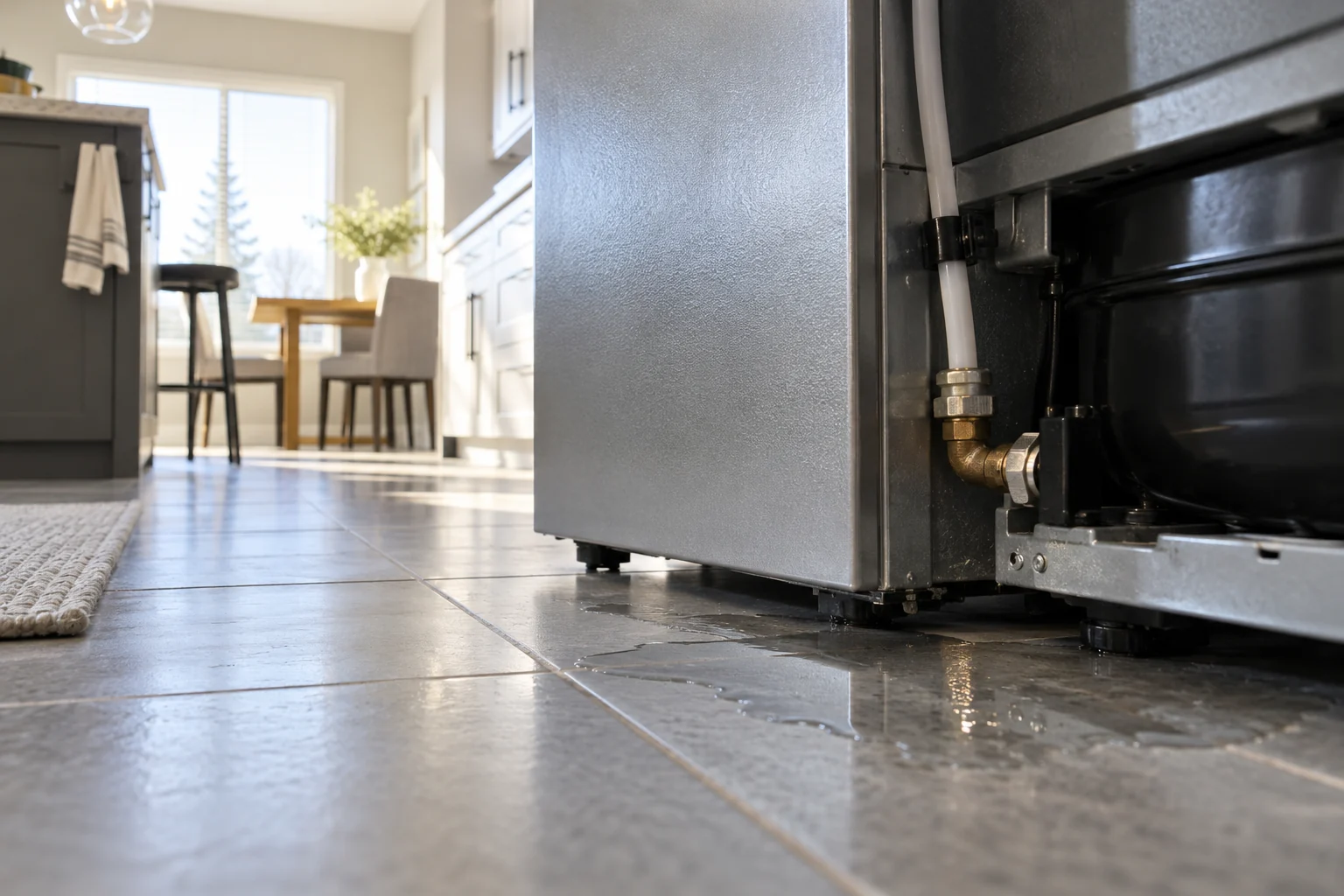
Pooling behind a refrigerator may involve its pressurized water supply, an appliance water-handling issue or another nearby source. Stop using affected water and ice functions, avoid wet electrical connections and arrange assessment. Do not pull the connected refrigerator out during an active leak merely to see behind it.
Describe Whether The Refrigerator Has A Water Supply
Tell the contractor whether the appliance makes ice or dispenses water and whether a supply line is known to be connected. That information changes the possible plumbing interfaces requiring examination.
A refrigerator without an attached water supply needs a different investigation from one connected to an ice maker. Do not assume that a dispenser on the door proves the current line is connected or that a familiar appliance appearance explains the leak. Give the technician the model and what you know about the installation. Water coming from a nearby sink or another pipe can also reach the same floor area.
Observe The Spread From A Safe Position
Record where water first became visible and whether it continues while water and ice functions are unused. A pool at the rear does not prove which connection or component released it.
Record whether the pool grew while nobody used the dispenser or whether it followed a particular use. An idle supplied line can still be under pressure, while other appliance water-handling conditions may have a different pattern. Describe the observation without diagnosing it. If the first wet location was hidden, tell the contractor that only the accumulated pool was visible.
Avoid Straining A Concealed Line
Moving a connected refrigerator can pull or pinch tubing, particularly when its route is hidden. Keep the appliance in place until safe access and connection handling have been considered.
The refrigerator’s weight and a concealed line can make a hurried move difficult to control. Pulling it away from the wall can add strain at both ends of the connection. Clear loose dry belongings along the access route instead, and tell the contractor about tight clearances or a built-in enclosure. Avoid using the move as a way to search for a valve during the leak.
- Report the first wet point without pulling the connected refrigerator across water.
- Note whether the ice maker or dispenser has been used recently.
- Ask the technician to trace the supply line and nearby sources separately.
- Keep wet flooring and wall materials on a separate assessment list.
Separate Water Functions From Electrical Isolation
Disabling an ice maker is not the same as isolating its supply, and touching a wet plug is unsafe. Report both the ongoing water and any affected electrical area before attempting controls.
Keep household members away from the wet rear area. Explain if a power cord, outlet or nearby electrical equipment appears affected, but do not touch it to check. A normal display on the appliance is not evidence that the wet area is safe. If there is no safe access to the relevant water control, give that information when arranging help.
Use A Known Accessible Water Shutoff Only
If the relevant supply valve is clearly identifiable and safely accessible, it may help control the release. Stop if the valve is stuck, damaged or leaking; do not work behind the appliance blindly.
If you use an appropriate known valve from a dry position, note whether the release stops, slows or remains unchanged. Those results need to be reported accurately. Do not assume a handle’s position proves the line is isolated, and do not open the connector to test it. A stuck or leaking control requires attention rather than more force.
| Visible clue | What to report | What not to assume |
|---|---|---|
| Water while the dispenser is unused | Describe continuing rear moisture and known supply connections. | Do not assume switching off water functions closes an external valve. |
| Water after a recent move | Give the moving date and any known connection work. | Do not pull the refrigerator out again to inspect hidden tubing. |
| Moisture under the kitchen floor | Report the visible spread and discovery time. | Do not equate a dry refrigerator exterior with dry surrounding materials. |
The supplied connection belongs in refrigerator water-line repair if it is the source. If water travelled from another fixture or wall line, use the service overview to keep the diagnosis tied to that finding.
Ask Which Trade Owns The Confirmed Fault
A line or connection issue can require plumbing work while an internal refrigerator problem may need appliance service. A clear diagnosis prevents the visible puddle from becoming an indefinite referral loop.
Ask the first contractor to identify the failed interface or the next examination needed. A plumber may address the supplied line while an appliance technician is needed for a separate internal fault. Keep the refrigerator model available for that handoff. A referral should explain what has been checked and whether any water or electrical restriction must remain in place.
Consider The Floor And Cabinet Route
Water can travel toward cabinets, beneath flooring or into the level below. Describe those areas even when the refrigerator supply has been isolated; drying needs are not resolved by stopping the source.
Mention wet cabinet bases, a changed floor surface or moisture below the kitchen. Even a restricted water line does not remove water already beneath flooring. Record the discovery time and take accessible photographs without moving the connected appliance. If separate drying or material work is recommended, retain that record apart from the invoice for the line or appliance repair.
A refrigerator supply leak can travel under flooring beyond the visible puddle. Alberta’s flood cleanup and utility-safety guidance covers water-damage precautions; the line repair and affected-material assessment are separate outcomes.
Keep The Repair And Appliance Handover
Save which line, fitting or component was addressed and when water functions may resume. A normal cold compartment does not demonstrate that the plumbing connection is leak-free.
Ask when the water and ice functions may resume and which checks support that instruction. Keep the repaired part or connection identified in the service record. If another pool appears, stop use and describe whether its timing matches the earlier release. A working refrigeration compartment and a dry exterior do not independently verify every hidden water connection.
When arranging help, give the crew the visible water route, appliance use and any safely accessible supply control. Ask which finding, test and remaining restriction will be recorded. Request service or call (587) 333-7742.