Know your property's water supply
Finding Your Main Water Shutoff During a Leak
The best time to find your main water shutoff is before a leak begins. Knowing which valve controls the indoor supply can save confusion when a pipe breaks, an appliance connection leaks or a fixture valve fails.
During an emergency, the valve is only useful if the route to it is safe and its function is known. This guide distinguishes the indoor main, individual fixture valves and the outdoor municipal service valve. It also explains when a building manager or the City needs to be involved.
Immediate priorities
Before operating a valve
- Check the route
Do not enter water or approach wet electrical equipment to reach a shutoff.
- Identify the valve
Use a known indoor main or appropriate local supply valve. Avoid guessing in a shared mechanical room.
- Report the result
Tell the plumber which valve was closed and whether the leak slowed or stopped.
Where to begin looking before an emergency
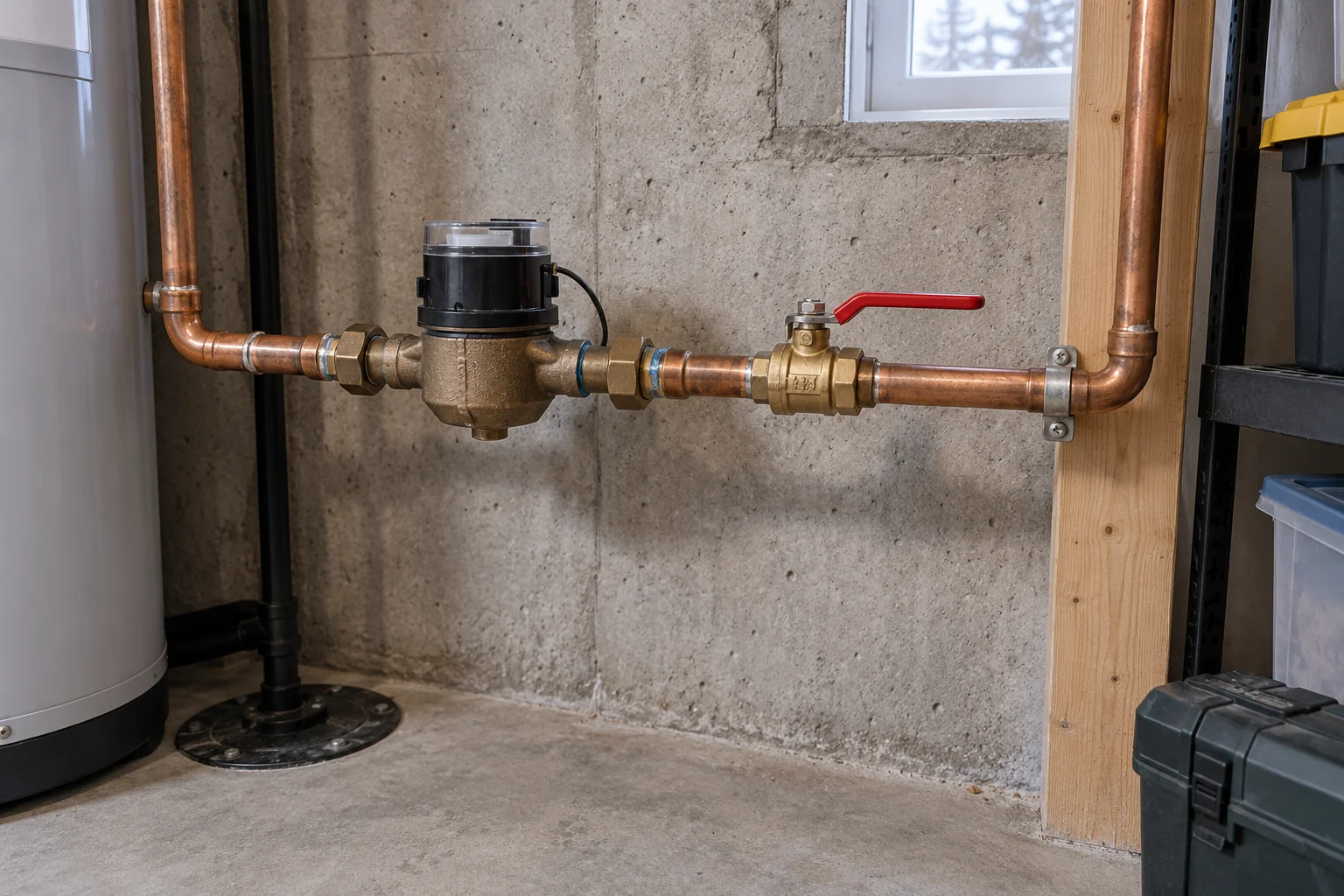
Follow the building's known water entry area rather than treating the nearest visible handle as the main. In Calgary houses the indoor main is commonly near the meter at the water entry point, often on the lowest level. Layouts change with renovations, finished basements and different building types, so use the actual property's records and ask the owner when the arrangement is unclear.
Look for a valve on the incoming supply before it branches around the home. You do not need to take covers off equipment or remove finished surfaces to explore. A clear label, a wide photo and a note of nearby landmarks can make the location easier for another occupant to recognize.
Further guidance: City guidance on indoor main shutoff locations.
Main, fixture and outdoor valves do different jobs
A local fixture valve controls a particular connection or branch; the indoor main controls the incoming supply serving the property. For an obvious local supply leak, a familiar accessible fixture valve may limit the interruption. When the broken line is upstream of that valve or the source is uncertain, closing the fixture valve may not change the leak.
The outdoor service valve belongs to the municipal system and is not a substitute for a household shutoff. In Calgary, City coordination may be needed to repair an indoor main that cannot isolate the supply. Do not use a curb key, dig around a service valve or attempt to operate municipal equipment.
- Fixture valve: a known local supply connection.
- Indoor main: incoming water serving the property.
- Outdoor service valve: municipal isolation handled through the City.
The indoor main controls incoming water
- Incoming supplyWater enters the building through its supply line.
- Indoor main shutoffThe highlighted valve controls the incoming property supply.
- To fixturesBranches carry water toward plumbing fixtures.
Use the known valve without forcing it
Only operate a familiar valve from a safe, dry position. Handles and valve types vary, so follow the identified valve's instructions rather than assuming every handle turns the same way. Stop if the valve is seized, the handle appears damaged or water starts leaking around the valve itself. Extra leverage can turn a difficult shutoff into another repair.
Do not remove a handle, loosen a packing nut or dismantle the valve during an active emergency. A valve that turns but does not stop the water also needs assessment. Record whether flow stopped, reduced or remained unchanged, and give that information when arranging help.
What to do when the shutoff cannot be reached
If the route crosses standing water or passes wet electrical equipment, remain outside the affected area. A valve's usefulness does not make the access safe. Tell the plumber that isolation is unavailable and describe the obstacle; contact emergency services for immediate danger and the appropriate utility for electrical or gas hazards.
Do not enter a flooded basement to turn off breakers, unplug a pump or rescue an appliance. Electrical and plumbing isolation are different tasks. The Government of Alberta's flood guidance advises against handling electrical systems in affected areas before they have been made safe.
Further guidance: Alberta guidance on flood-damaged utilities.
What closing the main does not solve
Shutting the incoming supply can control a supply-side release, but it does not repair the damaged pipe or remove water already in walls and floors. It also does not establish the cause of sewage rising through a drain. Water entering from outside, drainage backups and other building systems need their own assessment.
After isolation, do not reopen the supply simply because the visible drip has stopped. Ask the plumber when it can be restored and whether any equipment needs separate attention. Do not adjust heater controls or electrical equipment as an improvised follow-up step.
When the shutoff itself needs repair
A shutoff may need attention if it leaks, is difficult to move, has a damaged handle or fails to isolate the supply. Assessment should establish the valve's role and how the upstream water can be controlled before work begins. An indoor main repair can involve utility coordination; a local branch valve may have a different isolation route.
Ask the plumber to explain which occupants will lose water, the access required and how the completed work will be checked. Once repaired, update the label and property records so the next person does not rely on an outdated photograph. Keep valve repairs separate from any restoration needed after the original leak.
Make a practical water-shutoff plan
Keep the path to the identified main clear of storage and make the label readable in ordinary lighting. Store its location alongside emergency contacts, rather than leaving the information with one person. For a rental, provide the same note to the responsible occupant and property manager.
Arrange a planned assessment if the valve's condition is unknown; do not wait for a rupture to discover it cannot operate. Review the plan after plumbing renovations or a change in building ownership. Include local fixture valves only when their function has been confirmed, and identify the City's outdoor valve as utility equipment rather than a DIY emergency option.
Frequently asked questions
What if I cannot tell which valve is the main?
Ask the owner, manager or plumber to identify it. During an active leak, report that the shutoff is unknown rather than trying several valves in an unfamiliar mechanical room. Establish and label its location afterward.
Can I operate the valve outside myself?
Calgary's outdoor service valves are City-operated. Contact 311 or the appropriate utility route for municipal isolation; do not attempt to operate or repair the outdoor valve.
Will shutting off water stop a sewer backup?
It does not solve or diagnose a sewer backup. Stop using affected fixtures and arrange assessment. Wastewater can enter from a different part of the drainage system even when your incoming supply is closed.
The handle moved but water is still flowing. What now?
Do not force the handle further or take the valve apart. Explain which valve you used and whether the flow changed. The valve may not be the correct isolation point or may need repair.
Related plumbing services
Sources & further reading
A leaking or unreliable shutoff needs attention
Contact Calgary Emergency Plumbers about the valve and the leak it needs to isolate. Tell us if the indoor main is inaccessible or does not stop the flow.