Calgary cold-weather plumbing guide
Frozen Pipes: Warning Signs and Safe Next Steps
Little or no water from a tap during a Calgary cold spell can be a warning sign of frozen plumbing. It can also come from an outage or another supply problem, so the pattern matters: one affected branch is different from loss of water throughout the building.
A frozen line may already be damaged, with the leak becoming apparent only when water begins flowing again. This guide covers useful observations, safe boundaries around thawing and prevention questions for cold-exposed plumbing. It is not a set of instructions for heating a concealed or damaged pipe.
Immediate priorities
When flow changes in cold weather
- Note the affected taps
Describe known loss of flow and check the utility's outage information without dismantling plumbing.
- Avoid hazardous thawing
Do not use open flames or improvised electrical heating. Stay out of confined or wet spaces.
- Prepare for a leak
Know the indoor main's location. If water escapes, use it only when it is safely reachable and arrange repair.
Signs worth reporting
A noticeable change in flow during cold weather, frost on accessible internal plumbing and water appearing after a period without flow are useful observations. Note when the problem started and which taps are affected. You do not need to locate the ice blockage before making a call.
Avoid removing pipe insulation, opening walls or disconnecting fittings to investigate. Describe what is already visible from a safe area. A mark below a pipe may indicate a leak, but it does not establish whether that pipe is frozen, cracked or leaking at a connection.
- One fixture or branch has lost flow while others still work.
- Several taps have little or no water.
- Frost is visible on accessible supply plumbing.
- Water begins escaping as flow returns.
Further guidance: Calgary's frozen water line warning signs.
Check whether the interruption is broader than your plumbing
Look for a current outage or main-break notice from the water provider. Ask the building manager about a planned shutdown in a condo or commercial property. A known wider interruption is important context and can prevent a frozen-pipe assumption from sending the investigation in the wrong direction.
If only hot water is affected, say so rather than describing a total water outage. If both hot and cold flow have changed, report that distinction as well. The assessment should consider the supply and affected branches before any thawing or repair is selected.
Further guidance: Calgary water outages and main breaks.
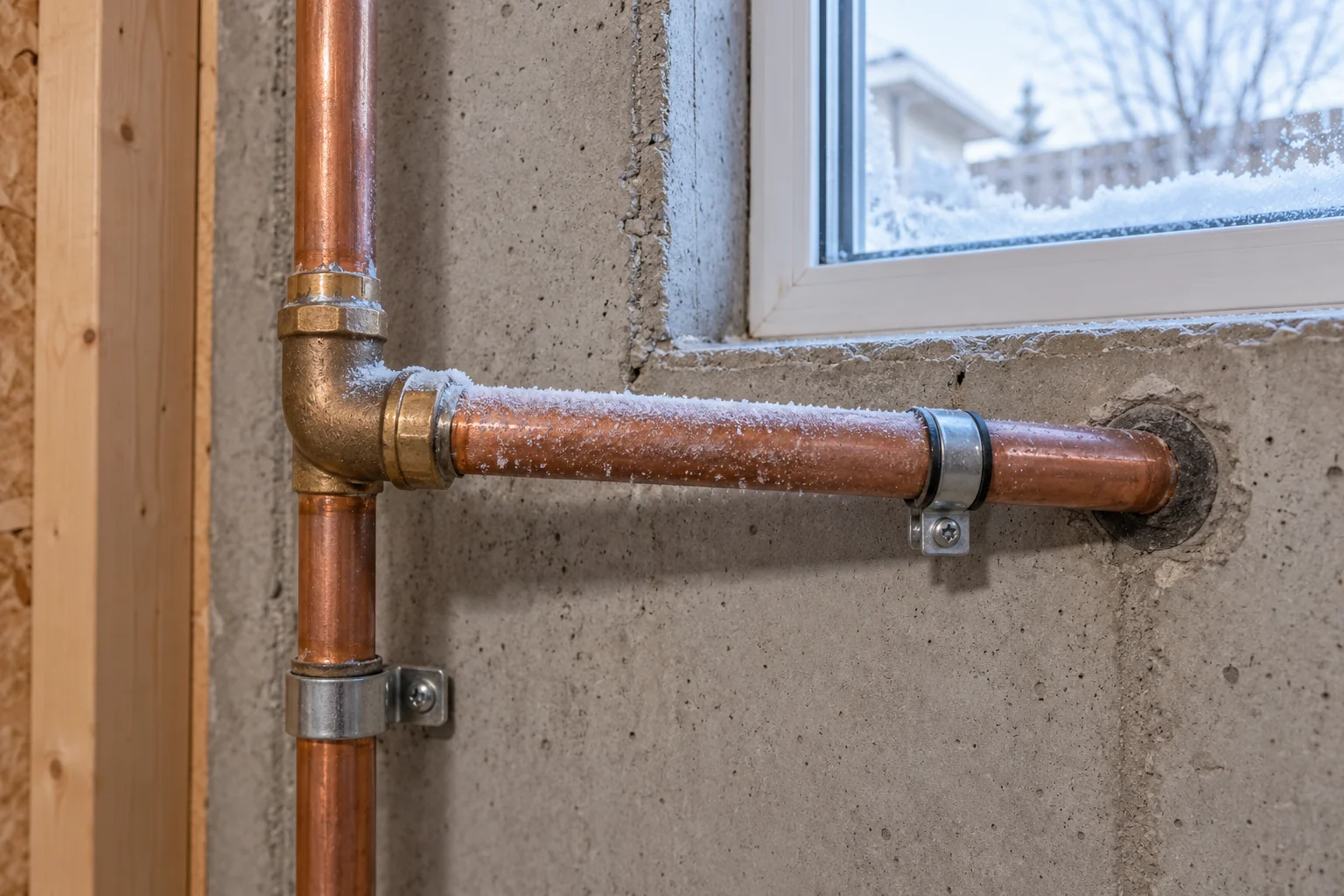
An ice blockage can restrict water flow
- Cold-exposed pipeA vulnerable section may be affected during cold weather.
- Ice blockageIce inside a pipe can restrict the water passage.
- Reduced flowA flow change is a warning sign, not proof of the cause.
Do not use a flame or improvised heating setup
Never apply an open flame to plumbing or use equipment in a way its manufacturer does not allow. Pipes may be close to combustible materials, and a concealed line cannot be safely judged from the visible section alone. Do not enter a crawl space or other confined area to attempt thawing.
Electrical heating near wet surfaces introduces another hazard. Do not lay out extension cords or unattended heaters to experiment with a pipe. The City publishes cautious thawing information and encourages professional assistance when there is uncertainty; a suspected damaged or inaccessible line should be assessed rather than heated by guesswork.
Further guidance: City guidance on thawing cautions and professional assistance.
Be ready for water when the blockage changes
Find the indoor main in advance if the route is dry and safe, and make sure the responsible occupant knows its location. If water begins escaping, keep people away from the wet area and close the known main only when it can be reached safely. Do not walk through water to do so.
Report any valve used and whether the flow changed. Restored water at a tap does not establish that all plumbing is intact. New leakage, stains or dripping need attention even if the original no-flow symptom has disappeared.
Indoor exposure and buried service lines are different problems
An indoor pipe beside a cold draft has different access and exposure from an underground water service. Frozen plumbing can therefore require coordination with a building owner, plumber or the water utility depending on the location being investigated. Do not assume that every no-flow incident is confined to the pipe nearest the affected tap.
Useful background includes an unheated area, a recent heating interruption, previous trouble on the same branch or a City notice concerning the property. Share that information without presenting it as a confirmed cause. The location and condition of the line still need assessment.
What a professional response should establish
Assessment should distinguish a supply interruption from an affected plumbing branch, consider access and look for damage before deciding how flow can be restored. If utility-owned infrastructure may be involved, follow the provider's reporting and authorization process. Private indoor repairs and municipal service work should not be treated as the same job.
After flow returns, ask what was checked for leakage and whether the exposed area still needs insulation or other protection. If a damaged section was repaired, keep a note of its location. Water-impact assessment is separate if a leak reached walls, floors or contents; a frozen line without escaped water does not automatically need restoration.
Prevent repeat cold exposure
Once the emergency is controlled, review cold drafts and poorly protected supply lines with the responsible owner or plumber. Maintain building heat, address openings that expose plumbing and discuss suitable pipe protection. Winterize outdoor water connections as appropriate to the installed system before freezing weather arrives.
For an extended absence, arrange property checks and review the insurer's requirements. A thermostat setting alone does not confirm every concealed pipe is protected. Make sure someone knows the main shutoff location and can report an interruption without waiting for the returning owner.
Further guidance: Calgary's winter preparation guidance.
A City running-tap notice is a specific program
Calgary's Frozen Pipes Prevention Program provides instructions to properties identified by the City. If you receive a notice, follow its directions and the City's follow-up rather than switching the instructed tap off during a warmer spell.
That program is different from a blanket recommendation for every household to leave water running. Do not copy a neighbour's instructions or rely on an online rule for an unidentified pipe problem. Contact the City when the notice, address or next step is unclear.
Further guidance: Frozen Pipes Prevention Program instructions.
Frequently asked questions
Does no water always mean a frozen pipe?
No. Outages, planned isolation and other supply faults can also interrupt flow. Note the affected taps, check the provider's information and describe the cold-weather context without assuming the cause.
Should I turn on a space heater beside the pipe?
Do not create an improvised heating setup, especially around water, combustible materials or concealed plumbing. Ask for assessment of the line and use only equipment as its manufacturer directs.
The tap works again. Is the problem over?
Flow returning is not proof that a frozen line is undamaged. New water marks or leakage should be reported, and the original cold exposure may still need attention.
Should every Calgary home keep a tap running?
No generic instruction fits every property. Follow a City prevention notice when one is issued for your address, and ask the City about that program if you are unsure.
Related plumbing services
Sources & further reading
Cold-weather flow loss or a new leak?
Call Calgary Emergency Plumbers with the affected taps, when the change began and whether any water is escaping.