Wastewater backup guide
Sewer Backup: Immediate Steps and Who to Call
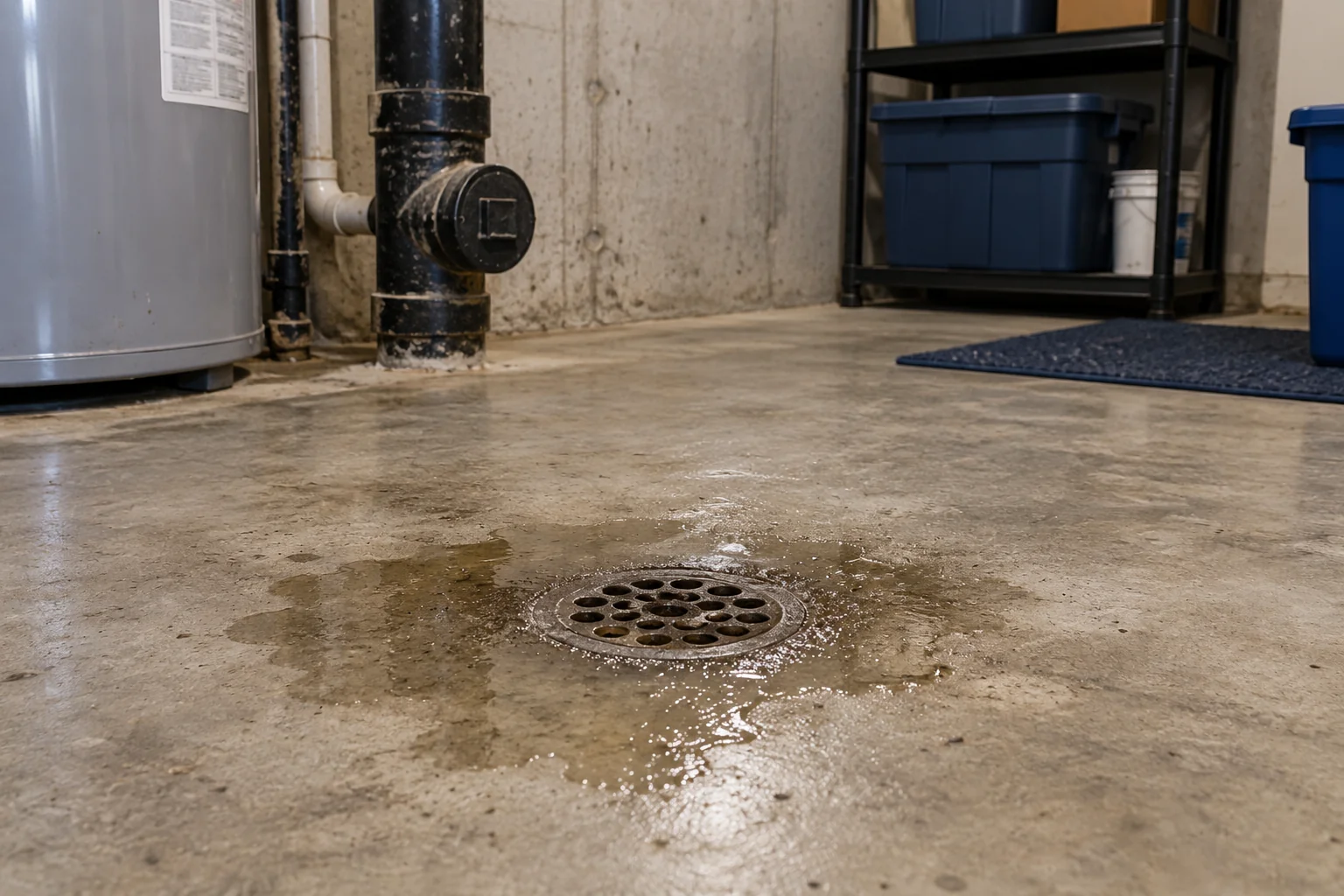
Wastewater rising through a floor drain, toilet or sink is an urgent problem that needs both source assessment and protection from contamination. The first goal is to keep people out of the affected area and avoid sending more wastewater into a system that is already backing up.
A backup does not, by itself, tell you whether the obstruction is inside the building, in a private service line or in municipal infrastructure. This guide explains the reporting route in Calgary, useful observations and the difference between drainage repair and sewage cleanup.
Immediate priorities
During an active backup
- Keep the area off limits
Keep occupants and pets away from sewage and wet electrical equipment.
- Stop adding wastewater
Avoid flushing or running fixtures and appliances connected to the affected system.
- Report and arrange assessment
Calgary advises calling 311 for sewage backups. Arrange private plumbing work when indicated and describe all affected fixtures.
Treat the affected water as contaminated
Do not judge the risk from colour or smell. Water rising through the drainage system may be contaminated even when it looks relatively clear. Keep children, pets and other occupants out of the affected rooms. Avoid carrying wet belongings through clean areas or using household equipment to spread or remove the water.
Stay clear of wet electrical equipment, outlets and panels. If the route to the basement crosses water, remain outside it. A plumbing response cannot substitute for emergency help when there is immediate danger, and basic household gloves do not turn an unsafe room into a safe cleanup site.
Further guidance: Calgary's guidance on sewage exposure.
Avoid putting more water into the backed-up system
Do not keep flushing a toilet, running a sink or testing the washing machine to see whether the backup has cleared. Showers, laundry and dishwashers can add substantial water to a shared drain. Tell other occupants which fixtures should stay out of use while help is arranged.
Do not pour drain cleaner into an active backup or open a cleanout cap to release the pressure. Both can introduce hazards without establishing the cause. If a chemical cleaner has already been used, name it when calling and keep its container information available for the responding professional.
A downstream problem can send wastewater back
- Fixture branchesIndividual fixtures connect to a shared drainage route.
- Downstream lineA problem farther along the route may affect several fixtures.
- Backup flowWastewater can return toward the building fixtures.
Who to call in Calgary
The City of Calgary directs sewage-backup reports to 311. Its triage helps determine whether a municipal inspection is needed or a plumber should investigate private plumbing. Follow the reporting instructions for your address rather than assuming the City or homeowner is responsible based on where the water appears.
A condo or business also needs the building manager involved because other units may share the affected drainage. Contact your insurer about the incident as appropriate. Outside Calgary, use the actual municipality or utility's reporting route; Calgary's process should not be assumed to apply in neighbouring communities.
Further guidance: Calgary's sewage backup reporting and inspection process.
Describe the drainage pattern from a safe position
List every affected fixture you already know about and say whether the lowest floor drain is involved. Note whether the level is rising, whether the backup began during fixture use and whether another unit has reported trouble. These details can guide the investigation without anyone repeatedly recreating the problem.
A single blocked fixture may have a local obstruction, while several fixtures backing up can point to a shared drainage route. Neither pattern proves the location or condition of the fault. Take photographs only from dry safe areas and describe inaccessible rooms instead of entering them for evidence.
- Which fixtures and floors are affected.
- Whether the wastewater level is rising or stable.
- Recent drainage trouble or repeated blockages.
- Known cleanout location and access restrictions.
- Any chemical products already used.
A blockage and a damaged pipe need different work
Material caught in a drain, buildup in a line and damage to a sewer pipe can produce similar symptoms. Clearing an obstruction can restore flow, but it does not automatically establish that the pipe is sound. Repeated incidents deserve a discussion about what was found and whether further inspection is appropriate.
Camera inspection, mechanical clearing and hydro jetting are different tools rather than a fixed package for every backup. Access and pipe condition determine which approach makes sense. A damaged sewer line may require repair; cleaning alone cannot mend a broken section.
What happens during professional assessment
The professional needs a suitable access point and information about the building's drainage layout. Give the known location of the cleanout from a safe area, but do not remove its cap or expose concealed piping yourself during the incident. If access has been covered by renovation work, explain that before the visit.
Ask how the proposed work will identify or address the fault, what permissions are needed and how drainage will be checked afterward. A heavily obstructed line may need clearing before useful camera findings are possible. Keep any inspection findings or service report so a later decision about repair is based on the observed line rather than the fact that another backup happened.
Drainage repair is separate from sewage cleanup
Restoring drainage deals with the plumbing source. It does not clean contaminated flooring, contents or concealed building materials. Avoid using an ordinary vacuum or moving affected items into living spaces. Ask for an appropriate contamination assessment and explain where wastewater reached.
Discuss cleanup and restoration separately, including what materials need attention and who authorizes the work. An optional introduction to Calgary Restoration can be considered, but it is not an automatic part of a plumbing repair. Keep photographs and work records for the property manager or insurer without promising that any particular damage is covered.
Reduce recurring drainage problems
Keep grease and unsuitable household waste out of drains, and follow the City's disposal guidance rather than relying on packaging that describes a product as flushable. If the property has a backwater valve, establish where it is and arrange maintenance suited to the installed model. Do not assume that a valve provides complete protection or that every property already has one.
For repeated backups, review the inspection findings and the location of prior obstructions with the plumber. Discuss whether a line repair, cleaning plan or backwater valve assessment is appropriate. Record renovations that changed drain access so future responders can find the relevant route without opening unrelated finished areas.
Further guidance: City guidance on preventing sewage backups.
Frequently asked questions
Should I open the cleanout to let the water out?
No. Leave it closed during an active backup and tell the responder where it is. Opening it may release wastewater into another area and does not identify the fault.
Does a backup mean the sewer pipe needs replacement?
Not automatically. Obstructions and pipe damage require different work. Assessment, and inspection where appropriate, should establish the findings before a repair method is chosen.
Will drain cleaner fix a sewage backup?
Do not add chemicals during a backup. They may create additional hazards for occupants and the professional working on the drain. Disclose any cleaner already used.
Can we use toilets upstairs?
They may connect to the same affected route. Avoid use that adds wastewater while the system is backed up and ask the responding professional when fixtures can be used again.
Related plumbing services
Sources & further reading
Arrange help for a private drainage problem
Contact Calgary Emergency Plumbers with the affected fixtures, whether wastewater is still rising and the property's access details. Follow Calgary's 311 reporting guidance for a sewage backup.