
Basement drainage guide
Sump Pump Failure and Basement Water: What to Do
A sump pump that is not keeping up can leave water rising in the pit and spreading onto the basement floor. An alarm, unusual running pattern or visible discharge problem deserves attention, but water in a basement can also come from a plumbing leak, seepage or a sewer backup.
The safe first response is to stay away from water and electrical equipment, report what can be observed from a dry area and arrange assessment of the actual source. This guide explains the sump system, what repair should investigate and which prevention measures are worth discussing afterward.
Immediate priorities
When water is rising
- Stay out of the wet area
Do not approach electrical equipment through water or reach into the pit.
- Describe visible behaviour
Report an alarm, a silent or continuously running pump and rising water only from a dry safe position.
- Arrange source assessment
Explain the point of entry and whether water is coming from the pit, a pipe or a drain.
Do not handle electrical equipment during flooding
Do not unplug the pump while standing in water, reach into a wet pit or cross a flooded floor to a panel. Keep people and pets outside the affected area. If the basement is unsafe, say so when calling rather than entering it to gather more detail.
Flood-damaged equipment may need assessment before it can be used again. Do not repeatedly reset controls, bypass a switch or connect an improvised pump and extension cord. Alberta's flood guidance calls for damaged utilities to be examined before use and for municipal advice on floodwater removal.
Further guidance: Alberta guidance on utilities and floodwater removal.
What the sump system is supposed to do
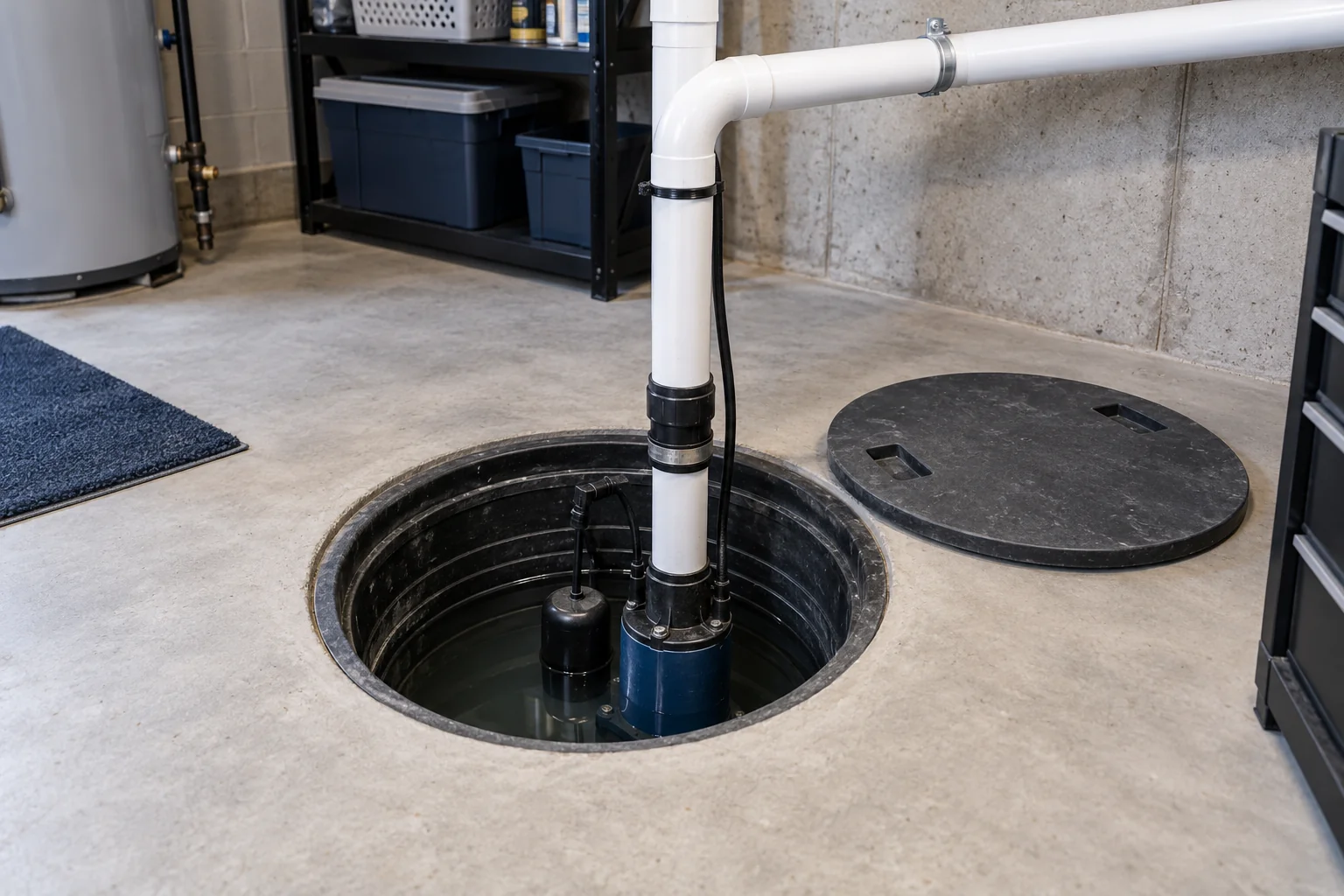
A foundation drainage sump collects water in a basin, and the pump moves it through a discharge route. The pump is therefore only one part of the system. Water that cannot leave through the discharge may continue to build up even when the equipment sounds as though it is running.
A sewage ejector system has a different job: moving wastewater from below-grade fixtures into the building's drainage. Do not treat a sealed sewage basin as an ordinary groundwater pit. Tell the plumber which system is involved if it is known, and keep lids and covers in place during an active problem.
Further guidance: Calgary's explanation of storm and sanitary sumps.
A sump collects water for the pump to remove
- Sump pit & pumpCollected water reaches the pump in the basin.
- FloatThe float is part of the pump control arrangement.
- Discharge outdoorsThe discharge route carries pumped water away.
Useful warning signs to report
An alarm, a silent pump while the water level rises or a pump that seems to run continuously can all help describe the incident. A different cycling pattern is worth noting, particularly if it has changed from normal operation. Sound alone is not proof that water is being discharged successfully.
Report any known power outage and a discharge problem visible from an accessible dry location. Do not dismantle the pump, lift its controls or reach below the lid to test a theory. If the pit cannot be seen safely, describe the water on the floor and explain that observation of the equipment is unavailable.
- An alarm or water approaching the top of the pit.
- Pump silence while the level rises.
- Continuous running or a new frequent cycling pattern.
- Water on the floor near the pit.
- A known power interruption or visible discharge concern.
Basement water does not always mean pump failure
Water appearing at a wall joint or after rain may involve seepage, while an active supply leak can wet the same floor from an entirely different source. Wastewater rising through a floor drain needs a sewage-backup response. The point where water first appeared is therefore important information.
Describe the timing, rooms affected and any plumbing use just before the water appeared. Avoid walking through it to trace the route. Calgary's basement seepage guidance explains how ground water can reach a building through foundation openings; the appropriate next step depends on the assessed source.
Further guidance: Calgary guidance on basement seepage and flooding.
What pump assessment and repair should cover
Assessment should establish the type of pump, how it is controlled and whether the connected discharge can carry water away. The appropriate repair might involve equipment, a control or connected plumbing; replacing the pump without addressing another fault may leave the original problem unresolved.
Ask what was found, what work is proposed and how operation will be checked. If replacement is recommended, discuss the system requirements and access rather than choosing by a generic online specification. Any wet electrical equipment needs the appropriate professional attention; a plumbing repair does not certify an affected electrical system.
The discharge route matters
A pump needs a discharge arrangement that actually moves water away from the collection area. A restricted outlet or water returning toward the foundation can undermine that purpose. Explain a known issue with the outdoor route without rerouting it yourself during the emergency.
Afterward, ask about the check valve, discharge condition and where the water is directed. Changes should fit the property and applicable requirements rather than send water toward a neighbouring lot or an unsuitable drain. City water-management guidance identifies the discharge route as an important part of sump planning.
Further guidance: Calgary water-management measures for sump systems.
A running pump does not dry the basement
Once the source is controlled, record which finishes and contents were wet and for approximately how long. Water inside flooring or a wall cavity may remain even when the surface looks better. Do not assume that restarting a pump resolves all damage from the incident.
Discuss separate restoration assessment where needed, and contact your property manager or insurer as appropriate. Cleanup decisions depend on the water source and affected materials. An optional Calgary Restoration introduction can help arrange that separate scope, but pump repair and restoration should be explained and authorized individually.
Plan maintenance and a backup before the next high-water period
Once the emergency is over, review maintenance instructions for the installed system and keep service access clear. Ask about a high-water alarm and backup arrangements suited to the property. A backup pump, backup power and an alarm address different failure scenarios; no single addition makes maintenance unnecessary.
Calgary's water-management guidance discusses backup power, a separate backup pump and attention to the discharge and check valve. Have any changes designed and installed appropriately. Do not place a fuel-powered generator indoors or improvise electrical connections as part of a flood response.
Keep the pump's service record, normal operating observations and maintenance contacts together. Review the plan before an extended absence and after renovations near the basin or discharge. Report recurring cycling changes early rather than waiting until water reaches the floor.
Further guidance: City guidance on sump maintenance and backup planning.
Frequently asked questions
Should I reach into the pit to move the float?
Not during an active failure or flooding. Keep clear of water and electrical equipment and arrange assessment. Describe the observed level and pump behaviour without bypassing controls.
The pump is running. Why is water still rising?
The running sound does not establish that the system is moving enough water through the discharge. Assessment needs to consider the pump, controls, incoming water and outlet rather than assume a single cause.
Does every damp basement need a sump pump?
No. First establish how water is entering and how the property drains. A plumbing leak, sewer backup and foundation seepage require different responses; installing a pump is not a universal fix.
Is a sewage ejector pump the same as a sump pump?
They serve different systems. A groundwater sump handles collected drainage water, while a sewage ejector moves wastewater from below-grade fixtures. Identify the known system when calling and do not open a sealed sewage basin.
Related plumbing services
Sources & further reading
Get the basement water source assessed
Contact Calgary Emergency Plumbers with the observed pump behaviour, where water first appeared and whether the equipment can be reached safely.