Calgary emergency plumbing guide
What to Do When a Pipe Bursts
A burst pipe can turn an ordinary room into an emergency in minutes. Water may spray from an exposed joint, run behind a wall or appear downstairs beneath a pipe you cannot see. The priorities are a safe route out of the affected area, stopping the water when this can be done safely and arranging a plumbing repair.
You do not need to establish the exact cause before calling. This guide explains what you can observe without taking plumbing apart, how to communicate the situation and what should happen after the flow stops. A dry-looking surface does not tell you whether concealed materials are dry.
Immediate priorities
The first few actions
- Keep a dry, safe route
Keep people and pets away from water near electrical equipment, damaged ceilings and other unsafe areas.
- Use a known accessible shutoff
Close a familiar indoor main or appropriate local supply valve only when you can reach it safely. Do not force a stuck valve.
- Arrange source repair
Call with the address, location of the escaping water, whether flow continues and any access restrictions.
Safety comes before reaching the pipe
A pipe rupture is not a reason to cross standing water to a breaker panel, unplug an appliance or reach a valve beside wet electrical equipment. Keep the affected area off limits and stay in a dry location. If there is immediate danger, contact emergency services rather than relying on a plumbing appointment to make the area safe.
Water from an upper floor can collect behind ceilings or run through openings before appearing below. Do not stand beneath a bulging or visibly damaged ceiling to catch the drip. Avoid opening the ceiling yourself; the repair team needs to assess access and the source without creating an additional hazard.
Further guidance: Alberta's guidance on water and electrical hazards.
Stop the supply only when the valve is known and reachable
A familiar valve serving an obvious local supply leak may isolate that connection. A damaged pipe or uncertain source may require the indoor main. Tell the responding plumber exactly which valve you closed and whether the flow changed. A slowing drip can still be water draining from an already wet cavity, so describe the change rather than assuming the incident is over.
In Calgary, the indoor main is commonly near the meter where the supply enters the house. The outdoor service valve is City-operated and is a different valve. If the indoor shutoff is inaccessible, seized or leaking, explain that when calling; do not improvise with tools or operate the outdoor valve.
Further guidance: Calgary's explanation of indoor and outdoor service valves.
Source repair and escaped water need separate attention
- Water supplyThe damaged pipe carries water through the building.
- Pipe failureWater escapes at the damaged section.
- Two separate tasksControl the plumbing source and assess escaped water separately.
What a burst pipe can look like
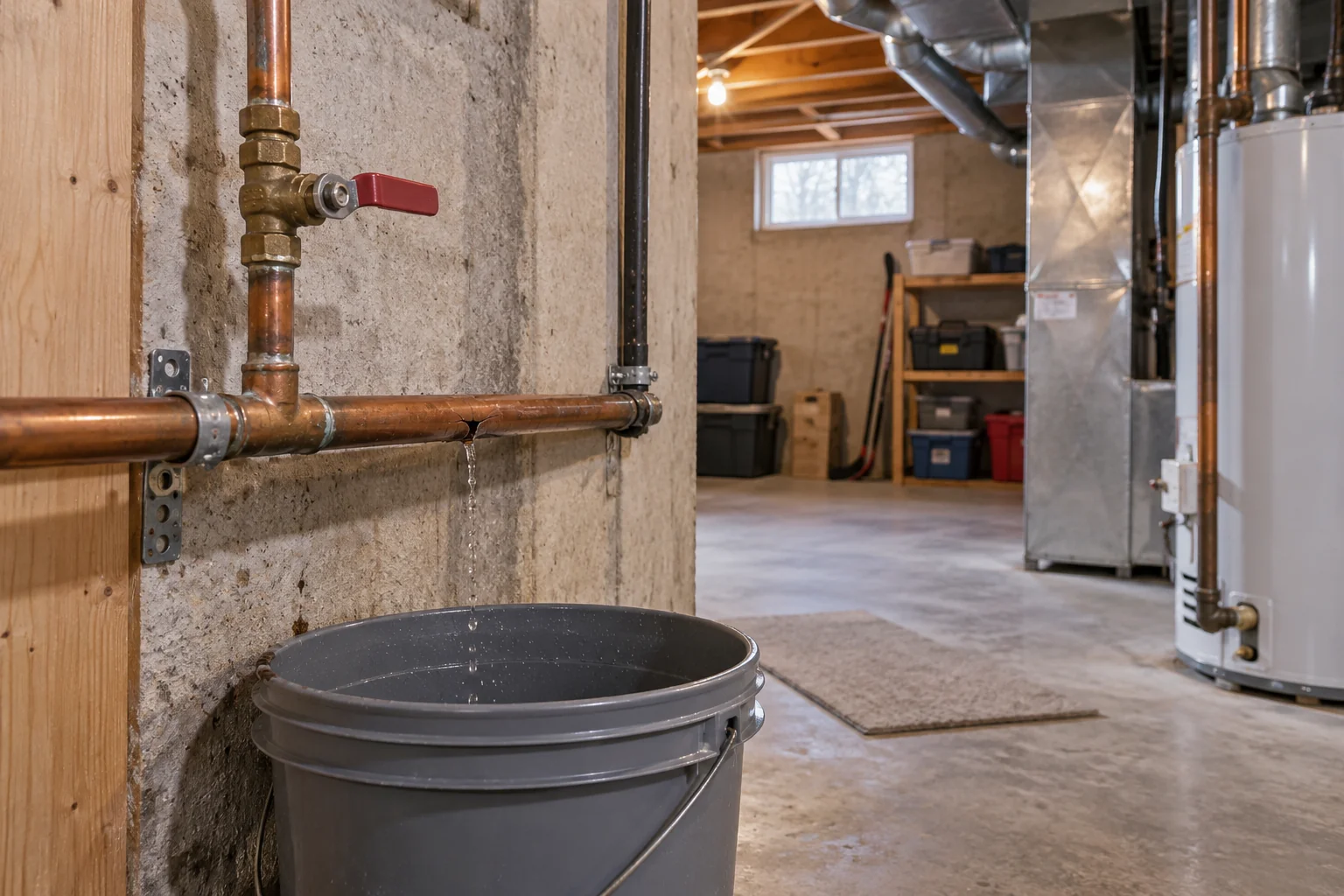
A split pipe spraying water is an obvious failure, but concealed damage may first appear as a rapidly growing stain, a new steady drip or water emerging along the floor. A recent loss of flow during cold weather is useful context, especially if water began escaping when the supply returned. These observations help the plumber investigate; they do not identify the exact repair location by themselves.
Make a short note of the first place you noticed water and the rooms above or beside it. If you can take photos from a safe dry position, capture both the close-up symptom and the wider room. Do not recreate the leak by turning water back on for a better photograph.
- A visible split, damaged fitting or continuous spray.
- Water appearing quickly beneath a ceiling or beside a wall.
- New leakage after cold-weather loss of flow.
- Water that continues escaping despite a valve being closed.
Why the repair needs more than a patch
A pipe may fail at a fitting, along a damaged section or beside an older repair. Cold exposure, material condition and the surrounding installation can all be relevant to the assessment. The visible break is the starting point, not a reliable explanation of why the failure happened.
Temporary tape or an improvised patch does not establish that a damaged pressurized line is safe to use. Avoid dismantling fittings or trying to tighten a broken connection during an active release. The proposed repair should address the affected pipe and any nearby connection that needs attention, with the access work explained before it begins.
Give the plumber a useful picture of the incident
Start with the full Calgary address and say whether water is still escaping. Explain which level and room are affected, whether the pipe is exposed and whether a known valve has been used. This is more useful than guessing the pipe material or calling every wet surface a separate leak.
For a rental, condo or managed building, identify the person who can authorize access and repairs. Mention shared mechanical rooms, locked suites and occupants affected by a water interruption. Keep the path to a dry service area clear where possible, but do not move wet electrical equipment or enter a damaged room to prepare for a visit.
- Address, unit number and a reachable contact.
- Whether flow is active, reduced or stopped.
- Location of the visible leak and the shutoff used.
- Wet rooms, electrical concerns and access restrictions.
What professional assessment and repair involves
The plumber first needs to identify the affected supply and how it can be isolated. An exposed split can be approached differently from a line inside a finished wall. Access, the damaged section and the surrounding fittings influence the repair, so ask what must be opened and which surfaces will need separate finishing afterward.
Once the source repair is complete, controlled checks can confirm how the repaired plumbing behaves when water is restored. Ask what was repaired, whether any related concerns remain and what should be monitored. A successful plumbing check addresses the source; it does not measure moisture in every floor or wall that water reached.
Deal with escaped water separately from the pipe
Tell the repair team about wet flooring, cabinetry, walls and contents, even if those areas are some distance from the rupture. Water can travel through concealed paths. The visible amount and duration are useful information for a separate water-impact assessment, but neither is a dependable drying test.
Contact your insurer or property manager as appropriate and document observations without entering unsafe areas. Ask about separate restoration support when building materials or contents are affected. An introduction to Calgary Restoration is optional; plumbing repair and restoration have different scopes and authorizations.
Reduce the chance of being caught unprepared
After the emergency, make the indoor main's location part of the household or building maintenance plan. Label it clearly, keep the route accessible and arrange assessment of a valve that is difficult to operate. Photos of the valve and nearby landmarks can help another responsible occupant locate it without guessing.
Discuss recurring leaks and any cold-exposed pipe sections with the plumber. Review pipe protection, building heat and vacant-property checks before winter. Keep a record of the repair location and date; it can help distinguish a new problem from an issue in the same branch later.
Frequently asked questions
Why is water still dripping after the main is closed?
Water already inside pipes or building cavities may continue to drain. A continuing release can also mean the wrong valve was used or isolation is incomplete. Explain what changed and keep the supply closed until the situation is assessed; do not turn it back on to test the theory.
Should I patch the broken pipe myself?
Avoid improvised repairs or dismantling a damaged pressurized line. Safe isolation and a proper assessment are the priorities. Tell the plumber about any tape, clamp or other temporary measure already applied.
Does the repair include fixing walls and floors?
Ask what the agreed plumbing work includes. Opening access, repairing the pipe, drying wet materials and restoring finishes can be separate tasks with different approvals. Do not assume all of them are included in one service request.
Related plumbing services
Sources & further reading
Get help with an active pipe leak
Call Calgary Emergency Plumbers with your address and whether water is still escaping. A service request can also provide the affected room and access details.