A burst pipe in a home can release water into several rooms before anyone finds the shutoff. That delay often starts with a small uncertainty. The valve beside the laundry sink looks like the main. The right handle is behind a stack of storage bins. A tenant knows where the meter is but cannot get into the locked room. You can resolve those problems on a dry day.
Put the plan together with the people who would actually use it. Walk to the main shutoff with every adult in the household or building management team. Point out the dry route to reach it, write down how to identify it, and explain when to leave it alone and call for help. A photo and plain directions work better than a label that only makes sense after you have found the valve.
Verify which valve controls the house
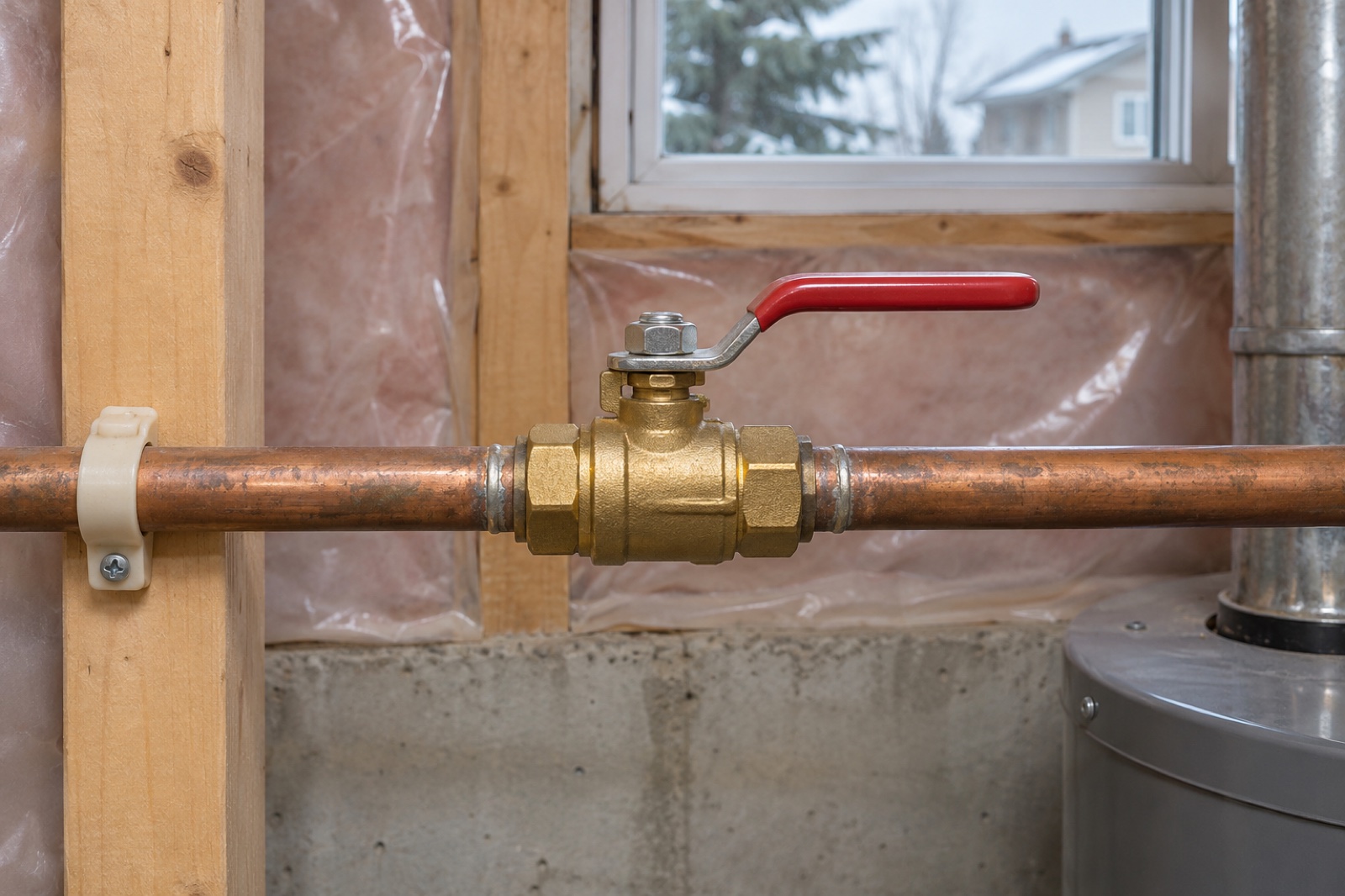
The main indoor shutoff is commonly near the point where the water service enters the building, often in the basement or mechanical area. Renovated houses can have several valves around a water meter, a filter, a water heater or a branch to an outside tap. Ask a plumber to identify the valve to operate in an emergency and make sure the people responsible for the property know the difference between the private shutoff and any equipment that must be handled by the utility.
Use readable labels and take two pictures. One should show the room and how to get to the valve. The other should be a close-up showing which handle to identify. If there is a meter and piping beside it, include those landmarks in the close-up. Write the directions from a place everyone knows, such as the basement stairs. Put a copy where it can be reached without entering the mechanical room, and keep one on a phone for an away-from-home call.
Talk to a plumber before trying an older, stuck or corroded valve. Forcing a handle can break it or cause another leak. If the plumber checks or replaces it, ask for a demonstration under normal conditions, when there is time to correct a problem. Find out what should happen at a fixture after the supply closes and what water can still drain out of the piping. Ask how to restore supply safely once the cause has been repaired.
Decide when a branch shutoff is useful
Some leaks are isolated to an appliance or fixture with its own working shutoff on a safe route. A washing machine supply may have a dedicated pair of valves. A toilet might have a stop at the wall. A concealed pipe between the main and one of these valves can continue flowing even after the fixture valve closes. Ask your plumber to identify the practical options during a routine visit and label any branch valves that would actually be useful.
Avoid adding too much detail to the emergency note. Someone arriving to wet floors and the sound of running water needs one clearly identified main shutoff, a safe access route and a number to call. Keep a separate list of branch valves for planned repairs. If shutting off the domestic supply has implications for another system at your property, ask the responsible trade what to include in the plan.
In a condo or multi-unit rental, check which person can operate shared valves and who has access at night. A resident may be able to shut a fixture valve while a superintendent handles a shared riser. Put the building's emergency number beside the plumber's contact and make sure everyone knows which one to use first. If a plumbing incident can affect another unit, include a simple method to alert those occupants when safe.
Leave the affected area if access is unsafe
During an active flood, keep people away from standing water, exposed wiring and affected equipment. If reaching the valve takes you through a wet area with possible electrical hazards, stay out and contact the appropriate emergency service, utility or qualified professional from a safe location. Give them the location of the shutoff and tell them how high the water appears to have reached, if you can see it safely.
Water also enters basements through foundations, doors and drains. Closing the domestic supply helps with a leak from the plumbing it controls. If water comes up through a floor drain or arrives during a storm, describe that to the plumber. Telling the responder exactly where you first saw water can help them choose the right equipment and investigation.
Keep a short log during the incident when it is safe to do so. Record the time you noticed the leak, when the water stopped, which valve was operated and which rooms were affected. Photos of the source and wet material can help the insurer and contractors understand what happened before repairs began. Avoid delaying an urgent call to gather documentation.
Coordinate the plumbing repair and the cleanup
Once the flow stops, ask the plumber to identify the failed part and determine whether adjacent piping or fittings were affected. If a pipe froze, the visible break might be one part of the affected run. Tell the plumber which rooms had little or no heat and whether any fixtures lost flow before the leak appeared.
A restoration contractor can check for hidden moisture in flooring, walls and adjacent rooms. Share the location and the timing of the pipe repair so the cleanup team knows whether water is still entering the assembly. Include a 24/7 flood restoration contact in your plan for an after-hours leak. Keep the contact list with the property address so someone taking the call can dispatch help to the right place.
After the repair, ask the plumber to show which valve positions are normal and how supply was brought back. Update the photos if the layout changed. Check that stored items leave a clear path to the main and that keys or access codes are available to the responsible people. A shutoff plan is small enough to practise when a tenant moves in or someone new starts managing the building. The next time someone hears water running where it should be quiet, they will have a safe, specific first step.
Run through the plan without a live leak
Pick a time when everyone is home and ask one person to find the shutoff using only the written directions. Leave the water on during this walk-through. Have them describe which handle they would use, where they would stand and whom they would call if the room were already wet. If the directions depend on furniture, boxes or other items that move, replace those clues with a permanent landmark. Repeat the exercise after any renovation that changes access.
For a rental property, hand over the plan during move-in and update emergency contacts when responsibility changes. If an on-call number uses an automated menu, give the caller a brief description of which option to use. Provide the building address and unit in the same note. During a leak, a neighbour who has never reported a problem there may be the person making the call.
If the property is sometimes empty, ask a plumber about leak alerts or automatic shutoff options appropriate to the supply system. Consider what the device can detect, how a signal reaches the responsible person and what happens if power or communications are interrupted. A remote alert still needs a person who can respond safely and arrange assessment. Test the notification process under ordinary conditions according to the manufacturer's instructions and keep the physical shutoff directions accessible.
After a real incident, update the plan while the details are fresh. Note whether the valve could be reached, whether the right person had access and how long it took to coordinate cleanup. If an appliance or branch was difficult to isolate, ask the plumber what adjustments are practical. Check the records for other properties you manage as well. Finding the shutoff on one house is a useful reminder to verify access in every house before pipes are under pressure and water is on the floor.