Can A Main Valve Be Fixed Without Street Shutoff In Calgary?
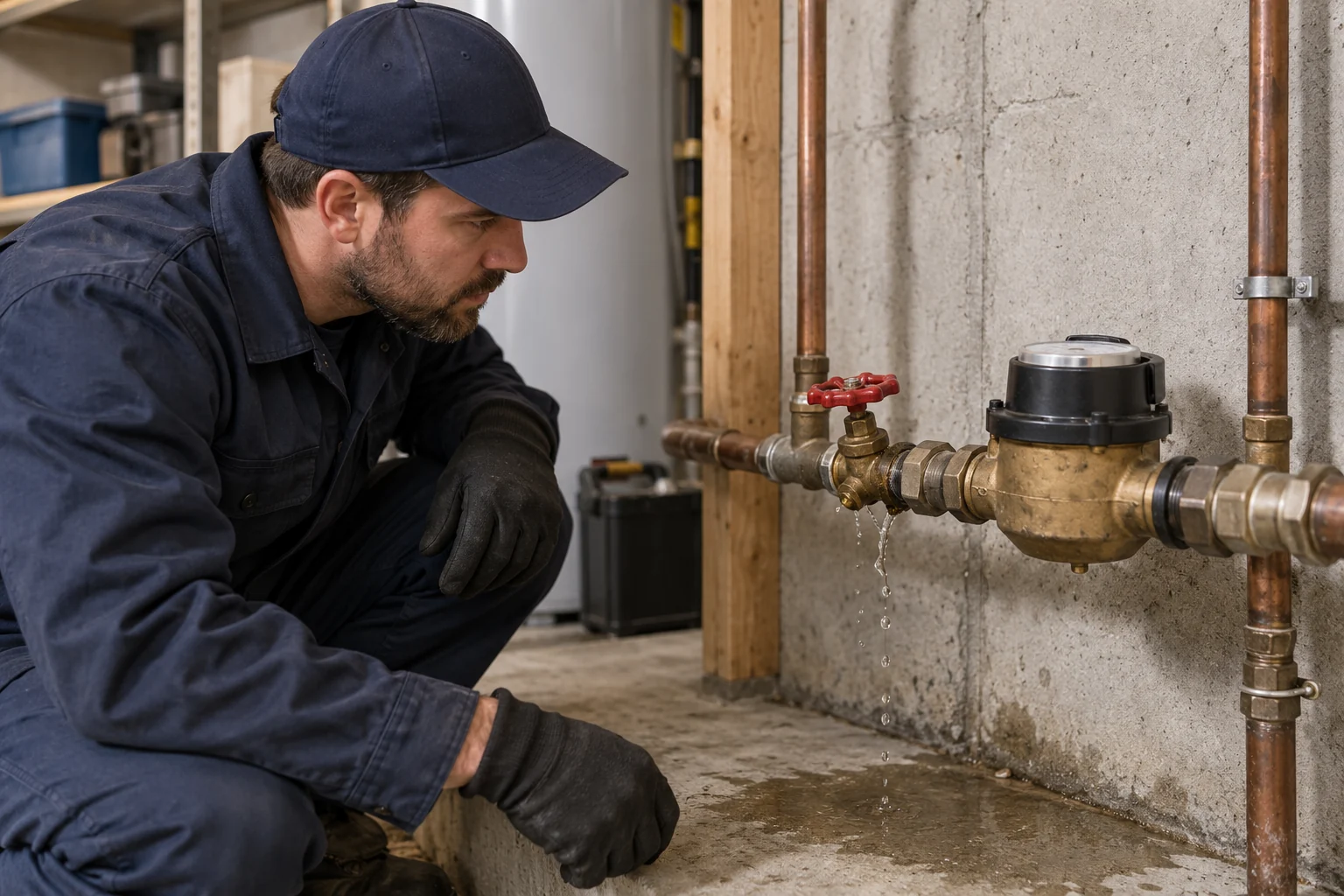
A leaking indoor main shutoff in Calgary may need upstream supply isolation before repair, because the faulty valve cannot necessarily isolate itself. Whether a street or service-side interruption is required depends on the property arrangement. Ask the plumber how it will be coordinated, and do not operate unfamiliar outdoor City controls or common building valves yourself. The pattern described in water leaking around the main shutoff valve can help explain where moisture may originate.
Clarify what the indoor valve controls
The household main normally sits in the domestic supply arrangement, but layouts and shared buildings differ. A fixture isolation valve may control only one branch, while a common valve can affect several units. Identify the actual component through the assessment rather than choosing the nearest handle. Our main shutoff guide gives domestic context, not permission to operate every control. The repair needs a reliable way to stop water feeding the section being worked on.
Understand why another control can be necessary
A repair on the valve itself may require isolation upstream of that component. A valve that leaks externally or does not seal can limit the available arrangement. Ask what has been confirmed and which control will be used. Do not assume the plumber can simply close the faulty main and remove it, or that a technique suitable at one property applies everywhere. Safe isolation should be established for the actual work before a component is disturbed.
Use Calgary service interruption guidance
The City provides water interruption and disconnection information for its service control arrangements. Refer to current instructions and ask who will coordinate the required step. A homeowner should not use an unfamiliar tool on outdoor infrastructure or excavate around a cover to avoid the process. Service controls, household repair and restoration of supply have distinct roles. Make sure the repair conversation accounts for each rather than assuming the indoor valve determines the whole sequence.
Include building management where supplies are shared
In a multi-unit property, upstream isolation can affect common piping or other suites. Notify the responsible management contact and identify who can provide authorized access to the mechanical area. Occupants need clear information about restrictions without being told to operate common controls independently. For riser pipe leak situations, the shared-system context is especially important. The arrangement should follow the building's confirmed piping and access requirements, not a detached-house checklist.
Keep the emergency description specific
Tell the plumber whether the valve is actively leaking, whether another source is also releasing water and whether safe access exists. A planned valve repair and an uncontrolled release need different immediate coordination. Keep people away from wet electrical equipment and unstable finishes. Do not repeatedly force the handle while waiting. For Calgary shutoff valve repair, those current conditions help establish what isolation and assessment are needed, without promising a universal dispatch time or method.
Ask what the interruption and repair scope includes
The proposal should describe the source-control arrangement, valve work, restoration checks and any steps handled by the City or another party. Ask how changes will be authorized if the condition is different once access is available. Do not compare an indoor component price with a broader coordinated scope as though they are identical. Access, shared occupants and related piping can affect the job. Clear boundaries prevent a service interruption from being mistaken for completion of the repair itself.
Confirm the usable control after completion
After the work and supply restoration, ask which indoor control is identified for future household response and what restrictions remain. Keep the operation information with the repair record. Restored pressure does not establish that wet materials or equipment are recovered. A useful handoff explains who completed each stage and what can safely be used. The answer to whether street supply must be interrupted is property-specific; the dependable rule is to coordinate the appropriate upstream control rather than improvise it.
Separate the isolation responsibilities
| Control context | Question to establish |
|---|---|
| Indoor domestic main | Does it reliably serve the source, and can the repair section be isolated through the confirmed arrangement? |
| Fixture or branch control | Which use is affected and what portion remains supplied? |
| Shared building control | Who authorizes access and coordinates affected occupants or equipment? |
| City service control | Who follows the current City process for the required interruption and restoration? |
A coordinated valve-repair planning checklist
- Active problem: explain whether the main leaks, fails to close or was found uncertain during routine preparation.
- Separate source: identify any downstream release that also needs control and repair.
- Access: state safe routes, locked spaces and shared-property restrictions before work is planned.
- Upstream arrangement: ask what control is suitable and who coordinates it, rather than choosing an outdoor alternative yourself.
- Authorization: identify the owner or management contact able to approve the defined work.
- Restoration record: retain the repaired component, controls operated, checks and remaining restrictions.
A coordinated interruption is not the same as completion of the valve repair. It creates the appropriate conditions for work, while the source assessment, replacement or repair and restoration checks each have their own outcome. Keep those stages distinguishable when sharing instructions.
Where another party provides a control step, ask how the timing and next contact are handled. Do not imply a guaranteed response window or that every property has the same isolation method. The arrangement depends on what can be confirmed at the site and through the responsible process.
Before occupants resume normal use, clarify any restrictions that remain. A valve can be repaired while material recovery or a separate leaking branch is still outstanding. A person hearing only that the street supply is back may otherwise assume every fixture is ready.
Finally, update the household reference for the indoor main. The goal is a reliably identified control with safe access, not teaching occupants to operate outdoor service infrastructure. If a future incident makes the route unsafe, the reference should support reporting the limitation rather than encouraging another attempt to reach the handle.
For a tenant or occupant meeting the plumber, clarify the responsible management contact before a common interruption is arranged. Providing entry and authorizing shared work can be different roles. The repair record should identify the relevant next contact so another person does not operate common controls based on an incomplete handoff.