Can I Patch A Pipe Until The Plumber Arrives In Calgary?
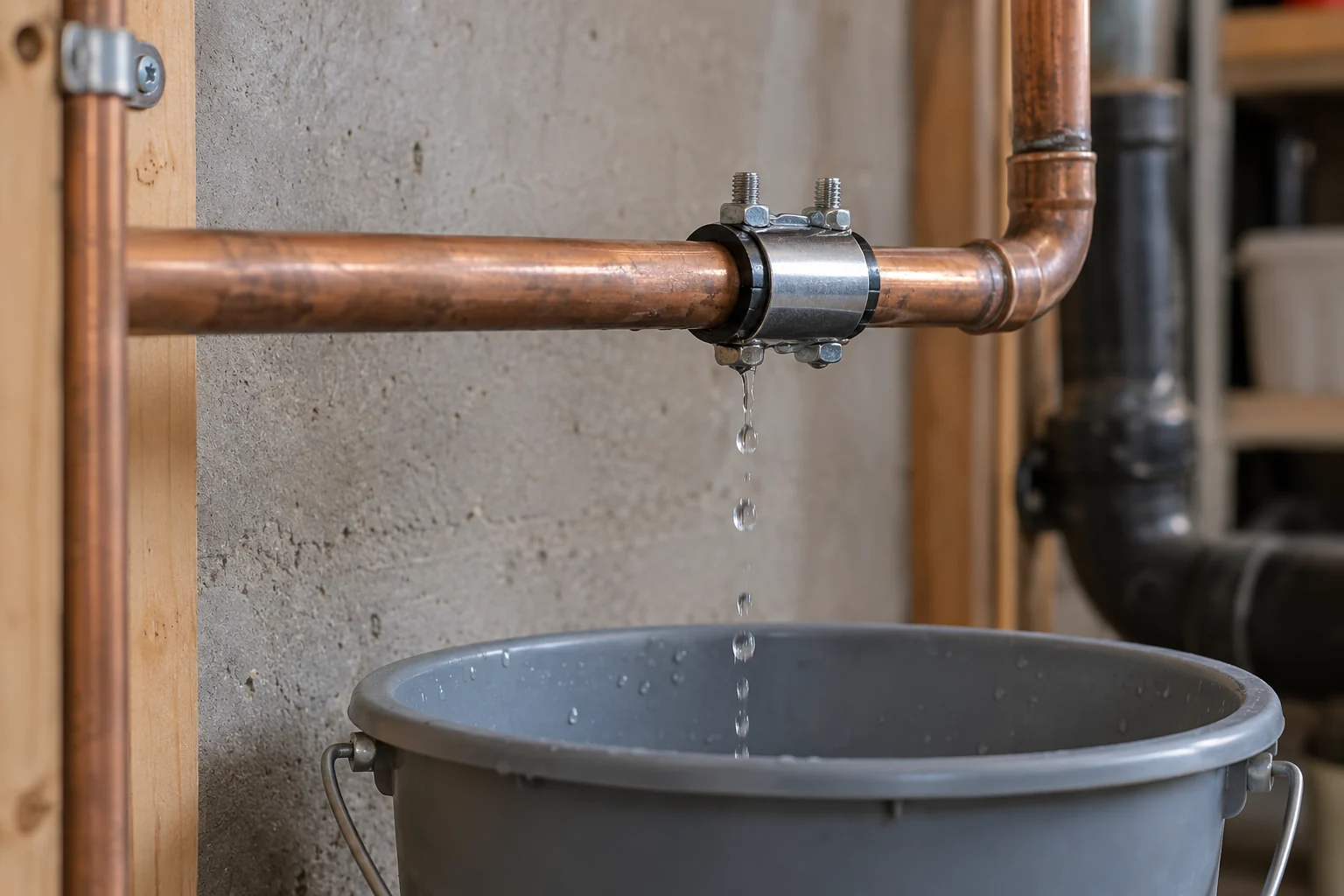
A temporary pipe patch should not be treated as a dependable substitute for safe water isolation and professional repair during a Calgary leak. Its suitability depends on the actual fault and conditions, and applying it can involve hazards. Do not approach water near electrical equipment or work on a pressurized damaged pipe by guesswork; obtain advice for the specific source. A temporary patch still needs a professional burst pipe repair that addresses the damaged section.
Distinguish temporary control from durable repair
A measure that reduces visible water briefly can have a different purpose from correcting the failed pipe or connection. Ask the responding professional whether any temporary step is appropriate and what restriction must remain. A pipe appearing dry after a patch is not proof of its condition under every use or pressure change. For Calgary burst pipe repair, the identified damaged section still needs a defined repair assessment. Do not describe a temporary stop as completion when the source has not been confirmed and corrected.
Start with safe known isolation
A working indoor control that serves the affected supply may reduce the release if it is safely accessible. Do not enter a flooded utility area, reach near wet electrical equipment or force a reluctant handle to achieve that outcome. Our main shutoff guide explains the domestic control context. If isolation is unavailable or ineffective, report that directly. Applying material around a fault should not become a workaround for an unsafe route or an uncertain control arrangement.
Avoid changing the failure before assessment
Wrapping, clamping or tightening by guesswork can disturb the damaged area, affect nearby joints or make the original symptom harder to assess. Do not pull on a split pipe, disconnect a fitting or use an improvised pressure test. The professional needs the visible condition and known history, not an attempt to make the repair look complete. A safe photo can help if taken without touching the source. Explain any action already performed honestly so the assessment accounts for it.
Keep product claims within their limits
A product sold for temporary use may have specific instructions, material compatibility and conditions. A general label does not establish suitability for a particular domestic pipe, drinking-water arrangement or active emergency. Do not assume a product can be used on every material or that it eliminates source assessment. Ask the plumber about the actual component and appropriate repair. An article cannot prescribe a patch method for an unseen fault or promise how long it will remain effective after the supply changes.
Do not let reduced flow hide remaining damage
A patch or closed valve can change the visible release while water already escaped remains in finishes. Alberta's cleanup guidance provides safety context for affected systems and materials. Do not use the smaller puddle as clearance for wet equipment or a damaged room. Source control, electrical evaluation and material recovery have different outcomes. Describe what changed and what areas remain affected so the next professional can assess the relevant conditions without assuming the incident ended when dripping reduced.
Communicate temporary restrictions to occupants
If the responsible professional leaves a fixture or branch isolated, keep that restriction clear. A household member may otherwise reopen the valve because the visible patch looks secure or another tap is working. In a shared building, management should coordinate common controls and affected suites. For water leak repair, ask how the temporary status will be documented and when the next decision occurs. A useful handoff names the restricted use instead of simply saying the leak is handled.
Complete the source assessment and retain the record
The final work should identify the damaged component, repair scope and relevant checks before use is restored. Record any temporary action already taken and what was subsequently corrected. If concealed areas remain outside scope, retain that limitation. A future leak should be assessed from actual findings, not a belief that a previous patch proved the whole run healthy. The dependable response is safe control followed by defined repair and recovery decisions, rather than an improvised product application being used as a guarantee against more water.
A temporary-control decision checklist
- Safe access: can the source be approached without electrical, contamination or unstable-finish hazards?
- Reliable isolation: is the affected supply controlled through an identified suitable arrangement rather than a handle position alone?
- Confirmed fault: has the failed component been assessed rather than inferred from a stain or nearby wet joint?
- Professional direction: has a property-specific temporary step been explained by the responsible professional?
- Use restriction: is it clear which fixture or branch must remain unavailable while source work is outstanding?
- Attendance: will the property be left unattended with only a temporary measure and no safe response available?
- Repair plan: is there a defined next assessment or source repair rather than an indefinite reliance on a patch?
The list is not an application guide. It helps clarify why a patch question cannot be answered reliably for an unseen pipe. The occupant can report the actual conditions and obtain appropriate advice without creating another release through an improvised attempt.
Keep three repair states separate in the handoff
An active leak, a temporarily controlled source and a completed assessed repair are different states. Tell the household which applies. A temporary measure can be useful when professionally directed for a confirmed situation, but its existence should not become permission to restore unrestricted use.
Ask which finding will establish the next stage. If a part or access arrangement is outstanding, keep that limitation visible and identify the responsible contact. Avoid promising that a temporary stop will hold for a particular number of hours without verified property-specific direction.
When the final repair is completed, retain both the earlier temporary action and confirmed outcome in the record. The sequence can help explain the incident to another trade or an insurer without claiming that a patch determined the cause or prevented all material damage.
Keep safe photos and any relevant original repair details available for the assessment. If an earlier temporary action changed the visible condition, explain what was done and when. Do not dismantle the patched section to recreate the original release or hide the action from the responding professional; the repair needs an accurate history of the current arrangement.