Does A Dripping Tap Always Prevent Frozen Pipes In Calgary?
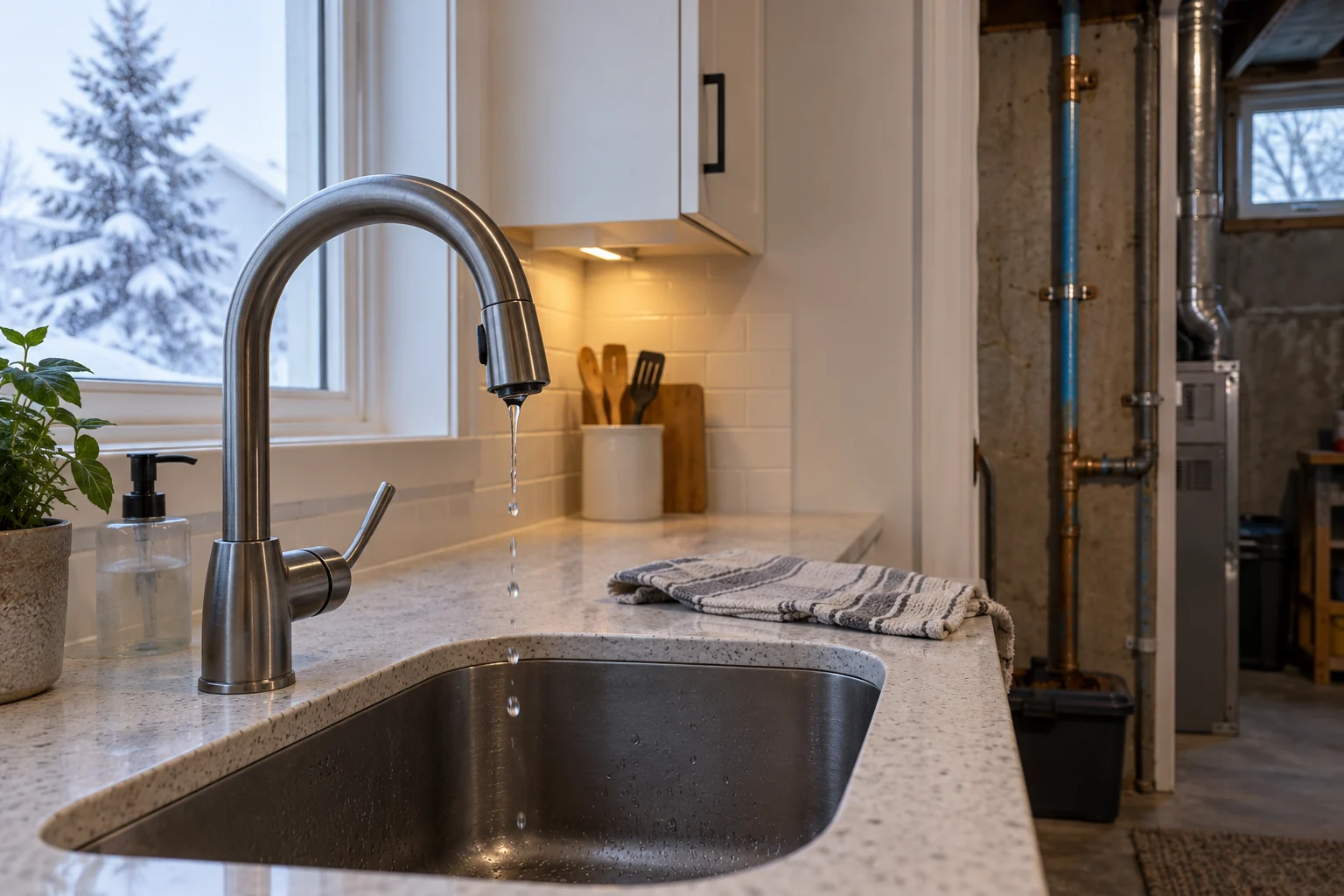
No. Leaving a tap dripping does not always prevent frozen pipes in Calgary, and it should not replace reliable heat, protection from drafts or proper winterization. The result depends on the affected pipe and conditions, and a dripping fixture does not necessarily move water through every vulnerable branch. If Calgary gives an address-specific freeze-prevention notice, follow that notice rather than applying a general internet rule to the whole house.
Know which pipe the flowing tap actually serves
Water moving to one faucet follows that faucet's supply route. It does not automatically circulate through a separate garage line, unused bathroom branch or seasonal outdoor connection. A homeowner who hears a tap running can feel reassured while another cold-exposed pipe remains idle. A protection plan should identify the vulnerable line instead of treating sound at a sink as evidence that all piping is protected.
Hot and cold sides can also involve different routes. A small trickle from one side does not establish protection for the other. Where the arrangement is unfamiliar, ask a plumber what the fixture serves and whether a controlled-flow instruction applies. Do not change several fixtures by trial and error while a line is already suspected frozen. Flow loss and active leakage need assessment on their own facts.
Distinguish City directions from an everyday household practice
Calgary's Frozen Pipes Prevention Program provides directions for identified properties. An actual notice can carry instructions relevant to the address and current conditions. Read the notice and use its contact information if anything is unclear. A neighbour's experience or an old social-media post is not a substitute for the directions supplied to your property.
Conversely, receiving no notice does not make private indoor piping immune to cold exposure. An exterior-wall branch can have a separate problem from a buried water service. Keep those systems distinct in the conversation. Ask whether the concern is an identified service-line risk, a private fixture branch or both. That distinction helps avoid extending one property's prescribed measure to unrelated household piping.
Keep reliable indoor heat at the centre of prevention
Water flow should not become a reason to turn off the heating system or leave an exposed room unheated. The City of Calgary's cold-weather plumbing guidance discusses indoor heating and draft control. A line beside an open garage door or inside a cold wall cavity can face conditions different from the thermostat location. A trip away from home calls for a broader winter travel pipe plan than leaving one tap running.
Use ordinary building heating according to its intended operation and address a heating failure promptly. Insulation may slow heat loss, but it does not supply heat indefinitely. Where the house will be vacant, check the applicable insurance policy's monitoring requirements and arrange a responsible contact. The prevention plan needs to remain effective during absence, power loss or an equipment problem rather than depend on a forgotten tap.
Consider whether the sink and drainage arrangement are suitable
A running faucet also sends water somewhere. An obstructed sink, closed stopper or drain already showing backup can turn a supposed prevention measure into an overflow. Never disregard a drainage problem because the supply line is the immediate concern. Follow any actual written directions and seek clarification where the fixture or drain condition makes them difficult to apply safely.
In a shared building, residents should not improvise measures affecting common services. Management can coordinate the responsible instructions and access. A household's prevention action should not depend on leaving an unreliable sink unattended. Tell the contact if you cannot provide a suitable arrangement, if the water is not flowing as instructed or if wetness appears. Changing conditions can require a different response.
Use this checklist before relying on a flow instruction
- Authority: identify whether the instruction comes from a current City notice or a professional assessment.
- Address: confirm that it applies to your property and present conditions.
- Fixture: establish which tap is intended and which line the measure addresses.
- Drain: report any obstruction, backup or unreliable disposal of the water.
- Heating: maintain the other required protection rather than substituting the tap for it.
- Monitoring: arrange observation appropriate to the actual instruction and household absence.
- Change: ask what to do if flow stops, leakage begins or the notice no longer seems applicable.
Keep the written instruction available to anyone checking the house. A handoff that merely says "leave water on" omits the fixture, purpose and response to failure. Those details matter more than a generic household habit.
Treat no flow as a warning, not a request for more force
If a tap produces little or no water during cold weather, forcing handles or repeatedly opening other fixtures does not locate the problem. Check the reported extent and whether there is a current public outage. Note visible frost only from an accessible safe position. Use our frozen pipe warning signs guide to prepare a clear description for the responsible contact.
Do not try to overcome the obstruction with an improvised high-heat method. Open flames and unattended heating equipment can introduce a second emergency. If the suspected line is concealed or conditions are uncertain, arrange professional assistance. Tell the plumber whether a City notice is in force and what was done under it. That prevents the private assessment from overlooking the service-line context.
Report active leaking separately from the prevention question
Water released from a pipe needs source-control attention even if the household was following a prevention instruction. Keep people away from electrical contact, unstable finishes or hazardous access. A known safely reachable indoor shutoff may be relevant, but an unfamiliar or ineffective valve should not be forced. In a condo or townhome, involve the building's responsible contact for shared systems.
Our Calgary frozen pipe service can assess the private plumbing concern. Explain whether flow loss came before the leak and whether the area has warmed. The instruction to maintain flow is not a diagnosis that the pipe is intact. A leak may require repair and a separate assessment of wet materials as well as clarification of the original prevention arrangement.
Build a prevention plan that does not rely on a myth
Once the immediate issue is assessed, ask what protection the vulnerable route actually needs. Draft repairs, reliable heat, suitable insulation, winterization or changes to routing may serve different installations. The answer should explain the specific line and exposure rather than promise that one dripping faucet makes every Calgary home freeze-proof.
Record the professional findings, agreed changes and current City instructions separately. Review the plan before travel or another cold spell, especially if fixtures or heating arrangements have changed. A useful plan makes clear who monitors the property and who to contact when conditions differ from normal. It replaces a broad rule with instructions that fit the actual building and its water system.