Can A Blocked Sump Outlet Flood A Basement In Calgary?
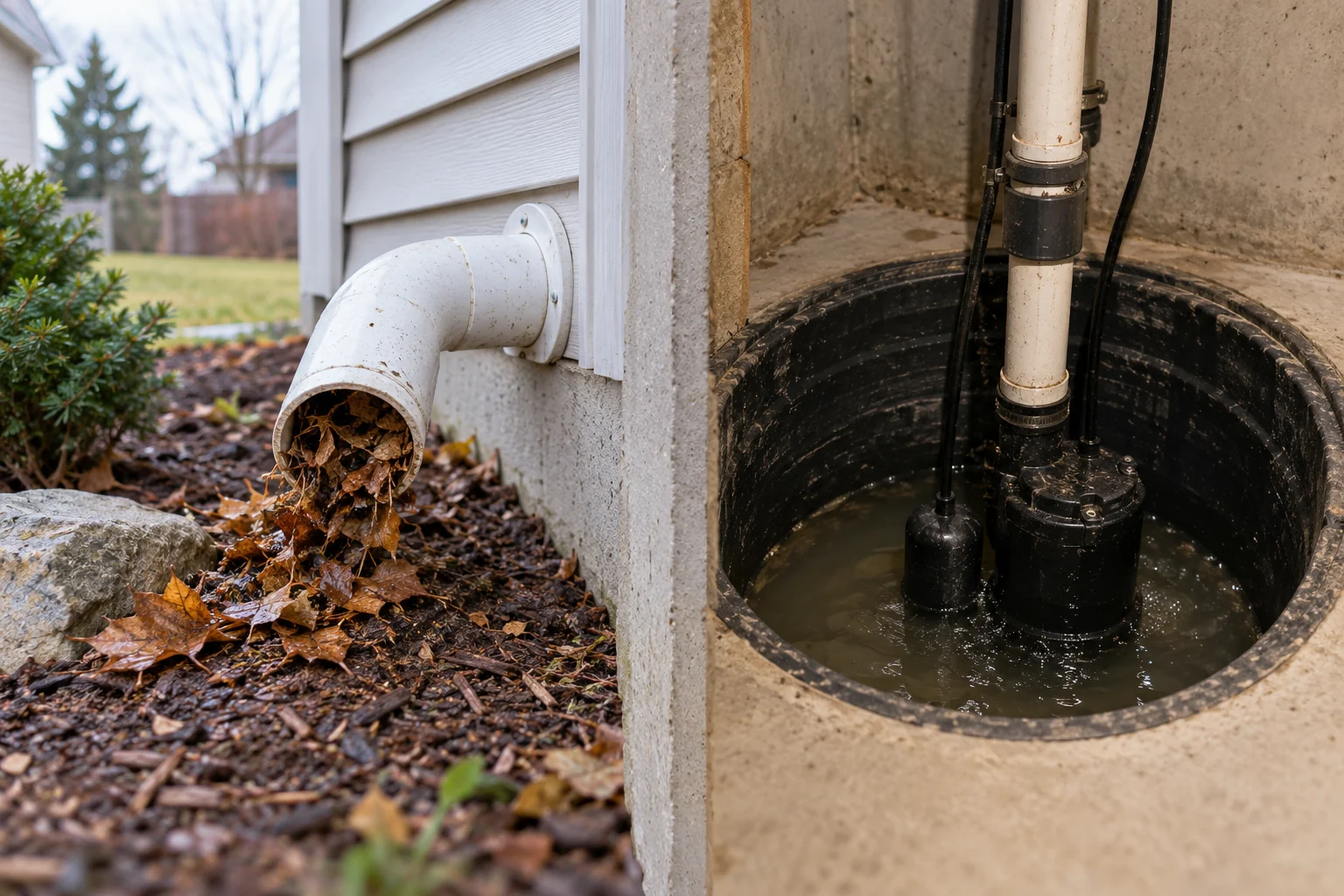
A blocked sump discharge line can flood a Calgary basement because the pump cannot move collected water out of the pit. The motor may run while the pit rises, or it may stop on an overload. Water then spills into the surrounding space or backs through connected collection points. Keep people out of wet electrical areas and contact a qualified service provider. Do not rely on the sound of a running pump as proof that water is leaving the building. A pump that runs without lowering the pit level may point to a blocked discharge or another fault.
Where a restriction can develop
Ice at an exposed outlet, debris, a kinked hose, a crushed buried run, a failed check valve, or a blocked fitting can restrict flow. The exact layout matters. A line with several bends or an improper endpoint can behave differently from a simple visible hose. Note when the problem started and what weather preceded it. Do not dig beside a foundation or cut a pressurized line based on an assumed blockage location.
Clues that point toward the discharge path
A high pit level with a running motor, weak or absent outlet flow, unusual noise, rapid cycling, or water returning to the pit after each cycle can all justify discharge inspection. None proves one particular blockage. A failed pump or exceptional inflow can look similar. Give the contractor the full pattern and the outlet location. Photographs of the exposed outlet or ice from a safe spot may help, but do not break buried or fixed components to investigate.
Why water may return even after it leaves the line
Discharge that ends too close to the wall can soak the same ground feeding the foundation drainage. Water may then return to the pit, making the pump run repeatedly. A line may also empty backward if its check valve fails. These are distinct faults, and the remedy depends on observing the actual route and flow. A contractor should verify where the water exits and whether the site’s drainage arrangement needs separate work.
What the repair should include
The service provider should identify the restriction, assess the pump and check valve, clear or replace the affected part as appropriate, and test under controlled conditions. Ask whether any temporary discharge arrangement has limits or needs approval. A thawed outlet may work briefly and then refreeze unless the underlying exposure or routing is addressed. Record the repaired route and the test result for future storms.
Respond to the water already in the basement
Fixing the discharge does not clean or dry the building. Restrict affected rooms, consider electrical hazards, and arrange appropriate water removal and material assessment. Alberta’s flood cleanup guidance covers practical concerns after water enters a building. Document the depth, duration, and affected materials. If the water may have come from sewage or another source as well, get that source assessed rather than treating every puddle near a sump as groundwater.
Map The Outlet Without Opening The System
Collect the discharge drawing, maintenance notes and location of any visible outlet from existing records. Tell the contractor whether the run is exposed, buried, shared with another pump or partly unknown. A diagram may no longer match alterations, so label it as a record to be checked. Site staff should not uncover a buried run, cut a hose or remove a basin cover to make the map more complete.
- Identify the basin and the known outlet location.
- Note exposed hose damage, outlet ice or another visible restriction from safe access.
- Give any recent excavation, landscaping or discharge-route change.
- State whether the complaint appeared during freezing weather, rainfall or thaw.
- Include any earlier restriction and what repair was recorded.
The Calgary sump pump repair technician can use that route information to plan inspection. An outlet concealed by snow or behind inaccessible property should remain described as unobserved. Absence of a reported flow is not the same evidence as a directly observed outlet with no flow while the pump runs.
Distinguish A Blockage From An Unsuitable Destination
A restriction keeps water from passing through the line as intended. A destination problem can occur even when water moves through it: the outlet may send water where it returns toward the building or creates another site issue. Ask the contractor to identify which condition was found. “Discharge problem” is too broad to show whether clearing a pipe, changing a component or reviewing the external drainage route is proposed.
| Finding | Follow-up question |
|---|---|
| Exposed obstruction | What led to it, and what reduces a repeat at this location? |
| Damaged buried run | What access and utility coordination does repair require? |
| Check-valve fault | How was return flow checked after the work? |
| Discharge reaches the building again | Which site-drainage provider should assess the destination? |
| Route not fully examined | What inspection remains before the cause can be closed? |
Review The Repair Under Relevant Conditions
If an exposed outlet was cleared, ask whether the underlying condition remains. A contractor should explain whether the work is a temporary restoration or a completed correction, and what must happen next. Do not describe a thawed outlet as permanently resolved without the service finding supporting that conclusion. The manager needs a specific follow-up rather than a general instruction to watch for flooding.
Ask the repair provider to document the section addressed and the observed flow at the intended outlet during its test. The basement-water and sump failure guide discusses related pump symptoms, but the completed job should be tied to this building’s discharge layout. If the line is shared, ask whether the review included the other connected pump and how that affects the result.
Carry The Building Damage Into A Separate Record
The point where water leaves the pit and the route it takes through the basement matter to recovery. Report which rooms were affected, which finishes or contents were wetted and whether electrical equipment was involved, all from safe access. The Alberta flood cleanup guidance provides general cleanup context while the responsible professionals assess the specific building.
When normal pumping resumes, keep any room restriction in place until its separate concerns are addressed. The maintenance entry should say the discharge was repaired and tested; the incident entry should show the cleanup and material work still open. That distinction prevents a repaired outlet from being used as an unsupported signal that a wet storage room or basement washroom can immediately reopen.