How Do I Prepare For An Emergency Plumber In Calgary?
Prepare for an emergency plumbing visit in Calgary by giving a clear address, describing active symptoms and arranging safe access to the affected area. Keep people away from hazards and have the responsible decision-maker available. Do not dismantle fixtures or enter water to speed the visit; preparation should support assessment rather than change the problem or put someone at risk.
Confirm the address and entrance
Provide the street address, unit or suite and the entrance that should be used. Mention locked gates, a rear entry, parking restrictions or a shared mechanical room. If the property is a business, explain whether staff or customers are present and who will meet the plumber.
A building name may not identify a specific entrance or service space. In Calgary shared buildings, the affected suite and the relevant mechanical access may be in different locations. Confirm who can provide each key or permission so the responding professional is not left searching for access that was assumed available.
Keep the current symptoms clear
Write a short note about what happened, when it started and what remains active. Include the fixture or room, whether the water is clean-looking or drainage water, and any pattern related to appliance use. You do not need to identify the failed part before an assessment.
For a visible ruptured pipe, burst pipe repair addresses the source. A blocked drain follows a different assessment route. Explain the observations instead of selecting whichever diagnosis seems most serious or familiar.
Preserve safe access to the work area
If the route is dry and safe, move small loose items away from accessible pipework or a fixture. Keep pets away and tell household members which room is affected. Do not shift a heavy appliance, remove cabinetry or open ceiling board without direction simply because piping may be behind it.
Water near electrical equipment, sewage exposure or sagging finishes may make access unsafe. Tell the plumber about that limitation before the visit. If people face immediate danger, contact emergency services; a planned repair arrival is not a substitute for an urgent safety response.
Record isolation without repeatedly testing it
Say which valve has been closed and what happened to the flow. If the main control was stiff, leaked or did not work, report that. Do not reopen a known faulty supply to demonstrate the leak or force the handle while waiting. Finding the main water shutoff in a Calgary home before the visit can save time when access is safe.
Our main shutoff guide supports preparation before an incident. During the emergency, a safe known control is useful, but unfamiliar shared valves or outdoor service equipment should not be operated by guesswork. A plumber or property manager may need to coordinate the shutoff.
Arrange repair authorization and relevant records
Have the owner, landlord or authorized business contact available to discuss findings and options. A person providing access is not necessarily able to approve every repair. Clarify that role before the visit where possible, particularly when the work may affect common piping or another unit.
If you have previous repair records or a relevant appliance model number already accessible, keep them available. Do not enter a hazardous area to find a label. Useful information can help explain earlier work, but it should not replace assessment of the current condition.
Prepare for a clear handoff
Ask how the plumber will communicate the identified source, proposed work and checks before restoring use. Note any fixtures that must remain isolated and any follow-up assessment outside the plumbing scope. Keep the record so everyone in the household or building receives the same instructions.
Alberta's cleanup guidance explains why affected materials and electrical systems may need separate attention. Preparing well means making those boundaries visible, not expecting a source repair visit to automatically dry, sanitize or reinstate every part of the property.
A practical arrival checklist
- Entry and meeting point: confirm the address, unit, entrance and person available so the responding professional can find the affected area.
- Known safety limits: identify restricted rooms and explain electrical proximity, contamination or unstable finishes without approaching them.
- Current water status: state what is active, isolated or unknown, including the control used and how symptoms changed.
- Access permission: arrange the responsible contact for shared rooms, other suites or business equipment where relevant.
- Household communication: tell occupants which fixtures must remain unused, avoiding an accidental restart while the repair is being planned.
- Useful existing records: have accessible prior repair information or model details ready, but do not enter a hazard to retrieve them.
- Authorization contact: identify who can discuss findings and approve work, especially when the person meeting the plumber has limited authority.
Prepare access without disturbing the leak
| Helpful preparation | Action to avoid without appropriate direction |
|---|---|
| Move small belongings along an already dry safe route. | Pull out a heavy or wet appliance to expose a suspected connection. |
| Write down when symptoms appeared and what was in use. | Run the fixture again to demonstrate water spreading into finishes. |
| Record the identified indoor valve already operated. | Force a reluctant control or try common building valves by guesswork. |
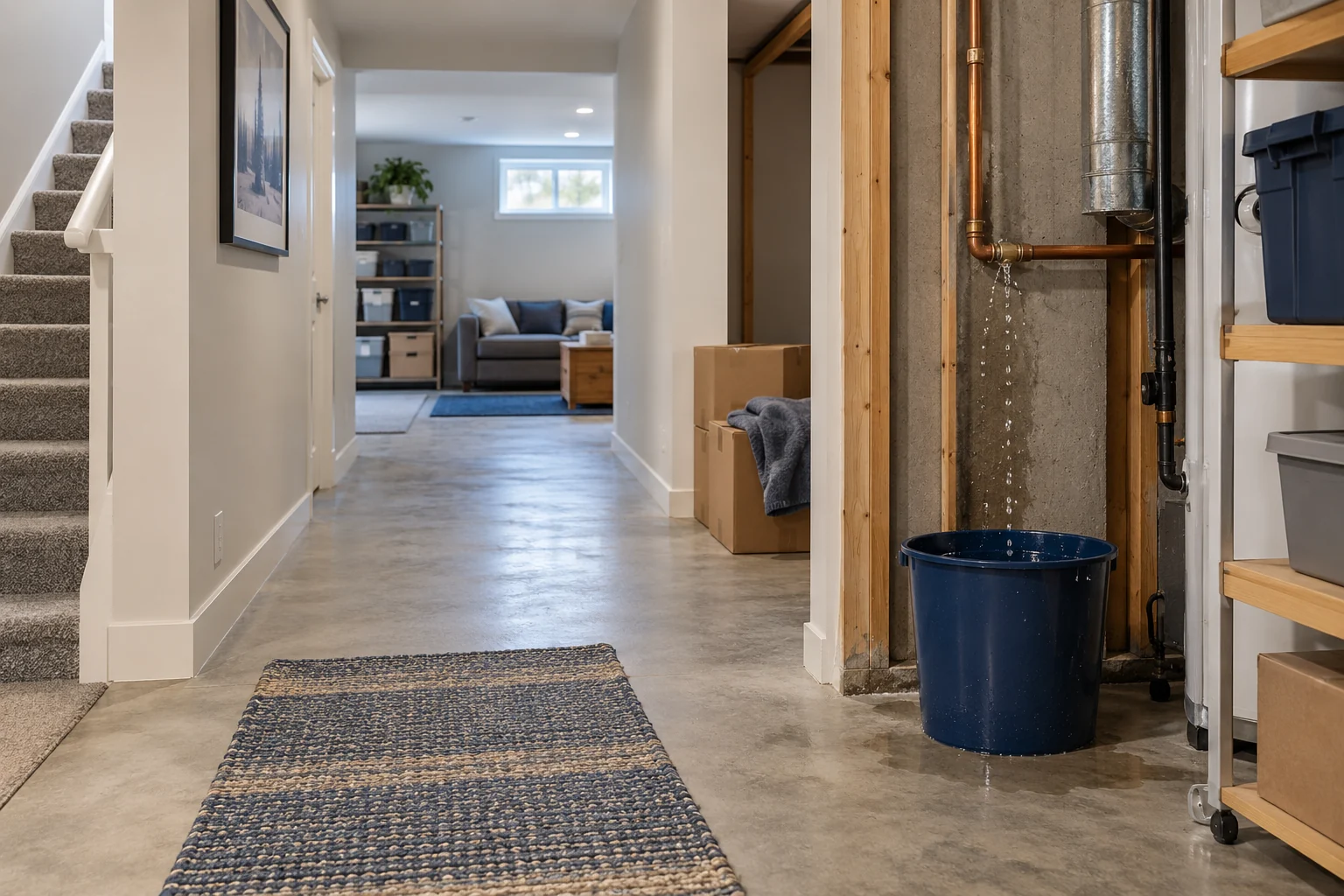
| Provide a safe photo showing the visible arrangement. | Open wallboard or a ceiling to obtain a more detailed image. |
The distinction is important because a repair assessment benefits from accurate conditions. An improvised tightening, opening or repeated test can worsen the source, introduce another leak or make the original pattern harder to understand. The occupant does not need to prepare the site like a technician.
Ask any practical preparation question during the initial conversation, explaining the access condition first. If a requested action cannot be done safely, say so. A professional can plan around a limitation more effectively than around a room that was changed by an unsafe attempt to help.
Finally, keep the person responsible for decisions reachable. An assessment may reveal a different source or access requirement from the first description. Clear communication lets the repair scope follow those findings while preserving the boundaries for material recovery, electrical evaluation and any later reinstatement.
Before the plumber leaves, walk through the practical restrictions with them. Which fixture can be used? Is a cabinet still open? Does another professional need to check wet flooring or electrical equipment? Write down the answers and tell everyone in the home, especially anyone returning later who did not see the repair.