Why Do Water Pipes Burst Without Freezing In Calgary?
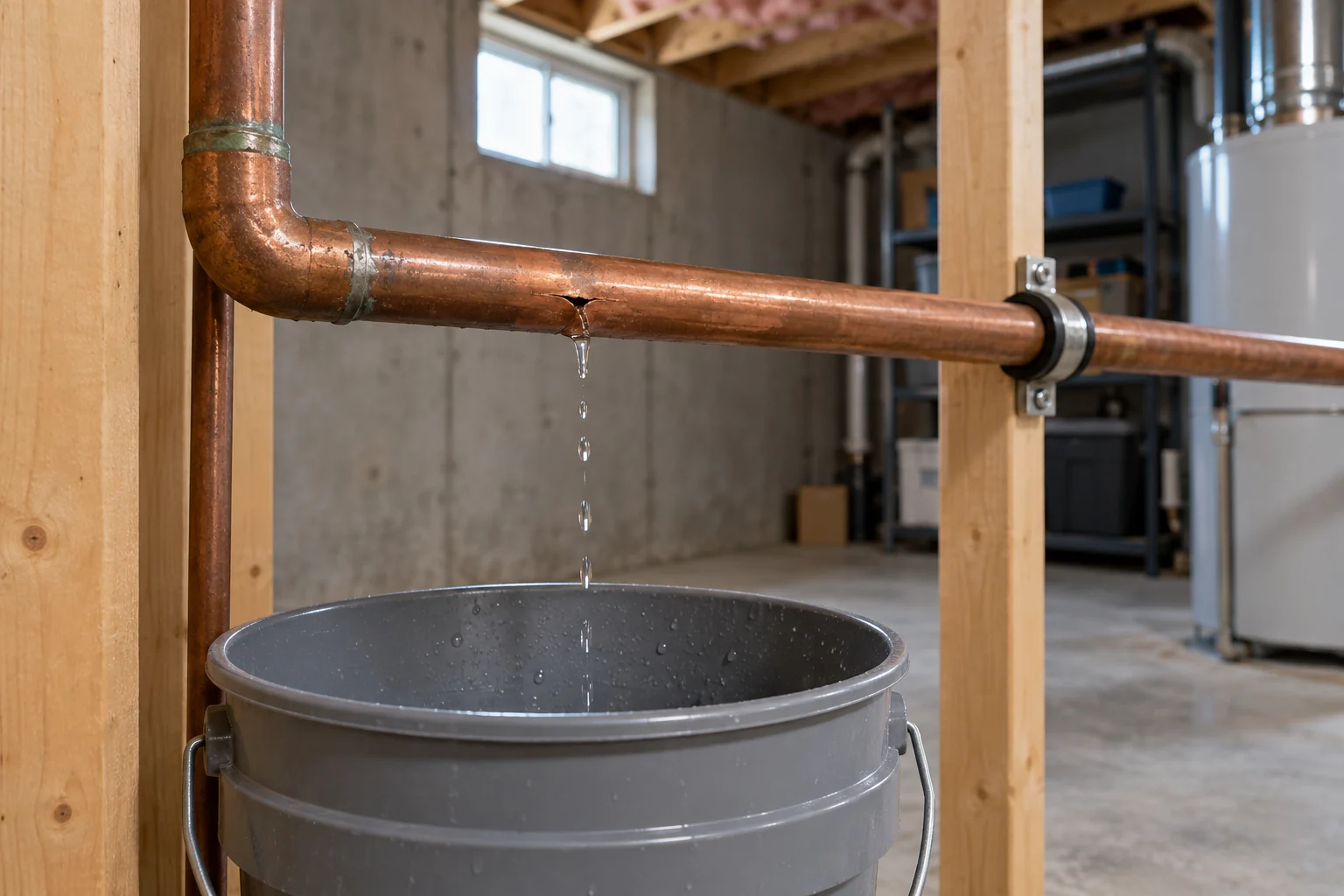
A Calgary water pipe can burst without freezing when a pipe or connection fails under conditions it can no longer tolerate. Material deterioration, a damaged fitting, movement or an inappropriate supply condition may be relevant, but the cause needs assessment. Do not assume warm weather proves the system is sound or that one repaired split explains every concealed pipe. After the source is identified, the professional burst pipe repair process shows what a defined repair should cover.
Start with the failure rather than a weather assumption
A visible split or failed connection identifies where water is escaping, but does not explain why it happened. Tell the plumber whether the area was heated, whether recent work occurred and whether another symptom preceded the release. Those observations can support investigation without establishing causation. A Calgary home can have a non-freezing failure during mild conditions, and a homeowner may also be unaware of exposure inside a concealed space. The repair record should state what was found and what remains uncertain rather than selecting a cause because it is seasonally convenient.
Consider pipe and connection condition
A deteriorated component may fail at a point that was not visibly wet beforehand. Age and material are relevant context, but an old system is not automatically defective throughout, and a newer connection is not automatically sound. Ask what the accessible condition shows. For burst pipe repair, the proposal should explain the damaged section and any assessed surrounding concern. Do not convert a single failure into a blanket statement that every hidden run needs replacement without supporting findings.
Review recent work and movement carefully
Mention an appliance being moved, a renovation or plumbing work if it actually occurred near the source. A connection can be affected by conditions around it, but timing alone does not establish responsibility. Avoid disturbing the damaged pipe or tightening neighbouring fittings before assessment. A useful history gives the professional context while preserving the condition as safely as possible. Ask how any proposed explanation follows the findings instead of assuming the last person who touched the room caused the release.
Ask about supply conditions where relevant
Unexpected pressure or other operating concerns may warrant professional review, particularly when several components show symptoms. Do not adjust pressure-related equipment by guesswork to prevent another failure. Calgary's home maintenance information provides local plumbing context, but the actual system needs assessment. A homeowner can report banging sounds, unusual flow or previous connection problems without claiming those observations prove a specific pressure fault. The professional should explain any checked condition and its limits.
Ask how the pipe material affects repair
If the property has known Poly B piping, ask how the current failure relates to the assessed material and connections. Poly B leak repair is a distinct source conversation, not permission to label every plastic pipe by appearance. An assessed localized defect and a wider system proposal require different evidence. Retain any known prior records. Do not assume one material name establishes the precise cause, future timing of another failure or a guaranteed replacement requirement for the entire home.
Separate source control from the cause review
The active release needs an appropriate safety and isolation response even before its full cause is known. Do not enter water near electrical equipment or force a reluctant valve. Our burst pipe response guide covers the immediate stages. Once control is established, ask what the source assessment supports and whether another condition needs follow-up. A successful repair can stop the visible failure while leaving a broader question appropriately identified as uncertain rather than ignored.
Document what prevention advice addresses
After work, keep the repaired section, checks and recommended follow-up. Ask whether prevention relates to a known exposure, material condition, connection arrangement or an operating concern. Do not accept a universal promise that one intervention will prevent every future leak. Material recovery remains separate where water affected finishes. If another symptom occurs later, describe its location and pattern using the record rather than assuming the same cause. The practical outcome is a repaired source and evidence-based follow-up, not a guess that non-freezing bursts always have one explanation.
Seven facts to gather safely
- Visible component: identify the pipe or connection only if it can be seen from a safe position, without touching the failed area.
- Room and access: explain concealed finishes, locked spaces or a shared-building arrangement that affects assessment and authorization.
- Active conditions: state whether water is still releasing and where it is travelling rather than reporting only its original discovery point.
- Isolation: report a known safe control used and how flow changed, including an ineffective or reluctant valve.
- History: mention earlier leaks, repairs or known material without inventing dates, failure rates or unsupported causes.
- Recent activity: record relevant work or equipment movement as context, not proof of blame or a reason to change the evidence.
- Safety: flag electrical proximity, unstable finishes or another immediate hazard before the ordinary repair discussion proceeds.
A description combining those facts can establish what needs prompt assessment without pretending the occupant can diagnose internal material failure. Keep uncertain explanations labelled as such when sharing the result with management, an insurer or another trade.
Compare the localized fault with a wider concern
A pipe section can have one visible defect while the professional identifies another condition worth reviewing. Ask which finding supports the wider concern. A history of several repairs can be relevant, but should not replace assessment of the present system. Conversely, a successful localized repair should not be described as proof that every concealed section is unaffected.
The estimate should connect each proposed task to a stated outcome. Source control, a section replacement and a broader condition assessment are different stages. Explain which one is needed now and which may follow access or testing. This helps the owner compare options without treating a larger scope as automatically better or a smaller price as equivalent work.
If the cause remains uncertain after immediate repair, retain that limitation and the follow-up recommendation. Documentation can be useful even when it does not name one definitive contributor. What matters is a safely controlled source, confirmed completed work and a clear next decision rather than a confident but unsupported explanation.