What If The Main Water Shutoff Will Not Turn In Calgary?
If your Calgary home's main water shutoff will not turn, do not force it with a wrench or extend the handle for leverage. A seized or damaged valve can fail and release more water. Keep clear of hazards, contact a plumber, and explain whether the problem is an active leak or a planned attempt to isolate the household supply.
Stop before a stiff handle becomes a broken valve
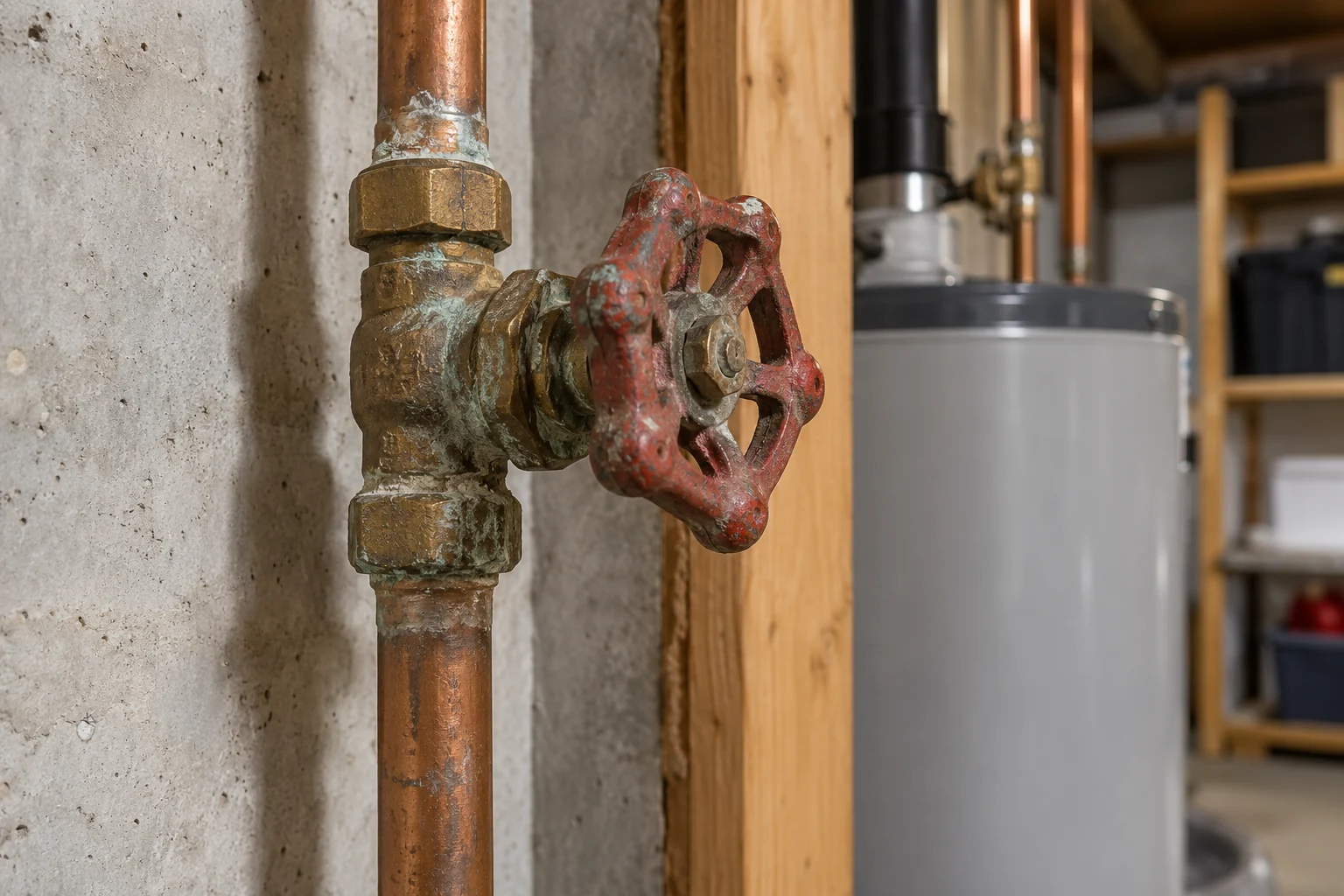
A valve may be difficult to operate because of its age, condition or an issue within the mechanism. You cannot identify that cause reliably from the resistance alone. Forcing the handle can damage the stem, body or nearby connection, turning a control problem into another supply leak.
If the valve begins leaking as you touch it, stop operating it. From a safe position, describe where water is appearing and whether another active leak is also present. Emergency shutoff valve repair considers the control itself as well as the isolation needed to work on it.
Distinguish stiffness from an ineffective shutoff
A handle that moves is not necessarily proof that the valve has stopped the supply. Likewise, water left inside the pipes can continue to drain briefly after a functional control closes. The relevant observation is whether the continuing release changes, not whether the handle reaches a position that looks correct.
Do not repeatedly cycle the valve to experiment while water is escaping. Note what you tried, how far the handle moved and whether a spray became a drip or remained unchanged. That information lets the plumber assess the isolation problem without additional strain on the component.
Describe the active source and nearby hazards
The urgency is different when the stiff valve is discovered during routine preparation versus while a pipe is releasing water. Tell the person taking your call if water is reaching a ceiling, electrical equipment or another suite. A source that is inaccessible or cannot be isolated may need coordinated action before ordinary repair access is possible.
Do not go into a flooded basement to try a second time. If the route becomes unsafe, stay out and explain that the indoor main cannot currently be reached. Immediate danger to people needs an emergency safety response, not further attempts to manipulate the valve.
Ask how water isolation will be coordinated
Replacing or repairing a main control requires a suitable way to isolate the supply upstream. Depending on the property, that can involve building management or City water service coordination. The available arrangement must be confirmed, not assumed from a general diagram or a neighbour's previous repair.
Calgary's service interruption information describes City service valve arrangements. A homeowner should not operate an unfamiliar outdoor valve or dig around a buried control in an effort to avoid that coordination.
Include building access in the repair plan
In a condo or shared property, the relevant upstream control may serve several units. Notify the responsible building contact and identify who can authorize access to the mechanical area. The plumber needs to understand shared supplies, affected occupants and any equipment that relies on uninterrupted water.
For a house, keep a dry route to the known control and meter area clear if it is safe to do so. Do not remove cabinets or disconnect piping yourself. Ask what access and preparation are needed so the planned work addresses the faulty control without adding avoidable disruption.
Confirm the replacement control and future use
After the work, ask the plumber to identify the repaired or replacement valve, explain its operation and show what checks were completed. Keep the area accessible and record any remaining limitations. Household members should know which control serves the domestic supply rather than using whichever handle is easiest to see.
The main water shutoff guide can help with preparation, while water leak repair addresses any separate source that prompted the shutoff attempt. A restored control and a repaired leaking pipe are distinct parts of resolving the incident.
What to report about a reluctant main valve
- The context: explain whether the resistance was discovered during preparation or while an active leak was already occurring.
- The control: identify the indoor valve and its room if known. If uncertain, say which handle was touched without claiming it controls the whole property.
- The movement: describe whether the handle moved normally, stopped early or did not move. Do not make another attempt just to give a more precise answer.
- Visible leakage: note water around the stem, body or adjacent connection, from a safe position. Moisture travelling along pipework can complicate the apparent source.
- The downstream result: report whether the original release changed. A handle position does not show that isolation is effective.
- The access: mention shared piping, locked rooms or hazardous water. These limitations belong in the plan before the valve repair is authorized.
Separate three different valve outcomes
| Observation | Assessment question |
|---|---|
| The handle will not move during a dry planned check. | The control needs condition assessment before it is relied on in a future incident; forcing it can create a release. |
| The handle moves but the active pipe release remains strong. | The valve may not be isolating the affected supply, or the source/control arrangement may be different from assumed. |
| Water appears at the control when it is touched. | The valve or nearby connection may itself need repair, by shutting off the supply farther upstream. |
These observations can overlap. An old valve may be both difficult to operate and unable to provide reliable isolation. Ask the plumber to explain which conditions are confirmed, what upstream control is required and what part of the arrangement will be repaired.
Do not reduce the issue to a replacement handle unless the actual assessment supports that scope. A visible component and the valve's internal function are different matters. The proposed work should show how the domestic supply will be safely restored and which control will be identified for future household use.
Keep instructions about any temporarily isolated fixture with the repair record. Restoring the main does not establish that a separate leaking appliance, pipe or drain is ready. A clear handoff avoids solving the control problem while another household member unknowingly restarts the source that made isolation necessary.