What Should Managers Note After A Sewer Backup In Calgary?
After a sewage backup in a Calgary facility, document where wastewater returned, when it was noticed, the safely observed affected areas, connected use stopped, contacts notified and the actual source findings. Keep City and plumbing reports, safe photographs, cleanup records and equipment checks together. Separate observed facts from suspected causes. The record should also show which areas remain restricted and who is responsible for remaining recovery work.
Record the incident before the details become inconsistent
Start with the address, unit, floor and return point. Note the person who first observed the backup and the time of that observation. Do not claim that discovery time is the precise start of the event if the area had been unoccupied. Record whether water was rising, stable or receding and any activity occurring just before it appeared.
A short factual timeline helps different shifts share the same account. Add significant updates, such as water reaching another room or continuing after use stopped. Keep staff observations attributed where useful and avoid turning their guesses into findings. A statement that a dishwasher was running is different from a conclusion that the dishwasher caused the sewer blockage.
Map the affected areas from safe observations
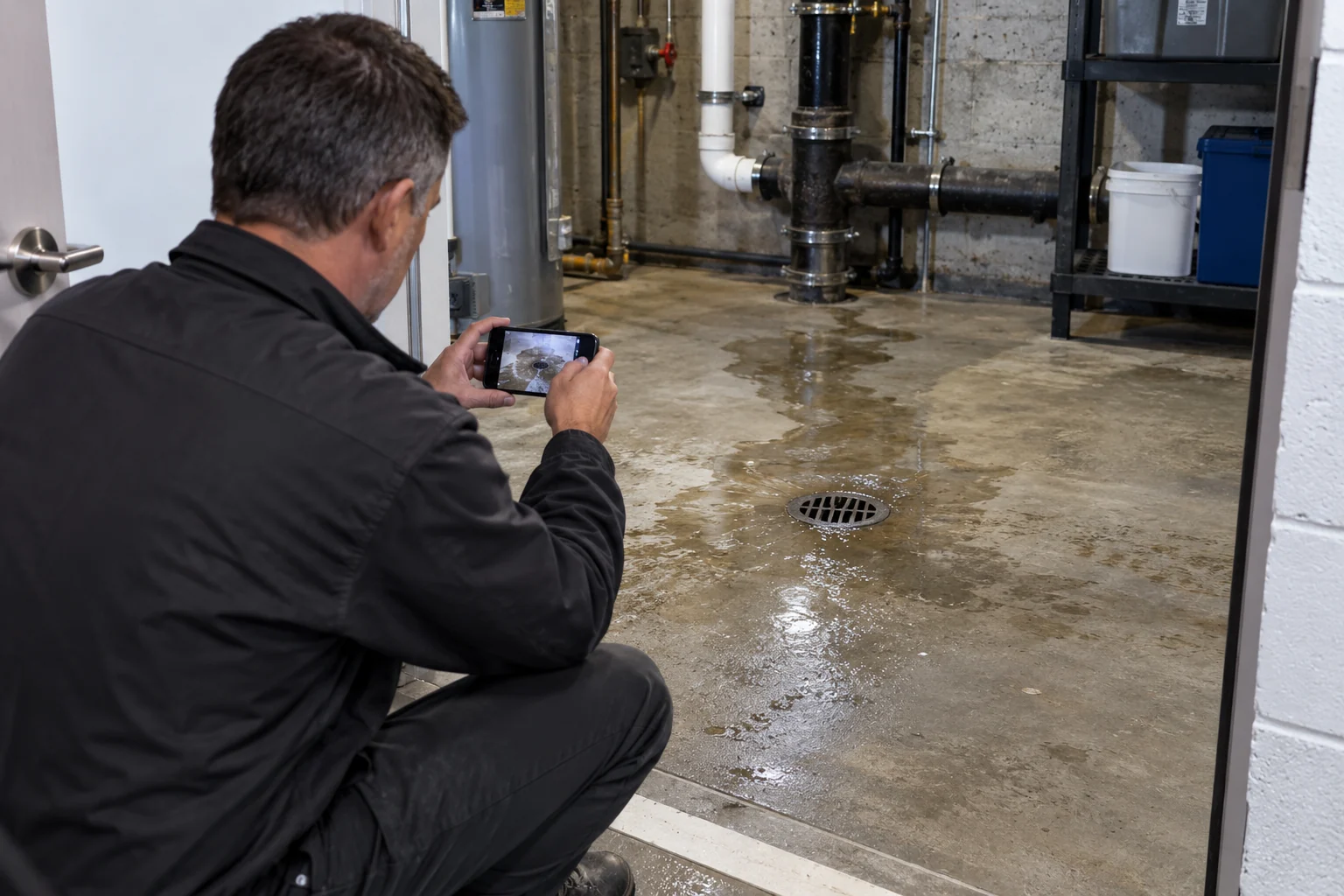
Photograph room overviews and visible waterlines only from positions staff can reach safely. Identify the rooms and surfaces in each image. Do not send someone across contaminated water, beside wet electrical equipment or beneath damaged finishes to complete the documentation. Explain any area that could not be safely observed.
Record inventory, equipment and building materials that may have been reached. Keep uncertain exposure separate from confirmed contact. A dry-looking top surface does not show the condition beneath flooring or inside packaging. Management needs that uncertainty so the appropriate cleanup or equipment specialist can inspect it. Photographs are useful evidence, but they do not replace those professional checks or authorize reopening.
Keep the first restriction and contact record
- Connected use: identify which fixtures and machines were stopped.
- Restricted area: name the rooms or routes unavailable to staff and visitors.
- Staff notices: record how the instruction reached security, cleaners and incoming shifts.
- City report: retain the 311 reference and actual directions.
- Contractors: identify plumbing, cleanup and relevant equipment contacts.
- Approvals: note who authorized entry, source work and any later expansion.
- Products: disclose any drain chemicals or cleaners involved.
- Updates: record who changes restrictions and why.
Calgary's sewage backup guidance explains reporting to 311 for triage. Keep the response as supplied rather than paraphrasing it into a guarantee about responsibility or repair timing. The private contractor should know the reference and instructions where relevant to the investigation.
Replace theories with confirmed source findings
The initial report may suggest a local drain problem or a wider sewer issue. After investigation, add the actual finding and the route examined. Ask the plumber to state what was cleared or repaired and what remains uncertain. Do not label the whole sewer inspected if access or visibility limited the work.
For Calgary commercial sewer backup repair, retain the completed scope and any recommended follow-up. If further inspection is proposed, record what it aims to establish. A flow restored after clearing is an important result, but it does not automatically explain every recurring condition. Management should be able to see that difference in the record.
Document cleanup as work with its own scope
Identify who handles contaminated water, affected materials, drying and reconstruction. Keep their reports and instructions separately identifiable within the incident file. A plumber's source-repair invoice does not document all of that recovery. Ask the cleanup provider which areas were addressed and what remains restricted or awaits additional work.
Alberta's flood recovery guidance discusses affected utilities and materials. For a commercial site, the responsible professionals should apply the guidance and requirements appropriate to the actual use of the space. A restaurant, clinic or public facility may need decisions beyond an ordinary office cleanup. Record the relevant professional or authority instructions rather than invent a universal reopening standard.
Keep equipment checks separate from exterior cleaning
Equipment exposed to water may need a qualified technician or manufacturer service provider before reuse. Record which machine or utility component was affected, who checked it and the actual result. A cleaned exterior or successful startup does not establish that all internal parts are safe. Staff should not restart restricted equipment simply to help complete the incident file. A restaurant needs additional food and kitchen decisions after wastewater backs up into a preparation area.
Where specialist water-fed equipment is involved, distinguish the building-side plumbing repair from the machine's service. Both providers need the incident information and previous work performed. Keep remaining restrictions visible at shift changes. An instruction buried in an invoice can be missed by employees who see only that the room is dry or the drain is operating again.
Provide the insurer with accurate facts
Notify the insurer and ask what documentation, authorization and item records are required. Keep claim references and instructions with suitable access for the people handling the loss. Coverage depends on the actual policy and circumstances. Do not change an uncertain source into a favourable claim description or assume a contractor's advice guarantees reimbursement.
Keep landlord and tenant communication where the premises are leased or the route is shared. Plumbing findings can help explain the location and work, but they do not decide legal liability. Record approvals and known obligations without asking the plumber to interpret the lease. A factual file is useful to the parties; unsupported statements assigning blame make the incident harder to resolve.
Close the record with assigned remaining tasks
Our sewer backup response guide explains how first actions fit with source work and recovery. At the end of each stage, list the next task and the person responsible. Include any inspection, equipment service, restoration or further plumbing investigation not yet complete. Do not close the incident as fully recovered while those tasks remain open.
When restrictions change, record the reason and communicate it to the people using the facility. Save the final source findings and prevention recommendations for future maintenance. If another backup occurs, this file should help the next contractor understand the route, earlier work and new pattern. The value of documentation is a clear account of what happened and what was done in the Calgary facility, not a large folder of unlabelled pictures or assumptions.