What If Sewage Reaches A Restaurant Kitchen In Calgary?
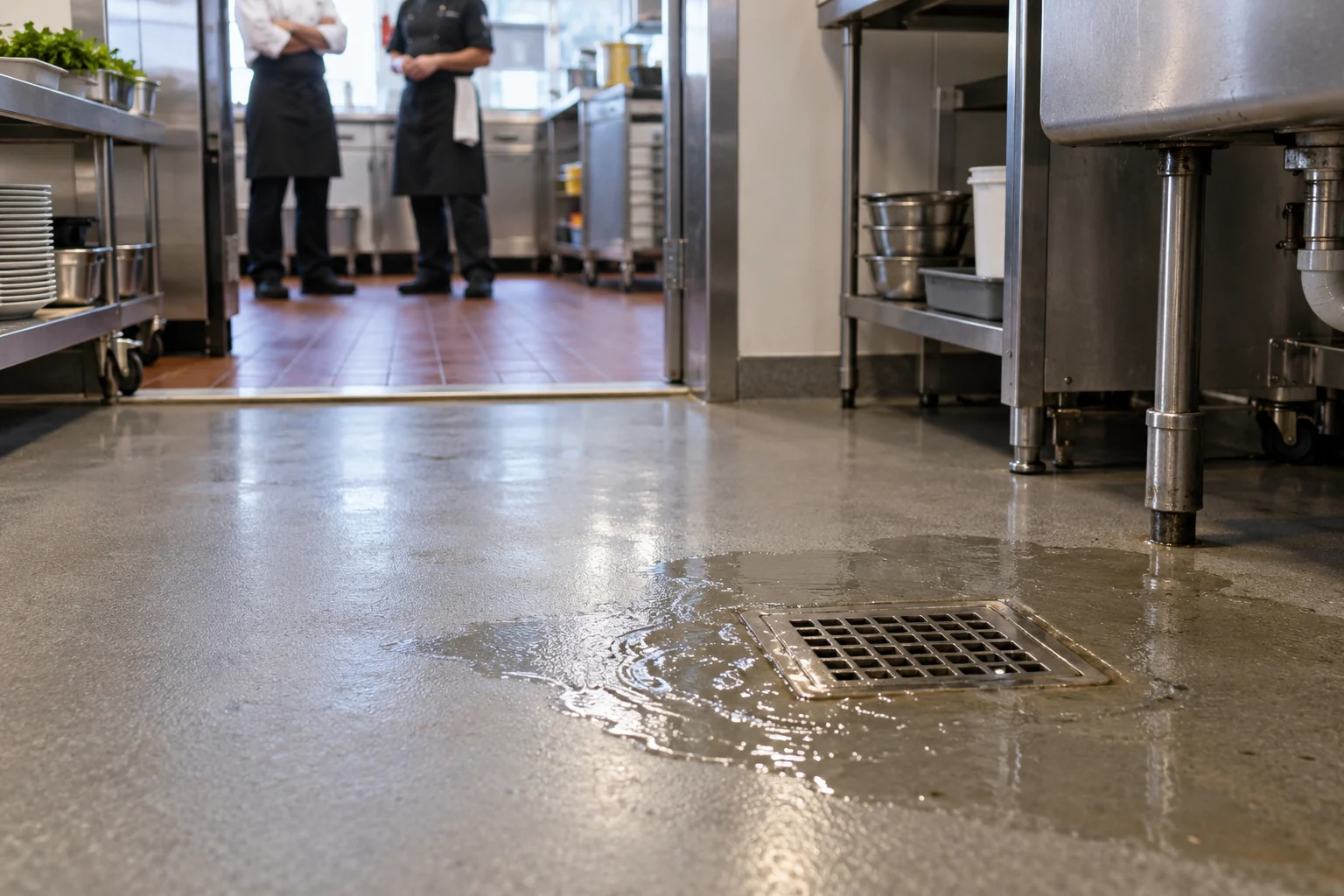
If wastewater backs up into a Calgary restaurant kitchen, stop affected food preparation, keep staff away from contaminated or electrically hazardous areas and stop discharges that can feed the backup. Notify responsible management, call 311 for sewage-backup triage and arrange private plumbing help where required. Follow Alberta Health Services guidance and contact Environmental Public Health for the actual food-facility situation. Clearing the drain alone does not make exposed food, equipment or surfaces ready for use.
Stop the affected operation before protecting the service schedule
The kitchen's use changes the consequences of returning wastewater. Food-contact surfaces, packaging, utensils and equipment may be involved even if the overflow began at a floor drain. Management should not ask staff to work around contaminated water to complete orders. Establish a restriction that keeps people and food handling away from the affected conditions.
Tell the shift supervisor, dishwasher staff, cleaners and front-of-house manager what has happened. A cook stopping sink use is not enough if another employee starts a dishwasher cycle. Customer communication is management's responsibility, but staff need a clear operational instruction first. It should name the affected work and equipment rather than simply ask everyone to watch the floor.
Stop discharges without guessing at equipment controls
Identify the activity that preceded the backup and stop further connected use. Sinks, dishwashers and other water-fed equipment can contribute discharge. If a machine is already operating, use only its normal safe controls or obtain suitable advice. Do not handle wet electrical connections, bypass a protection device or rearrange drain hoses to maintain service.
For Calgary commercial drain and sewer backup repair, tell the contractor what equipment was running and where wastewater appeared. State any drain chemicals already used. If the route is unknown, say that instead of declaring a grease-interceptor problem or a broken sewer. The source needs investigation; keeping an unsupported diagnosis out of the call helps that work.
Report the event through the right channels
Calgary's sewage backup guidance explains reporting to 311 and triage of public infrastructure versus internal plumbing. Provide the address, unit and affected drainage. Retain the reference and instructions, then share them with the private contractor where relevant. A report does not decide the restaurant's reopening requirements or guarantee that a City crew will repair private components.
Alberta Health Services provides guidance for food facilities after a sewage backup. Use the applicable guidance and contact Environmental Public Health about the actual incident. A manager should not substitute a plumber's source-repair completion for the food-safety decisions needed before preparing food in an affected space.
Organize the kitchen report before the plumber arrives
- Return point: identify the floor drain, sink or other fixture where wastewater first appeared.
- Discharge: name the equipment or activity running immediately beforehand.
- Extent: describe the affected work areas from safe observations.
- Food involvement: identify potentially exposed food, packaging and food-contact areas for the responsible food-safety review.
- Chemicals: report any drain product or cleaner already present.
- History: provide prior clearing and grease-interceptor service records where relevant.
- Access: explain cleanout locations, locked areas and any hazard blocking the work route.
- Approval: identify who can authorize repair and coordinate the landlord if needed.
Do not open cleanout caps or move equipment through contaminated water to complete this list. Missing access information can be explained in advance. The contractor and management can then plan how the source will be reached without turning preparation into untrained drain or equipment work.
Keep food and packaging decisions separate from plumbing
Potentially contaminated food and packaging should not be returned to use because a container looks dry after the event. Follow the applicable AHS direction and responsible food-safety advice. Keep affected or uncertain items segregated and document them appropriately. Do not ask a plumber to certify that stock is usable: identifying a pipe source is a different task.
Contact the insurer about documentation and authorizations while following necessary safety and health requirements. Coverage depends on the policy and incident, not the size of the backup. Photographs can help record exposed areas if taken from safe positions. Keep the item decisions, source findings and cleanup record together so management can explain what was affected and how it was handled.
Plan cleanup, equipment checks and source repair together
The drainage may need clearing or repair, while the kitchen needs appropriate cleaning and other recovery work. Ask who handles each scope. Wet electrical or gas-fed equipment can require a qualified check before reuse. Do not restart equipment simply to demonstrate that the drain now accepts water. The equipment provider may also have relevant procedures for the affected machine.
Our sewer backup response guide explains the distinction between the first response and restoring the space. The responsible food-facility manager should coordinate applicable health guidance, cleanup and operating decisions. A single service invoice should not be treated as proof that every food-contact surface, concealed material and utility system has been addressed.
Investigate recurrence without assigning a cause too early
Once the immediate backup is controlled, ask what the contractor found. Grease accumulation, unsuitable discharge practices, equipment-related issues and pipe defects require different evidence and work. Provide reliable interceptor maintenance records and earlier inspection reports rather than assuming busy service proves a capacity problem or staff conduct caused the blockage. A repeated kitchen backup calls for the same evidence-based question as a recurring commercial drain blockage.
If further inspection is recommended, ask what it will establish and how that finding affects the repair choice. Clearing may restore flow without explaining a repeat incident. Keep the contractor's report and any visibility or access limitation. A maintenance plan should fit the findings, with assigned responsibilities and a clear response to new slow drainage or returning water.
Reopen using the actual completed checks
Before affected food preparation resumes, management needs the appropriate food-safety, cleanup, equipment and plumbing information. Follow applicable AHS instructions and any directions issued for the incident. The drainage operating again is one part of that record. It does not by itself establish that exposed food is suitable, equipment is safe or the affected kitchen meets its operating requirements.
Tell the next shift exactly what is available and what remains restricted. Keep the completed scope, source findings, food disposition and follow-up responsibilities together. A Calgary restaurant's response should protect staff and customers first, then restore the kitchen through the right work and decisions. It should never reduce a sewage backup to a hurried drain clearing followed by an automatic return to service.