Poly B Spot Repair Or Repiping: Which Fits In Calgary?
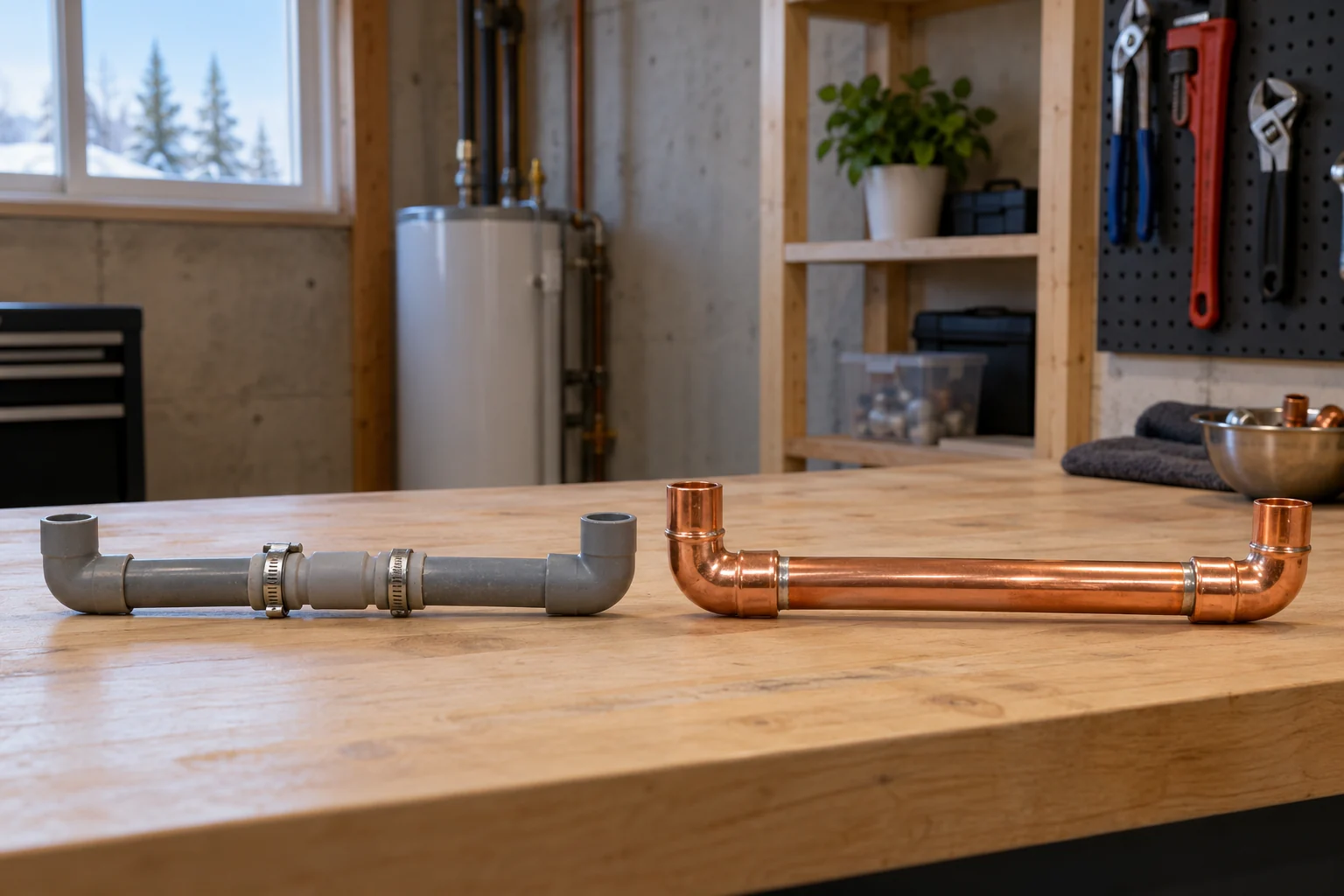
When comparing a Poly B spot repair with repiping in Calgary, start with the confirmed failed component and ask what each option replaces, leaves in place and requires for access. Include water interruptions, permits where applicable, wall and ceiling repairs, and any remaining service-line or shared-system exclusions. A cheaper local repair and a wider replacement are different scopes; neither should be judged from the headline price alone.
Establish whether you are choosing emergency work or planned work
If water is actively escaping, controlling that release is the immediate task. A homeowner may need an urgent repair before there is time to plan wider replacement. Ask whether the proposed intervention is temporary or a completed local repair, and what restrictions remain afterward. That distinction prevents a temporary isolation from being remembered as a permanent solution.
Once the source is controlled, a wider project can be discussed using the actual findings. Our Calgary Poly B repair service can investigate the leak and explain the boundary of that work. The separate pipe leak response guide covers first actions when water is spreading. A long-term estimate should not postpone safe source control or treatment of an immediate hazard.
Ask what evidence supports wider replacement
One leaking part, repeated documented failures and a planned renovation can lead to different discussions. Ask the contractor which observations support the recommendation. Were other accessible joints leaking? Was a broader operating concern measured? Are several previous repairs recorded? Keep those facts distinct from a general claim about the material's age. A record of Poly B fittings leaking in several locations matters more than an unverified account of a single wet cabinet.
Calgary's home maintenance information does not call for automatic replacement of problem-free Poly B just because it exists. A leaking installation needs its own evaluation. The homeowner can still choose planned replacement, but the estimate should explain whether it is intended to address confirmed failures, reduce exposure to remaining material, coordinate renovations or satisfy another stated requirement.
Draw the replacement boundary in plain language
The phrase "repipe the house" can conceal important differences between quotes. Does it mean all interior hot- and cold-water supply lines, only the basement distribution or a named group of fixtures? Is the underground service included? What happens at common building supplies or inaccessible sections? Ask for a route or room list that makes the scope understandable.
For a spot repair, identify how far the new section extends and where it joins existing material. For wider replacement, identify every excluded branch. A small amount of remaining material may matter to your objective, particularly if the purpose is to remove a specific material throughout the property. Do not describe the house as completely replaced afterward unless the completed record supports that statement.
Compare the parts of the estimate side by side
| Estimate item | Question to ask |
|---|---|
| Pipe routes | Which rooms, fixtures and supply sections are included? |
| Connections | Where will new work join existing piping or equipment? |
| Access | Who opens walls, ceilings, cabinets or other finishes? |
| Restoration | Are finish repairs included, allowed for or handled separately? |
| Water use | What interruptions and temporary restrictions are expected? |
| Approvals | Who handles required permits and building permissions? |
| Unexpected findings | How will extra work be priced and authorized? |
Use the same questions for each contractor rather than assuming one quote includes what another names explicitly. If an item is an allowance or an exclusion, keep it visible in the comparison. An estimate that clearly identifies uncertainty is easier to evaluate than a short number that leaves the homeowner to discover exclusions after the work starts.
Consider the household's access and water needs
Replacement may require access through occupied rooms and around fixtures. Ask which rooms must be cleared and what remains usable at the end of each work period. Discuss the household's actual needs, including occupants who rely on particular bathrooms or equipment. Do not assume a standard schedule applies to every finished Calgary home.
A future renovation may make some openings easier to coordinate, but an existing leak still needs control. If work will happen in phases, ask what remains between phases and how the transition is managed. For a rented property or shared building, clarify entry permissions and who communicates interruptions. Plumbing work becomes much harder when the contractor, occupant and owner have different understandings of the access plan.
Check permits and finish responsibilities before signing
Calgary's plumbing permit guidance helps identify the approval process for the actual work. Ask the contractor which requirements apply and who obtains the necessary approvals. Do not assume that calling a project a repair removes every permit requirement, or that a homeowner can authorize changes to a common building system alone.
Wall and ceiling restoration also needs a named responsible party. Determine whether the plumbing contractor provides that work, whether another contractor is required and how openings will be left in the meantime. Ask about cleanup and protection of household contents. A plumbing quote may be entirely reasonable while excluding decorating, but the homeowner should know that before comparing it with an option that includes more finish work.
Separate policy requirements from plumbing findings
If insurance considerations are part of the decision, contact the insurer with accurate material and inspection records. Ask what documentation it requires and whether its requirements address the whole installation or a specific section. Do not rely on a contractor's assurance that a particular scope guarantees coverage or a lower premium. Those decisions belong to the insurer and the policy.
The same distinction applies to a planned sale. Ask the appropriate real-estate or legal professional about disclosures rather than treating a plumbing estimate as legal advice. A contractor can document what was inspected and replaced. That documentation is most useful when it states the actual boundaries and does not describe a partial interior project as replacing an underground service or uninspected common piping.
Choose the option whose scope matches your objective
- Ask whether this quote stops the identified leak or replaces named supply routes.
- Confirm any interior pipe, service line or shared supply that remains outside the project.
- Keep a written list of finish repairs and approvals handled separately.
Write your main objective before approving work: stop this confirmed leak, address a pattern of failures, replace specified routes during renovation or remove confirmed interior Poly B. Then check whether the quote actually delivers that objective. A local repair can be a complete solution to its stated scope without being a whole-house replacement. A larger project can leave exclusions that matter if your goal is complete removal.
After completion, obtain the repair or replacement record and keep photographs where available. Note any remaining materials, temporary restrictions or recommended follow-up. Ask which checks were performed before restoring normal use. The strongest comparison is based on findings, complete scope and practical household impact. It leaves the homeowner able to explain the choice in concrete terms instead of repeating a price or a broad promise.