What Should I Do First When A Pipe Bursts In Calgary?
When a pipe bursts in Calgary, keep clear of electrical hazards, stop the water through a safely accessible working indoor shutoff if you know where it is, and call for plumbing help. Do not enter a flooded space to find the valve. Once the supply is controlled, the damaged pipe and any affected building materials still need separate assessment. If you have not located yours before a crisis, our guide to the main water shutoff in a Calgary home explains where to look safely.
Start with the route to the shutoff
A familiar valve is useful only if you can reach it safely. Look at the path, not just the handle: water beside an electrical panel, a slippery stairway or a bulging ceiling may make access unsafe. Keep children and pets away from the room. If there is immediate danger to a person, contact emergency services and explain that water is involved.
For a homeowner who has already identified the valve in a dry utility area, closing that indoor supply can reduce the release. Our guide to locating the main shutoff distinguishes this valve from outdoor City infrastructure. Do not improvise with an unfamiliar street-side control.
Understand why dripping can continue
Closing a main valve does not instantly empty every pipe. Water already inside the system may continue to drain from the rupture, and water stored above the leak can move downward. That does not mean you should keep forcing the valve handle. However, a strong continuing flow may indicate an ineffective shutoff, a different source or a shared supply arrangement.
Tell the plumber what happened after you closed the valve: a spray becoming a drip is different from no visible change. Record the time and which control you used. Avoid reopening it repeatedly to see whether the broken pipe still leaks.
Protect the area without touching the damaged pipe
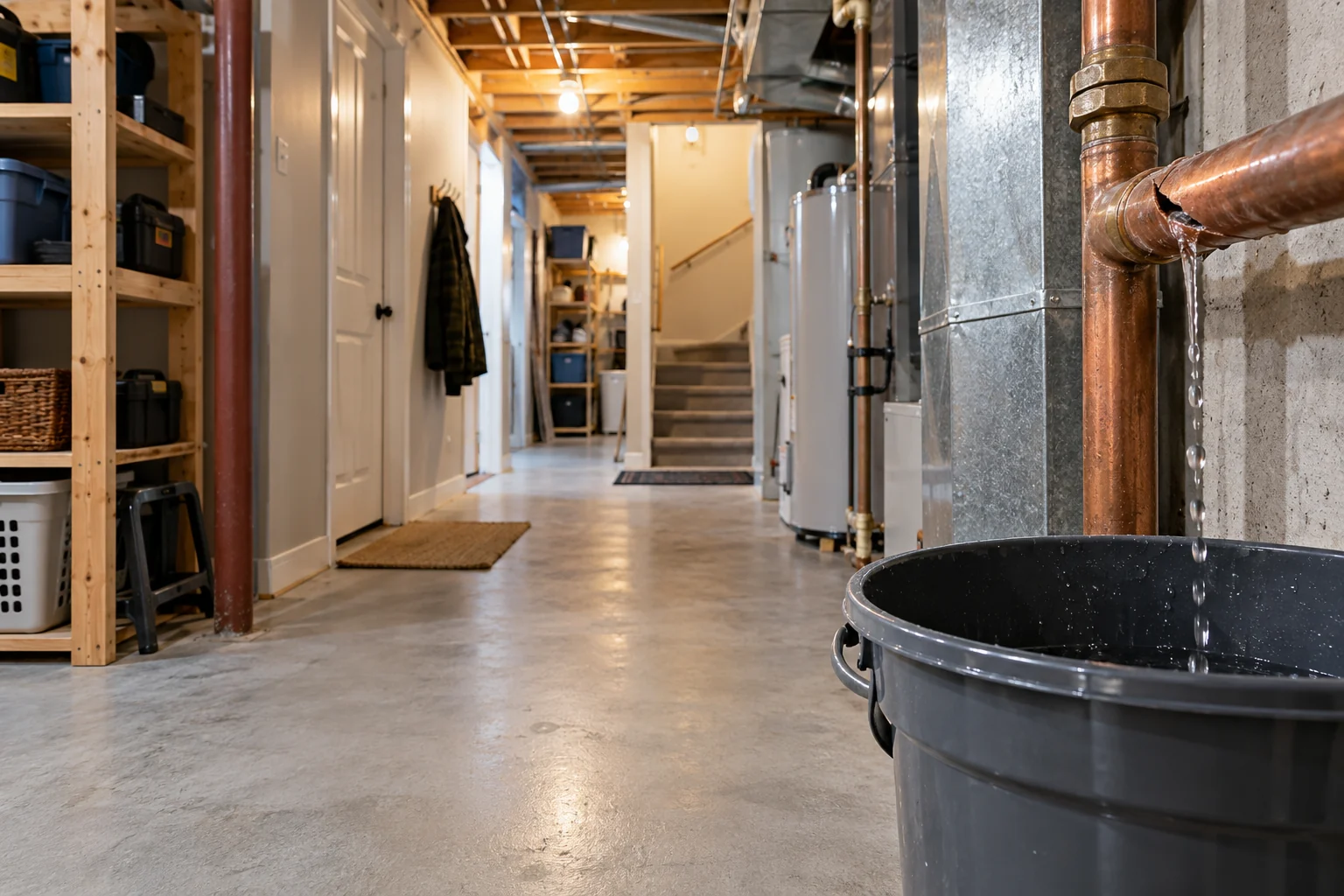
If the room is dry and safe to enter, move lightweight belongings away from the water path. Place a container under a localized drip only where it can be set down without reaching through hazards. Do not pull on a split pipe, wrap exposed wiring, or open a damaged ceiling to release collected water. A temporary measure should not create a second problem.
Alberta's guidance for homes affected by flooding supports keeping wet electrical systems out of use pending appropriate inspection. Household water can still become hazardous after contact with equipment or contaminated materials.
Describe the failure before arranging access
Give the Calgary address, whether the property is a house or shared building, and the visible location of the pipe. If you know the material or can see a split, describe it without guessing what is behind the wall. Mention cold weather, recent work or an appliance operating when the release began; each observation can help narrow the assessment.
For emergency burst pipe repair, access can be as important as the damaged fitting. Let the plumber know if the pipe is inside a finished ceiling, behind cabinetry or in a locked mechanical room. Keep the area available without dismantling finishes yourself.
Ask what needs to be tested after the repair
A repair may involve a localized damaged section, a connection or a wider problem in the piping system. Ask what the plumber found, which part was repaired and what checks support restoring the supply. If freezing contributed to the rupture, replacing the broken section alone does not explain how that location will be protected next winter.
Be clear about any limits to the assessment. Visible pipework can be checked differently from concealed runs. A successful pressure or operation check should not be described as a guarantee that every hidden pipe or damaged building material is unaffected.
Keep repair and damage recovery separate
Once the pipe is controlled, write down the affected rooms and take photographs from safe positions. Water may have followed framing or entered a room beyond the original rupture, so note stains and wet finishes without opening them. Contact the relevant restoration or assessment professional if building materials need attention; a pipe repair is not a drying plan.
If the burst happened during freezing conditions, read about frozen pipe assessment and repair before treating the incident as an isolated split. Record the suspected cause, repair scope and any follow-up recommendations so the next step is clear.
A safe sequence after the first discovery
- Move people away: identify the affected room and keep access clear for the appropriate response. Do not ask someone else to enter an unsafe space on your behalf.
- State the hazard: water at electrical equipment or an unstable ceiling needs a safety-aware call before anyone treats the event as a straightforward pipe replacement.
- Use known isolation only: if a working indoor valve is safely reachable, record the control used. If not, explain why it is unavailable rather than attempting an unfamiliar alternative.
- Observe the result: say whether a spray reduced, flow remained strong or water is draining from finishes. Do not restore pressure to demonstrate the failure.
- Stop affected use: make sure household members do not run a restricted fixture or appliance. A closed main and a marked isolated branch can affect different parts of the home.
- Arrange source assessment: give the visible location, property type and access restrictions. The source needs a defined repair even if a container now catches the remaining drips.
- Document the handoff: retain what was repaired, checked and left unavailable, then address affected materials through the relevant separate assessment.
Questions to ask once immediate water control is established
Ask whether the failure appears limited to the damaged section or whether another condition needs investigation. If freezing is suspected, explain which rooms were unheated or exposed, but do not claim the cold caused the split unless the assessment supports it. The prevention conversation may concern the location and property conditions rather than simply installing the same component again.
Clarify who handles an access opening and its reinstatement. A pipe repair behind ceiling board may leave another stage of work, and the estimate should explain that boundary. If the plumber could examine only an accessible section, preserve that limit in the record instead of telling the household that all piping has been checked.
Finally, ask who should assess moisture beyond the visible rupture. Water can have moved before the supply was stopped. The amount remaining at the source is not a complete measure of the incident. A useful repair record helps material-recovery professionals understand the identified pipe fault and the period of possible release without asking the homeowner to reconstruct every detail later.