What Should I Do For A Basement Sewage Backup In Calgary?
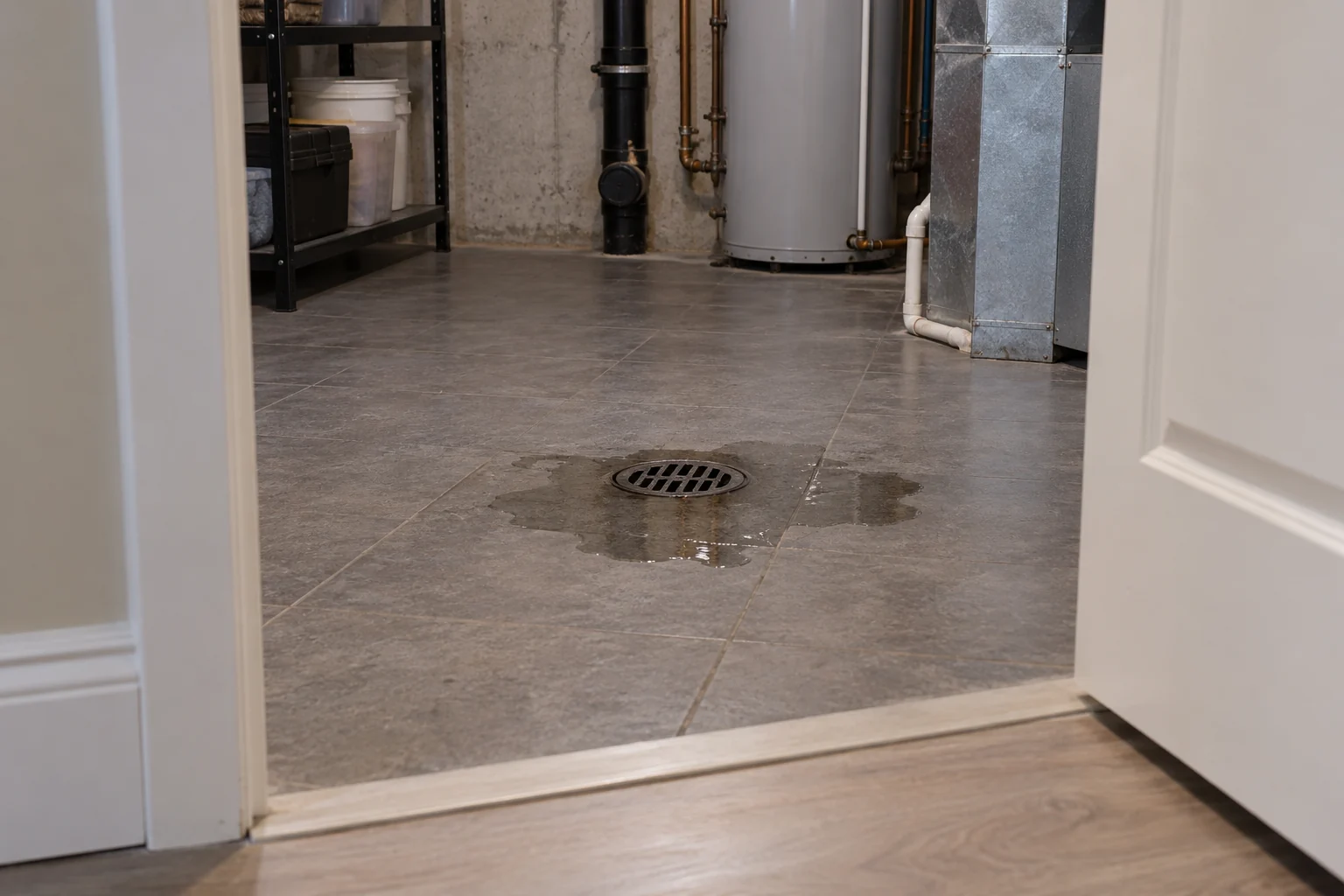
If sewage backs up into your Calgary basement, keep people and pets out of the affected area, stop household water use that can feed the backed-up route and call 311 for City triage. Arrange private plumbing help where required and notify your insurer. Do not enter wet areas near electrical equipment, open a sewer cleanout or begin an improvised cleanup. Source repair, contaminated-material cleanup and safe return to the room are separate tasks.
Keep the household away from the returning water
Wastewater can expose occupants to contamination even when it looks relatively clear. Close off access from a dry location where possible and tell everyone in the house what has happened. A child or pet should not enter to retrieve a toy, and an adult should not carry wet items through clean rooms without an appropriate plan. Protecting belongings is secondary to keeping people out of hazardous conditions.
If water has reached electrical equipment or outlets, do not walk through it to operate a breaker or recover an appliance. Seek the appropriate utility or emergency assistance from a safe location. Alberta's flood cleanup guidance emphasizes checking affected utilities before use. A quiet appliance or dark room is not proof that electrical conditions are safe, and the plumber's arrival does not remove that separate concern.
Stop adding wastewater to the affected route
Tell occupants not to flush toilets, shower, drain a bath or start a washing machine or dishwasher while the affected drainage is unresolved. Water used upstairs can still reach a basement problem. Do not repeatedly test a fixture to see whether the backup continues. Report the behaviour already observed so the contractor can investigate without the household adding more water.
If an appliance is running, describe that in the call and ask about stopping it through its normal controls safely. Do not handle a plug or switch in wet conditions. Closing a water-supply valve is not the same as removing water already in the drain, and a backup can have causes beyond current household use. If water rises after use has stopped, report that change immediately.
Call 311 with observations rather than a guessed diagnosis
Calgary's sewage backup instructions direct residents to 311 so the issue can be triaged between possible City infrastructure and internal plumbing. Give the address, unit if applicable and the fixture or floor area where wastewater is appearing. Explain whether several fixtures are involved and what activity preceded the return. You do not need to establish where a pipe is blocked before reporting it.
Keep the reference number and actual instructions. A report does not promise a particular attendance time, private repair or insurance outcome. If a private plumbing investigation is needed, share the City information with the contractor. For a condo or townhouse, notify management as well, especially if shared access or other units are affected. Avoid independently changing common services or entering another unit to investigate.
Prepare information without opening or dismantling the sewer
- Address and access: provide the basement or unit location and the responsible owner's contact.
- Water behaviour: say where the return began and whether it is still rising.
- Connected use: identify the fixture or appliance used just before the backup.
- Previous incidents: provide earlier clearing or inspection reports if available.
- Chemicals: disclose any drain cleaner, including the product, timing and location.
- Cleanout: describe a known safely visible location and any obstruction to access.
- Hazards: flag wet electrical equipment, damaged finishes or contaminated access routes.
Leave cleanout caps in place. Opening one can release wastewater and complicate the scene. If an access point is hidden by a finished floor, carpet or a wall, tell the contractor. They can plan the required permission and work. Do not cut finishes or move objects through contaminated water just because preparation instructions mention access.
Arrange the plumbing investigation and cleanup as separate scopes
Our Calgary sewer backup service can investigate a private source and explain the necessary work. Ask what was found, which route was addressed and whether further inspection is recommended. Clearing a blockage can restore drainage without establishing every cause of a recurring problem. A recommendation for more work should explain the findings behind it. A sewer backup is different from a clean supply-water leak when deciding how to report contamination and plan cleanup.
Cleanup needs its own plan for contaminated water and materials. Ask who handles removal, cleaning, drying and any necessary reconstruction. A plumber clearing the line does not automatically provide those services or approve the affected room for use. The sewer backup response guide explains how the first household actions fit alongside those separate jobs.
Notify the insurer and record what happened safely
Contact the insurer with the date, observed source, affected rooms and steps already taken. Ask what documentation is required and how proposed cleanup or restoration should be authorized. Coverage depends on the policy and circumstances; no contractor can guarantee it from a photograph of the basement. Keep the claim reference and adjuster's instructions where supplied.
Photograph only from a position you can reach safely. An overview, visible waterline and affected contents can be useful, but documentation is not a reason to enter water beside utilities or a damaged ceiling. Save plumbing reports, cleanup invoices and photographs together. If a damaged item must be removed, follow the responsible cleanup and insurer instructions instead of discarding everything before the loss is documented.
Do not restart utilities or appliances just because water is gone
The disappearance of standing water does not establish that affected electrical equipment, a furnace or a water heater is ready for use. The appropriate qualified technician should address equipment exposed to the incident. Tell each professional about the sewage involvement and any cleaning products present. A source repair and a utility clearance are different findings and should be recorded separately.
Likewise, a dry-looking floor may conceal moisture or contamination in materials below it. Ask what recovery work was completed and which areas remain restricted. Household members need a clear reopening instruction from the responsible parties, not an assumption that normal use can resume because the drain accepted one flush. Keep access restrictions in place until the relevant work and decisions are complete.
Use the findings to decide what comes next
After the incident, keep the City reference and contractor reports. Ask whether the source was a confirmed obstruction, a pipe defect, a shared-system issue or something still unresolved. If additional inspection or prevention work is proposed, ask how it addresses that finding. Avoid assuming every backup requires the same device or a full sewer replacement.
Review safe cleanout access in ordinary conditions and make sure occupants understand the drainage practices recommended for the property. If symptoms return, report the previous findings and the new pattern promptly. The useful outcome is not just a quiet floor drain: it is controlled plumbing, properly addressed contamination, checked affected equipment and a documented plan for any remaining problem in the Calgary basement.