What Should I Stop Using During A Drain Backup In Calgary?
When drains are backing up in Calgary, stop flushing toilets, running showers, draining baths and starting laundry or dishwashers that may discharge into the affected route. If several fixtures are involved or the route is unknown, do not assume another room is independent. Tell everyone in the property about the restriction, keep people away from returning wastewater and ask the plumber or building manager which use can safely resume.
Stop the discharge that first revealed the backup
If the washing machine was running when the floor drain rose, mention that and stop further discharge through the machine's normal controls when that can be done safely. If a toilet flush caused water to appear in the shower, do not flush again to demonstrate it. The observation already made is useful. Another test adds wastewater to a route that may not carry it away.
Give the contractor the sequence in plain language: what was operating, where water appeared and whether it is still rising. Avoid calling it a broken pipe unless that has been confirmed. A backed-up drain can have several possible causes. Accurate reporting helps the plumber choose what to investigate without the household continuing to feed the system while waiting.
Include appliances that discharge without a faucet running
Laundry and dishwashing equipment can release water later in a cycle, after someone has stopped paying attention to it. A household instruction limited to "don't use the bathroom" can miss those discharges. Tell occupants not to start the affected appliances. If a cycle is already underway, ask how to stop it appropriately rather than handling a plug or switch in a wet area.
Also mention water-fed equipment with an automatic discharge that you know is connected to the affected system. Do not operate unfamiliar controls in an attempt to stop everything. The contractor can review the actual arrangement. A useful call distinguishes appliances confirmed to be involved from equipment whose drain connection is uncertain, so the response does not rely on a guessed diagram of the house.
Do not assume upstairs plumbing bypasses a basement problem
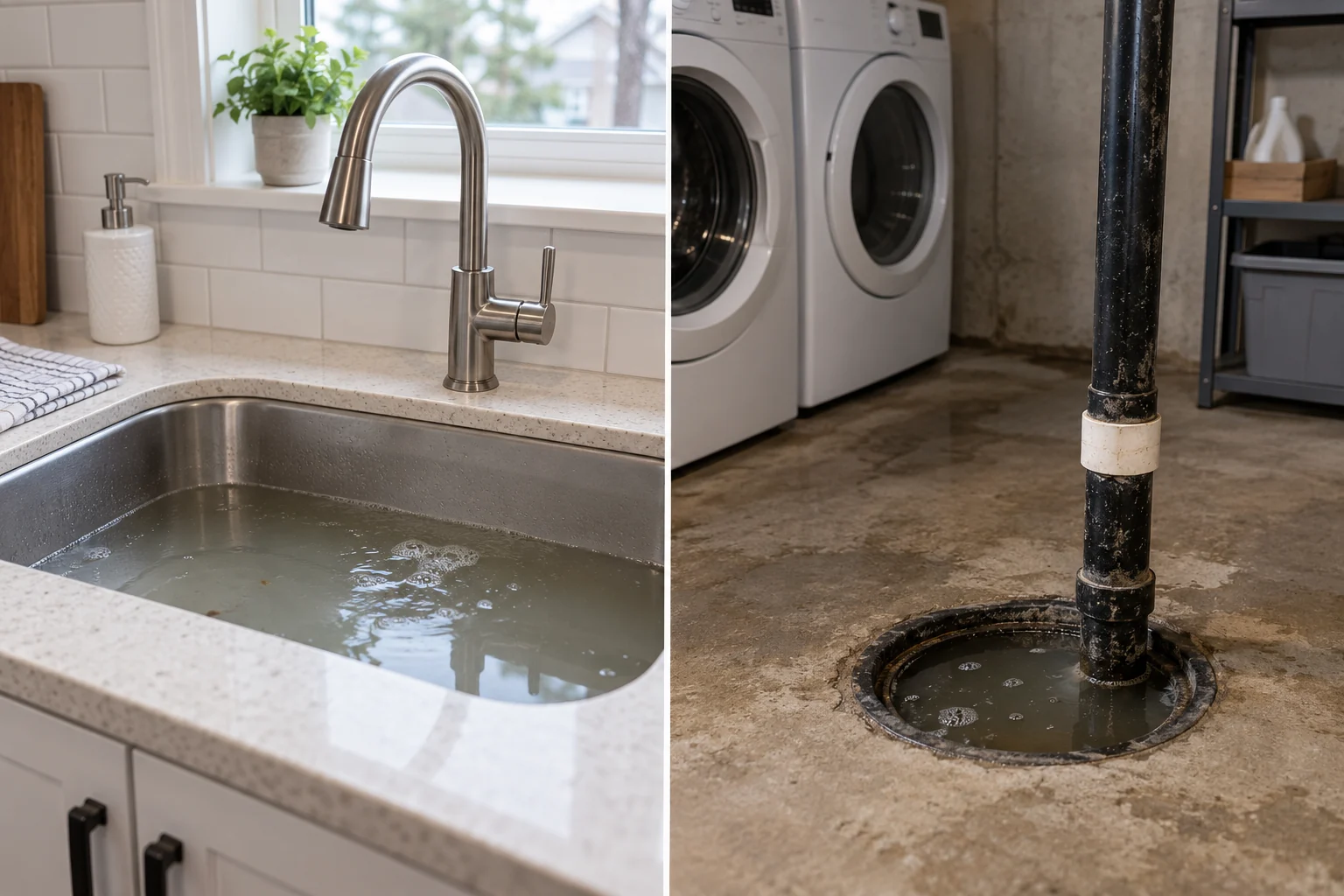
A basement floor drain can be the place water appears even when the water was used upstairs. The first visible overflow is not necessarily the location of the blockage. An upstairs bathroom may join a route that cannot adequately discharge. If several fixtures are showing symptoms, treat the wider use question as unresolved until someone responsible has reviewed it.
For Calgary emergency drain cleaning, list the fixtures already known to be affected. Tell the plumber whether the property has another usable bathroom, but do not test that bathroom solely to prove it works. In a condo or townhouse, notify management because the drainage may serve more than one unit. A resident should not change common equipment or enter another suite to investigate.
Give the whole household one clear instruction
- Toilets: no repeated flushing into a suspected backed-up route.
- Sinks: no full-basin discharge or running water to test the system.
- Baths and showers: stop water use where the route may be connected.
- Laundry: do not start another cycle; report a machine already discharging.
- Dishwasher: do not start it while its discharge route is unresolved.
- Chemicals: do not add cleaners or combine products in the drain.
- Visitors: tell anyone entering the home which facilities are unavailable.
- Restoration: name who will confirm when ordinary use can restart.
Use specific words rather than a vague note that plumbing is being repaired. A person who has not seen the backup may interpret that note as applying only to one sink. In a larger household, choose one contact to communicate updates so different people do not receive conflicting instructions about which fixture is available.
Understand what a supply shutoff does and does not do
Closing a water-supply valve can stop new water entering the portion it serves, but it does not empty wastewater already in drains. It also does not necessarily stop water entering from outside the private system. Do not treat a shutoff as proof that a backup cannot continue. Report any rising water after household use has stopped.
Only use a known safely accessible control where appropriate. Do not force an unfamiliar valve or enter water near electrical equipment to reach it. In shared properties, common supply controls require the responsible building contact. If the plumber gives a restriction involving supply, ask which fixtures or equipment it affects. A restriction meant to reduce wastewater should not be confused with a completed repair of the obstruction.
Keep people out of the affected area while reporting the incident
Wastewater returning through a drain can contain contamination even when it does not look like sewage. Keep children and pets away and avoid carrying wet belongings through unaffected rooms. If outlets, electrical equipment or gas appliances are affected, do not attempt to restore them yourself. Seek the appropriate help from outside the hazardous area. If the water is sewage rising into the basement, follow the more specific basement sewage-backup steps as well as stopping discharge.
Calgary's sewage backup instructions explain 311 reporting and City triage. Our sewer backup response guide covers the household's first actions. Explain any cleaner already used, the affected area and whether access to a cleanout is obstructed. You can report a safely visible access location without opening the cap or cutting a finished wall.
Ask for a clear restart instruction after the work
When the plumber finishes clearing or repairing the source, ask which fixtures may be used and whether any restriction remains. Do not assume the first draining sink clears every appliance in the home. If work was temporary or further investigation is planned, record what is allowed in the meantime. Tell the same occupants who received the original restriction.
Controlled verification may form part of professional work, but that is different from the homeowner's repeated test flushing before the source is understood. Follow the actual instructions and report any return of symptoms. Keep the contractor's findings and any City report number. A cleared route also does not mean contaminated flooring, cabinets or rooms are ready for ordinary use; cleanup and reopening have their own requirements.
Keep restrictions practical if service is unavailable
If the property has no confirmed usable sanitation, explain that during the first call and ask the responsible owner or manager about temporary arrangements. Household members should not improvise wastewater disposal or continue use because waiting is inconvenient. For a business, customer facilities and operational needs may require management decisions separate from the plumbing repair.
Record when the backup was noticed and what activities stopped. If water keeps rising despite those restrictions, report the change promptly rather than waiting for the expected visit without updating anyone. The practical goal is to avoid adding to the problem, protect occupants and give the plumber a clear description. It leaves the cause and repair choice to investigation without allowing ordinary household routines to worsen the Calgary backup.