
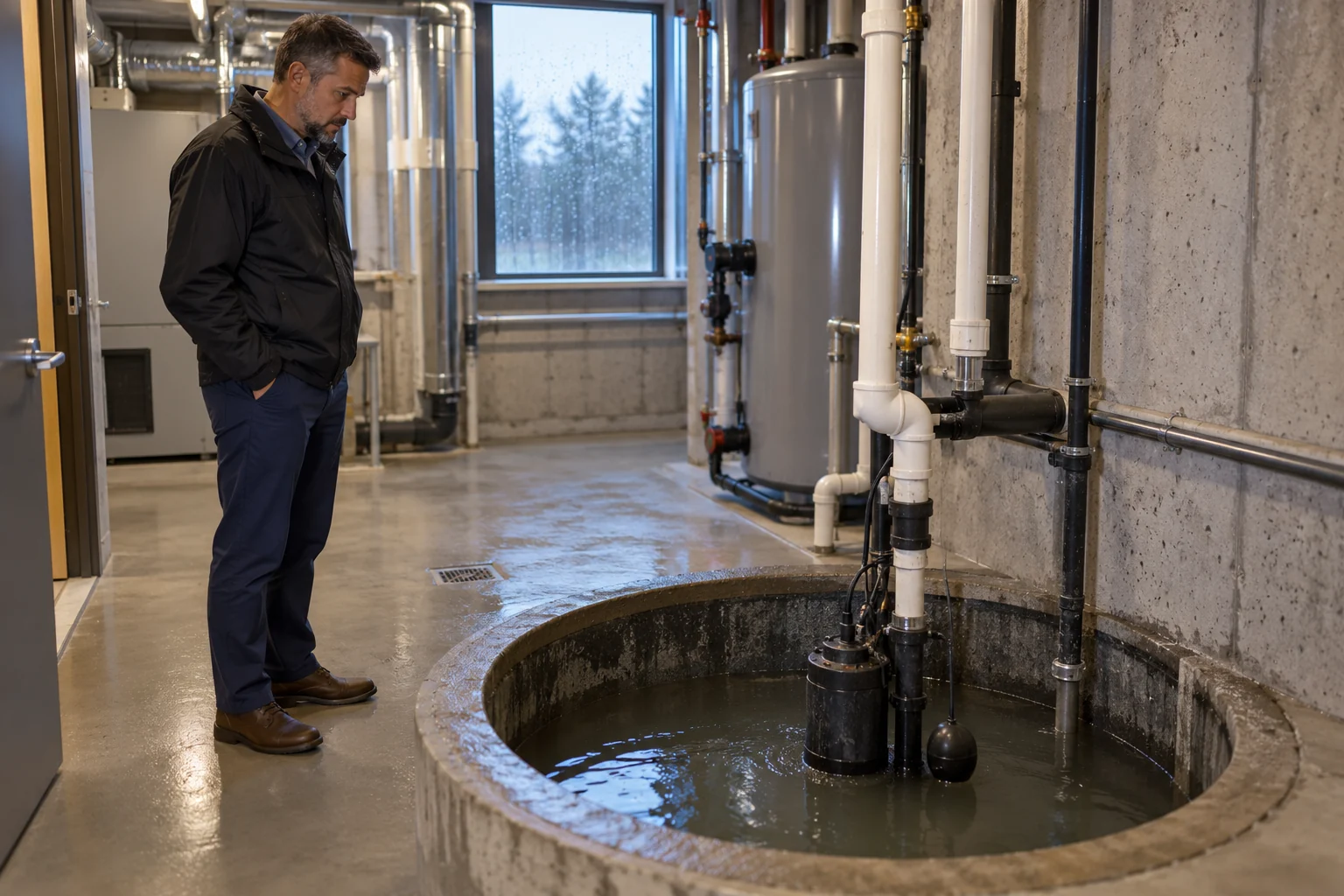
What If A Sump Pump Stops In Heavy Rain In Calgary?
When a sump pump stops during heavy rain at a Calgary property, the manager should keep people away from rising water, wet electrical equipment, and unstable stored materials, then call a qualified plumbing or pump service provider. Do not send staff into a flooded pit to lift the float by hand. Name one site contact who can provide safe access, authorize work, and coordinate occupants. If water is approaching electrical equipment or a hazardous area, get the appropriate emergency help and keep the space closed. If the motor keeps running but the pit level does not fall, review the constant-running sump pump causes.
Find out what the pump was supposed to protect
Identify the sump pit, discharge route, connected drains if known, and rooms that have flooded before. Review drawings and maintenance notes, but treat old diagrams as clues rather than proof of the current arrangement. A pump in one room may not control water entering another part of the building. Note whether the pit is filling, whether the motor is silent or running, and whether any alarm has sounded. Do this from a dry, accessible position.
Do not mistake a reset for a repair
A tripped breaker, silent motor, stuck float, blocked intake, failed check valve, or obstructed discharge can each change the symptom. Repeatedly resetting electrical protection or cycling the pump may damage equipment and hides the sequence of failure. Record the alarm or breaker condition and tell the service provider. An electrician may be needed when the electrical supply or panel is involved. The plumber or pump specialist should test the actual cause before the system is returned to duty.
Coordinate water management and business access
A service visit may require closing a storage room, redirecting deliveries, moving contents, or arranging specialized water removal. Protect employee and occupant routes first. If rain continues, ask the contractor what temporary pumping or monitoring is feasible for this building, how discharge will be managed, and who watches the area. Do not discharge water onto neighbouring property or into an unsuitable drain. Assign someone to communicate restrictions to tenants and the next shift.
Document water entry separately from pump failure
The failed pump may explain why collected water was not removed, but it may not explain why so much water reached the pit. Check for visible foundation seepage, surface water entry, drain problems, and any plumbing or sewer symptoms. Keep the source investigation and damaged-material assessment separate from the pump repair. Alberta’s flood cleanup guidance is useful for planning safe cleanup, especially where water has reached porous materials.
Test and follow up after the storm
Ask for the failed part, repair, test conditions, discharge observation, and remaining limits in writing. A test with a small amount of water may not reproduce a storm load; discuss how capacity and backup will be reviewed. Confirm that alarms reach the right person and that the log records what happened. Reopen affected space only after electrical, cleaning, and building-material concerns have been addressed by the appropriate people.
Prioritize The Current Storm Condition
- Keep access away from water and electrical hazards; do not inspect inside the pit.
- Tell the responding provider whether the pump is silent, sounding normal or repeatedly starting.
- Describe whether the visible level is rising, steady or not safely observable.
- Identify the room threatened next and any occupied route affected.
- Give the authorized building contact and the dry access route for the crew.
Our Calgary sump pump repair service needs that current storm account before it can plan an inspection. A manager should not send staff back into the wet room every few minutes to improve the report. Use only observations available from established safe access. If the condition cannot be watched safely, state that limitation and arrange an appropriate response with the professionals involved.
Record What Happened Before The Pump Stopped
Give the last known normal operation, first alarm and first visible water outside the basin. Include a known power interruption or recent service without making either the assumed cause. If someone reset a control before the failure was reported, document it. A pump silent after a breaker event and a pump that stopped after prolonged running give the technician different starting points, even though both leave a high basin.
Use a short timeline such as “alarm heard; motor later silent; water first seen beside storage shelves.” Add observed times where available, and mark estimates as estimates. Do not state how long the motor ran unless someone actually observed it or a system record establishes it. That distinction prevents a guessed chronology from becoming the reason a specific part is replaced.
Temporary Measures Need Their Own Plan
If a contractor proposes temporary pumping, ask what water it manages, where it discharges and what conditions limit it. Identify who watches any alarm, who receives a change in level and who approves further work. A temporary arrangement must fit the building and its current hazards; a staff member should not improvise a pump, extension lead or discharge hose in standing water to keep business moving.
Separate the emergency objective from later resilience work. The immediate job may be controlling rising water and restoring a failed component. A later review may address capacity, discharge routing or backup. Record both without assuming that an emergency repair demonstrates performance in every future storm. The sump pump failure and basement-water guide explains symptom categories that can support that discussion, while the installed system still needs its own assessment.
What The Storm Handover Should Establish
| Question | Useful result |
|---|---|
| Why did pumping stop? | The observed fault, evidence and component addressed. |
| Did removal resume? | Test conditions, basin response and verified discharge path. |
| What happens after hours? | Alarm receiver and backup contact who can act. |
| What remains wet? | Separate removal, cleanup, material and utility tasks. |
| What needs another visit? | Named follow-up for unresolved cause or capacity questions. |
Keep the Alberta flood cleanup guidance with the building’s recovery planning where water has entered occupied or stored areas. Stopping the rise is only one milestone. The manager should distinguish restored pumping from permission to re-enter a wet room, and should tell the next shift which milestone has actually been reached.
After rainfall eases, review the incident with the service records. Ask whether the original fault was established or whether the repair only restored operation while further investigation remains. Preserve any photographs and alarm history with the pit identifier. That gives the later design review evidence about this storm instead of a broad recollection that the pump “could not cope.”