What Should Tenants Do For After-Hours Leaks In Calgary?
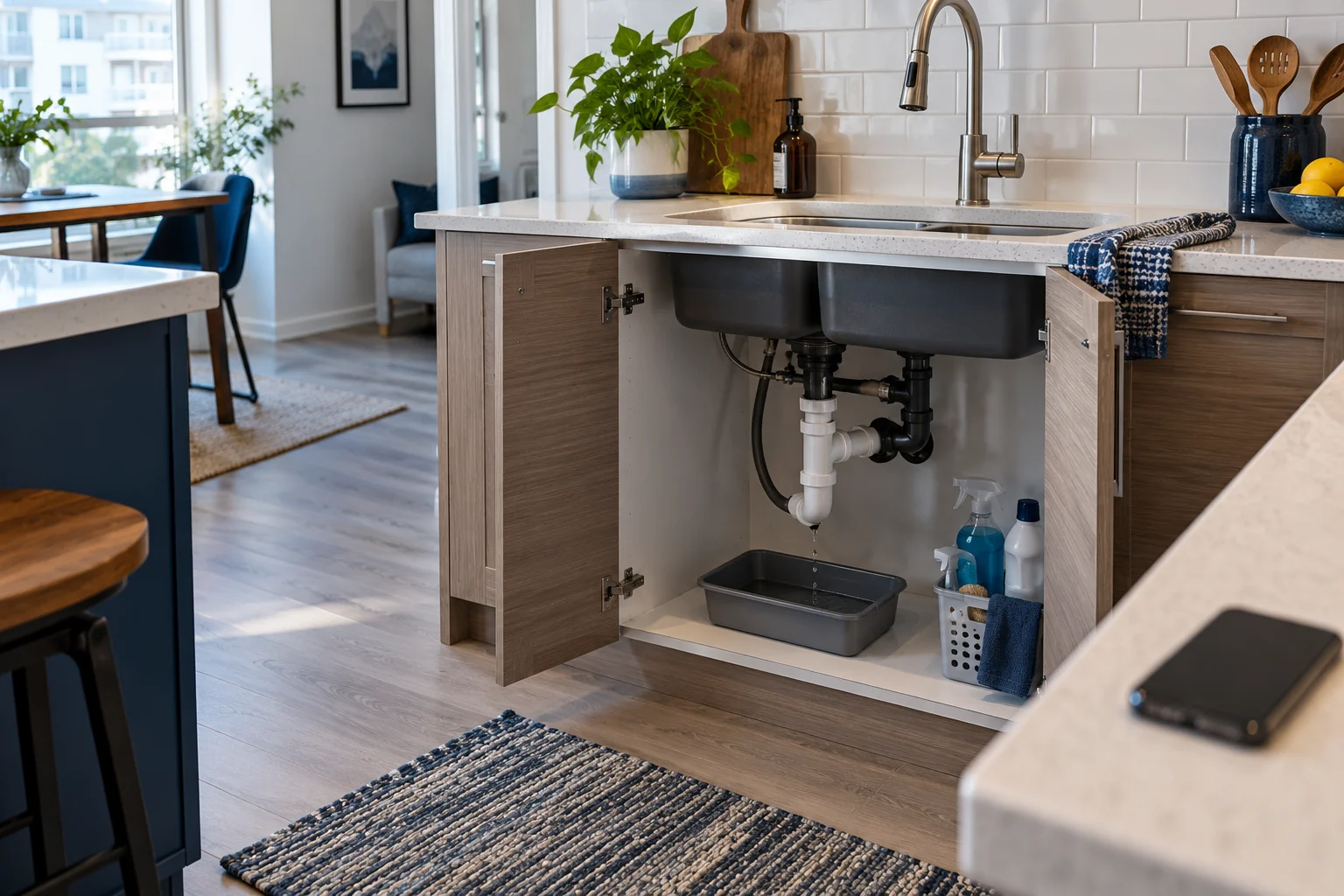
If you are a tenant facing an after-hours plumbing leak in Calgary, keep away from hazards, notify the landlord or emergency property contact, and explain whether water is actively escaping. Use only a known safely accessible household control where appropriate. Who authorizes or pays for work depends on the lease, law and circumstances, so do not assume the answer from a general emergency checklist. When speaking with the contractor, use the emergency plumber phone checklist to report what changed and what remains unsafe.
Report the current condition clearly
Give the unit, room and exact building address. Say whether the source is visible, whether water is moving and whether another suite appears affected. Mention water near electrical equipment, sewage or a sagging ceiling at the start of the message. Those facts can change the response and access plan.
If there is immediate danger to a person, contact emergency services rather than waiting for a callback. Keep people and pets away from the affected area. Do not enter a flooded mechanical space or operate unfamiliar building controls to make the report sound more complete.
Use the property's emergency contact arrangement
Check the lease or supplied building information for an after-hours contact. Tell that contact what has happened and what you can safely observe. Keep a record of the time and method of notification, along with any response or instructions. Clear communication helps coordinate a repair without turning a difficult incident into conflicting accounts.
If you cannot reach the responsible contact and the leak remains active, seek professional advice about the immediate conditions. Do not assume that an article can decide the legal or financial responsibility for your particular tenancy. Confirm authorization and applicable obligations through the appropriate property or legal source.
Understand the limits of suite isolation
A fixture valve may serve one appliance, while another control could affect the suite or several units. Operate only a control you know and can reach safely. A stiff handle, leaking valve or unfamiliar shared arrangement should be reported rather than forced.
Our main shutoff guide explains why property layouts differ. For riser pipe leaks, water can affect multiple units and common access may be required. Let building management coordinate those controls and affected occupants.
Keep the area accessible without dismantling it
If it is safe, move lightweight personal items out of the water path and keep an ordinary route available for assessment. Do not remove ceiling finishes, pull out a built-in appliance or reach beneath compromised materials. Access preparation should not expose the tenant to a hazard or disturb another unit.
Tell the property contact about pets, entry restrictions and whether you can meet the plumber. If someone else will provide access, confirm how the responding professional will find the correct entrance and unit. Avoid leaving a general promise of access when the mechanical space remains locked.
Document facts and protect other occupants' privacy
Photographs taken safely can show the visible leak and affected belongings. Keep the original time and write a short description of what was happening. Do not include unrelated private documents or images from another suite. A visible stain does not establish who caused the incident.
For water leak repair, the useful record is the observed condition, identified source and completed scope. Keep those findings separate from assumptions about liability, coverage or responsibility for damage until the relevant parties assess them.
Confirm restrictions after the visit
Ask the responsible property contact which fixtures may be used, whether any supply remains isolated and who will arrange further work. A plumbing repair can leave material drying or reinstatement outstanding. Tenants should receive clear practical instructions about the space rather than infer that every part of the room is recovered.
The City's home maintenance information provides plumbing context, not a tenancy ruling. Preserve the repair handoff and notification record, and direct legal or payment questions to the appropriate adviser using the lease and current Alberta requirements.
An after-hours tenant reporting sequence
- Describe immediate danger: report water near electrical equipment, sewage or damaged overhead finishes before discussing ordinary maintenance arrangements.
- Identify the unit: provide the exact address, suite and entrance so a property contact does not confuse symptoms between units.
- State active conditions: explain what is releasing water now and whether any known safe control has changed it.
- Notify the supplied contact: use the landlord or building emergency arrangement and retain the time of the message.
- Clarify access: say who can meet the responder and who controls shared mechanical rooms or entry to another suite.
- Confirm authorization: identify the person responsible for repair approval rather than assuming access permission covers every scope.
- Receive the restrictions: keep instructions on fixture use and room access clear for other occupants.
Separate the source finding from responsibility questions
A stain in a tenant's room does not prove the source is within that tenant's fixtures. Common piping, another suite or a building issue can be involved. Likewise, a fixture being used when wetness appeared does not establish negligence or liability. The plumbing assessment should record the source and limits before parties draw conclusions about responsibility.
Retain factual communications without turning them into an argument during source control. If an instruction says not to use a fixture, confirm which one and how the restriction will be communicated to other occupants. If access to another area is needed, the responsible property contact should arrange it; the tenant should not investigate a neighbour's suite independently.
Payment, legal obligations and policy coverage need the applicable lease, current requirements and incident facts. Ask the appropriate property or legal adviser rather than relying on a general post. A repair quote can describe necessary work without deciding those administrative issues.
At the handoff, distinguish plumbing completion from recovery work. The tenant may still have restricted room access, wet belongings or finish reinstatement outstanding. Ask who coordinates that next step and how new symptoms should be reported. A clear instruction is more useful than being told everything is fine when a supply branch remains isolated.
Keep the original symptom notes, confirmed repair record and later instructions together. This supports a consistent account across shift changes or several property contacts, while leaving unconfirmed cause, coverage and liability questions identified as unresolved.