When Should A Calgary Sewer Backup Be Reported To 311?
Report a sewage backup to Calgary 311 when wastewater comes up through a sink, toilet or drain; do not wait until you have identified the blocked pipe. The City uses the report to help determine whether internal plumbing or City infrastructure may be involved. Keep people away from affected water, stop connected household use and arrange private plumbing help where required. A 311 report does not replace urgent action for an immediate electrical, medical or other safety emergency.
Report the returning water, not your theory about the pipe
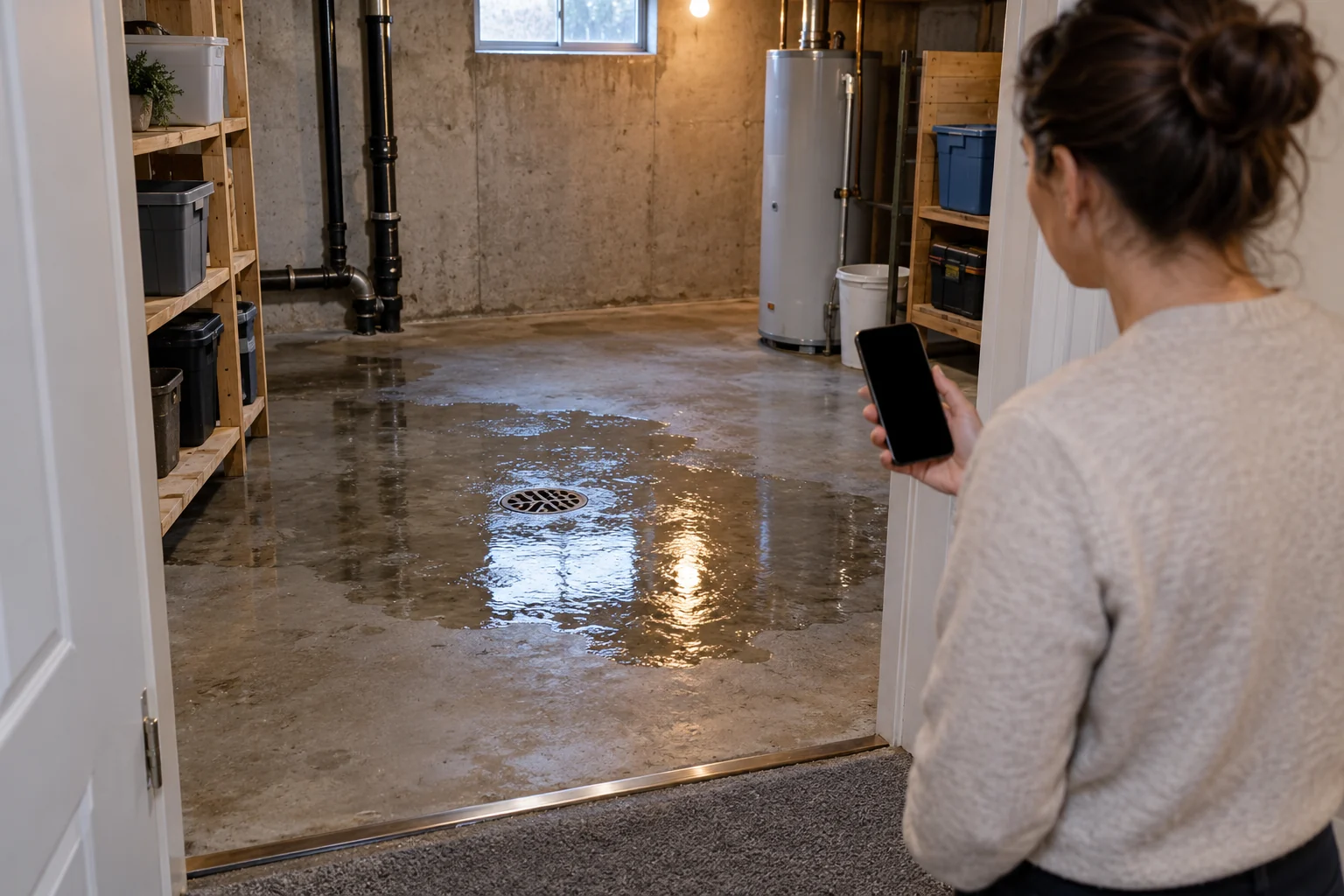
The most useful opening is the address and what is happening: wastewater rising through a basement drain, a toilet backing up or several fixtures failing together. Say whether the water is still rising and whether another fixture or appliance was used immediately beforehand. You do not need to know the cleanout's technical name or the sewer's route before placing the call.
Avoid describing a collapse or a City-main problem unless it has been confirmed. Heavy rain, a neighbour's incident or previous private clearing can be relevant context, but each is different from an inspection finding. A factual description helps 311 triage the report without the caller deciding responsibility first. Keep suspected causes clearly separate from the observed water and timing.
Understand what the City reporting process is for
Calgary's official sewage backup page describes calling 311 and the distinction between possible public infrastructure and internal plumbing. Follow the actual instructions supplied for the incident. A general webpage cannot promise which crew will attend, when attendance will happen or what private work will be covered at the particular property.
If you are advised that private plumbing investigation is needed, retain that instruction and share it with the contractor. If a City visit occurs, keep the report provided and any recommended next steps. The report is part of the incident history, not an automatic all-clear for wet rooms or affected equipment. Source investigation and recovery decisions can involve other responsible professionals.
Keep private help and building management informed
For a private drainage concern, Calgary sewer backup repair can investigate the source. Tell the contractor about the 311 call, any directions received and the affected fixtures. If the problem is changing while you wait, update the relevant contact with the specific change rather than making several conflicting reports that omit earlier information. The City report does not replace the immediate household response to sewage in a basement.
In a condo, townhouse or leased property, notify the owner or building manager. Shared access and drainage can require coordination beyond an individual unit. Report another unit's symptoms if you know them, but do not enter that unit or adjust common controls to verify the connection. Management should receive a clear account so access and other occupants can be handled by the responsible people.
Have this information ready where possible
- Property: exact address, unit and whether it is a detached or shared building.
- Contact: the person available to communicate and authorize access where applicable.
- Fixtures: the sink, toilet, floor drain or other point where water returns.
- Timing: when the change began and which water use preceded it.
- Extent: the safely observed area affected and whether water continues rising.
- History: earlier backups, clearing work or changes to the drainage system.
- Access: a known cleanout location and any obstruction or unsafe route.
- Products: any drain cleaner used, including name, timing and location.
Missing one detail is not a reason to delay the report. Explain what is unknown. A cleanout hidden under a finished floor is an access issue to plan for, not an invitation to cut the floor before the cause has been assessed. Accurate uncertainty helps the responding party prepare without the homeowner taking risks to complete a checklist.
Stop household discharges during an active backup
Toilets, showers, baths and appliances can add water to an affected route. Tell everyone in the property not to use the relevant plumbing while a backup is unresolved. If several fixtures are involved or the connections are unknown, ask what use can continue rather than assuming an upstairs bathroom is separate. Do not repeatedly flush to check whether the incident has stopped.
If an appliance is operating, describe it in the call and ask how to stop it through normal controls safely. Keep away from wet plugs, outlets or equipment. If water continues rising despite household use stopping, report that change. A drinking-water shutoff does not automatically prevent wastewater already in the system or outside it from returning through a drain.
Do not prepare access by opening the sewer yourself
A cleanout is an access point for work, and during a backup opening it can release wastewater. Identify the location where it can be seen safely and leave its cap in place. If storage or finishes cover it, report the obstruction. The professional can explain what access is required and obtain the appropriate permission before removing a barrier.
Our sewer backup response guide explains the first household actions. Keep occupants away from contaminated areas and do not carry wet objects into unaffected rooms simply to clear a route. A response plan must account for the conditions on site. Instructions about access are not a reason to enter hazardous water or handle damaged utilities without suitable expertise.
Treat utility hazards and cleanup as separate decisions
If water affects electrical equipment, gas appliances or unstable building finishes, seek the appropriate emergency or utility help from a safe location. Calling 311 about the sewer does not make those conditions safe. Likewise, a plumber investigating the source does not automatically inspect every flooded appliance or authorize a contaminated room for use.
Notify the insurer and ask about required documentation and cleanup arrangements. Coverage and authorizations depend on the actual policy and circumstances. Photograph only from safely reachable positions. Save the plumbing findings, 311 report number and cleanup records together. A consistent record should show what happened, which work was done and which conditions still require attention.
Use the report after the immediate incident
When drainage is restored, ask what the work established and whether additional investigation is recommended. A cleared obstruction and a confirmed structural defect are different findings. Keep the actual report rather than replacing it with a remembered summary that all sewer piping was checked. If a limitation prevented inspection, record that too.
If another backup occurs, provide the previous reference and describe the new event. The affected fixtures, timing and water behaviour may help establish whether it resembles the earlier problem. Report promptly rather than assuming a previous private repair makes a new City report unnecessary. Calgary 311 is the City's starting point for backup triage; a useful report gives clear observations while the household protects people and coordinates the rest of the response.