When Does A Business Need Backup Sump Capacity In Calgary?
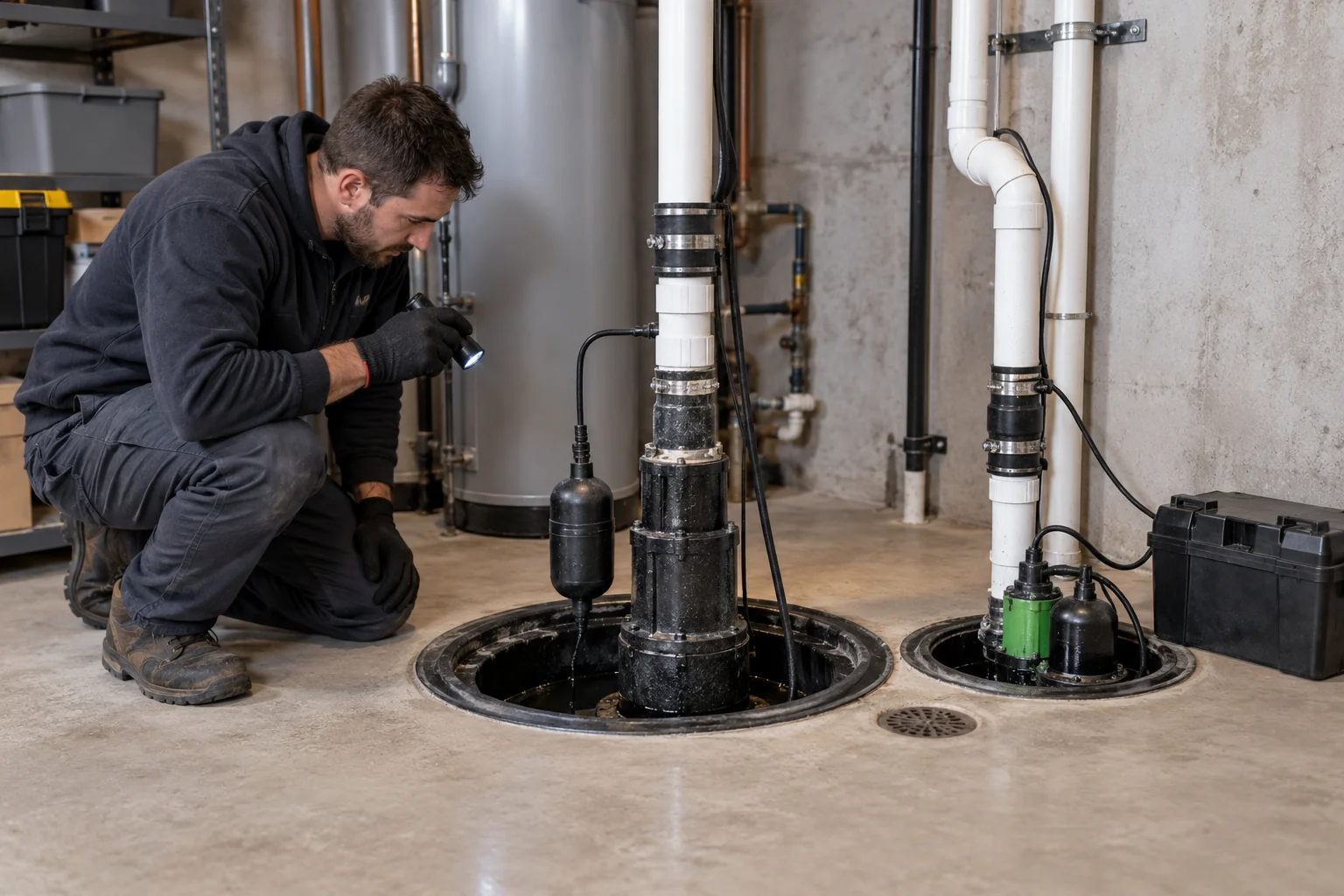
A Calgary commercial property should consider backup sump pumping when one pump protects occupied, valuable, or hard-to-restore space and a failure could let water rise before staff can respond. Review past high-water events, outage history, inflow during storms, and whether anyone receives an alarm. Backup capacity is a design decision for the actual pit and discharge path. It is not simply adding a second motor to a crowded basin. A sump pump maintenance log helps show whether failures, alarms, or inflow are becoming more frequent.
Review the consequence and response time
A storage room with low-value contents and a staffed mechanical room have different exposure. Ask how quickly the pit could fill under known heavy inflow, when water would leave the pit, and who could reach the site. If an alarm goes to an unmonitored panel after hours, that matters as much as the pump count. Property management should identify affected tenants, critical equipment, and the route people would use if water entered the area.
Choose redundancy that addresses the likely failure
A second pump can help with motor failure or exceptional inflow, but a shared blocked discharge may defeat both. A battery system may bridge some power interruptions, but its useful duration depends on load and condition. A generator requires its own maintenance and operating plan. Ask the designer or service provider which failure modes the proposed arrangement covers and which remain. Avoid describing any one backup as guaranteed flood prevention.
Check the physical system before selecting equipment
The pit size, float levels, electrical supply, check valves, discharge diameter, route, outlet, and applicable approvals all matter. Two pumps starting at the same time may exceed a shared discharge’s capacity. A backup that cannot be tested safely or serviced without stopping the primary system may be difficult to rely on. Get the arrangement documented and ask how each pump is exercised and isolated.
Pair the backup with monitoring and a human plan
An alarm should reach a person who can act, identify the building and pit, and show whether the primary or backup has run. Management should set an escalation route for nights, weekends, and staff turnover. A sensor without a response plan provides information but does not remove water. Keep a record of alarm tests, battery condition where relevant, and service work.
Review after a real event
After heavy rain or a power outage, compare the recorded water level, pump operation, and actual building condition with the design assumptions. If the backup operated, find out why the primary did not carry the load. Repair any failure before the next storm and assess wet materials separately. Alberta’s flood cleanup guidance can support the building response, while the pump specialist addresses capacity and control changes.
Compare Backup Options By The Failure They Cover
| Arrangement to assess | Design question | Limit to check |
|---|---|---|
| Second pump on normal building power | Can it take over for a failed primary or assist at higher inflow? | Both may stop during a common power loss. |
| Battery-supported pumping | What delivered flow and operating duration fit the expected duty? | Load, battery condition and charging affect available operation. |
| Generator-supported supply | How is this pump supplied during an outage? | Generator operation, maintenance and transfer arrangements need their own plan. |
| Separate discharge arrangement | Which common outlet failures does the proposed route avoid? | The destination, capacity and site requirements still need review. |
| High-level notification | Who receives a specific alarm and can respond? | A notification system does not provide pumping capacity. |
Use this comparison with a qualified designer or service provider; it is not an equipment specification. A backup should cover a defined failure or load, and the proposal should name what remains outside that protection. Two motors using one obstructed pipe can share the same weakness. Backup power alone does not resolve that pipe, while another pump on the same power supply does not address an outage.
Prepare A Building-Specific Design Brief
- Protected space: List the occupied rooms, stored contents and equipment exposed if the pit overflows.
- Existing system: Provide the basin, pump and outlet records, marking uncertain details for inspection.
- Event evidence: Attach recorded level, alarm and operation history rather than a guessed storm capacity.
- Staff response: Explain occupied hours, after-hours access and who can authorize urgent work.
- Failure objective: State whether the concern is pump failure, power loss, higher inflow, outlet trouble or several of these.
The Calgary sump pump service provider can assess the existing components before a backup proposal is developed. Ask it to distinguish repair of a current defect from design for a future failure. Adding equipment to a system with an unresolved outlet or control problem may leave the original weakness in place and make the arrangement harder to service.
Require A Testable Maintenance Arrangement
The proposal should explain how each pump and alarm can be checked under appropriate controls. Ask what the test establishes, how it avoids damaging the operating system and how incomplete results are recorded. A unit that cannot be accessed for service or a backup that has never been exercised should not be described as reliable solely because it was installed. The sump failure and basement-water guide helps frame current symptoms; the design review needs the actual system details.
Specify the records management will retain: equipment identifiers, control arrangement, discharge routing, test method, service responsibility and outstanding restrictions. For a battery-supported design, ask the provider for its model-specific checking and replacement instructions. For generator supply, coordinate the responsible electrical and generator service contacts. The building should know who maintains each part instead of treating all backup equipment as the plumber’s continuing responsibility.
Review The Decision After Installation
At commissioning, compare the demonstrated operation with the failure objectives in the brief. If the intended backup did not operate during a test, keep that item open with a named next action. If the alarm reached only a local panel, do not record successful after-hours notification until the proposed receiving path is checked. Record the conditions demonstrated and any design question that remains unresolved.
After a real high-water event, preserve the pump and alarm history for review against those objectives. If water entered the building, use Alberta’s flood cleanup information for recovery context while separate professionals assess the damage. A design can reduce a stated exposure without guaranteeing that flooding will never occur. Management needs both the documented protection and a clear response for the conditions it does not cover.