Should I Replace A Cracked Filter Housing In Calgary?
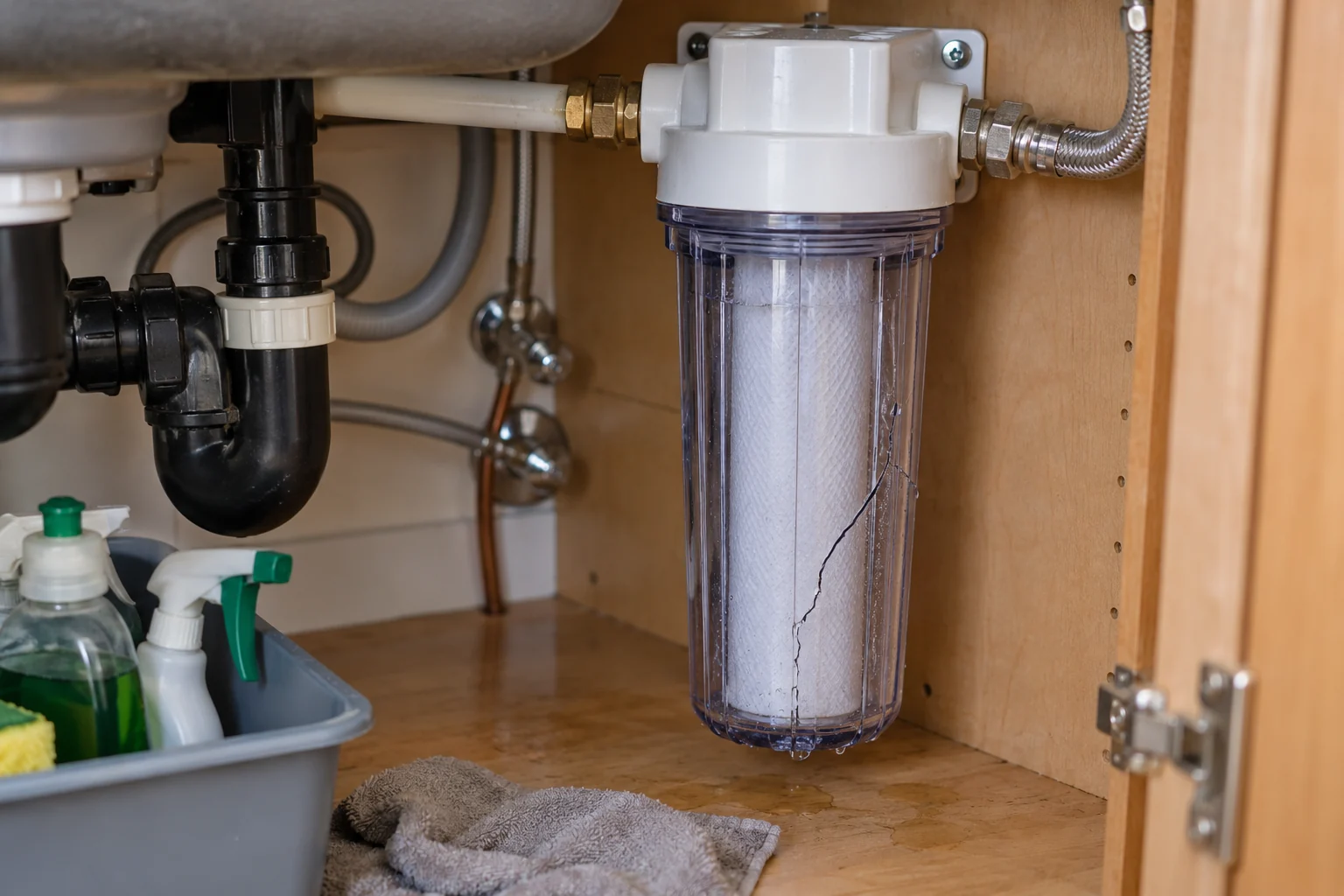
Stop using a cracked water filter housing in your Calgary home and ask a plumber to check which parts need replacing. Do not keep a pressurized cracked bowl operating because the leak seems small. Safely isolate its supply if you know the correct valve, leave the housing assembled, and arrange a compatible replacement with the cause checked before water is restored.
A structural crack is different from a seal leak
A filter assembly can leak from a worn seal, a fitting or the body itself. Water tracking down the side does not always identify its starting point. A visible split in the bowl, however, is damage to a component that holds water pressure. Tape or surface adhesive does not establish that the bowl can safely perform that job again. The plumber should identify the damaged part and check the manufacturer's replacement instructions.
A technician may first dry and inspect the outside while controlling the water source. That helps distinguish a fractured bowl from water running down from a connection above it. Do not repeatedly tighten the bowl to discover which explanation is correct; overtightening can create another fault.
Keep the housing closed until pressure is controlled
Closing a valve does not necessarily release water already held under pressure. Leave the bowl and its fasteners alone while arranging help. If a familiar, working upstream valve is safely reachable, close it and tell other occupants which equipment is unavailable. When the valve is unfamiliar, inaccessible or also leaking, explain that to the plumber rather than experimenting with several controls.
For a larger whole-house assembly, the isolation may interrupt much of the property's water supply. Plan for that interruption and avoid starting water-fed appliances. Our main water shutoff guide shows where to look for the indoor main valve. Keep the filter's own instructions handy too: its valves and pressure-release steps depend on the model.
Match the replacement to the complete assembly
Similar-looking bowls are not necessarily interchangeable. The model, connection arrangement, operating conditions and seal design matter. Photograph the label from a dry position and retain any available installation paperwork. Tell the repairer whether this is an under-sink drinking-water filter or a whole-house unit because the access and affected supply are different.
Check whether the replacement is a single bowl, a complete head-and-bowl assembly or a wider system change. A damaged thread or head can make replacing only the visible bowl an incomplete repair. Compatibility should come from the manufacturer and inspection, not the apparent diameter of the part.
Find out why the housing cracked
A crack can follow impact, freezing exposure, unsuitable operating conditions, material deterioration or an installation problem. It is not possible to choose between those explanations from a puddle alone. Mention any recent cartridge change, unusually cold storage area, collision or earlier leak. That history can guide the assessment without proving the cause. If the problem appeared during service, review why a filter housing can leak after a filter change separately from the crack itself.
In a Calgary home, a filter near an exterior wall or in an unheated space deserves a closer look at winter exposure. The City explains the risk of cold conditions to plumbing in its frozen water lines guidance. Replacing a broken part without correcting an exposure problem can leave the new assembly vulnerable.
Inspect the surrounding cabinet and connections
Water may collect behind stored items or below the base of the cabinet. Keep electrical accessories clear of the wet area and do not reach into water around powered equipment. Describe the extent of visible moisture when you request water filter leak repair in Calgary. Plumbing source control and drying damaged materials are separate parts of the response.
The nearby connections also need a check. A stressed hose or poor support can continue to leak after a new housing is installed. Clearing safe access to the assembly helps the plumber inspect the whole connection path.
Restore service with the required checks
Ask which leak checks, flushing steps and cartridge procedures apply to the repaired model. Do not assume that turning the water back on completes every requirement for drinking-water use. Follow the manufacturer's instructions and the repairer's explanation. Keep a record of the replacement part and any remaining follow-up work so the next cartridge change is based on the installed assembly.
Five details to collect before a replacement is selected
- Model and part identification: record the assembly's label and the damaged component's marking if visible. A cartridge name alone may not identify the housing that surrounds it.
- Position in the supply: explain whether the filter serves one drinking-water tap, an appliance or the whole property. This affects which users lose water during isolation.
- Recent handling: note the last cartridge change and whether the leak appeared immediately afterwards. Do not assume that timing proves the person changing it caused the crack.
- Environmental exposure: describe an unheated cupboard, exterior-wall location or impact that could affect the assembly. Include earlier freezing concerns.
- Damage path: list the cabinet, floor or room below that became wet, and any electrical equipment nearby. This helps arrange the correct access and follow-up.
Collect only information available without loosening the pressurized equipment. These notes are for planning, not permission to continue using a damaged housing. If the filter cannot be safely isolated, make that the first point in the service call rather than waiting until a replacement part is discussed.
Before the plumber leaves
Ask whether the head, threads and seals were inspected as well as the bowl. A quote for one component should explain which damage it addresses and what would change the scope. If the exact part is unavailable, ask about the implications of replacing the complete assembly rather than accepting a look-alike component without compatibility confirmation.
- Which part was replaced, and what model information should be kept?
- Was a contributing pressure, freezing or support issue identified?
- Which model-specific flushing or drinking-water return instructions apply?
- What should prompt another call if moisture reappears?
Keep those answers with the installation record. If a future cartridge service is done by another person, they should be able to identify the repaired assembly and its instructions. Do not treat an old bowl wrench, spare seal or previous cartridge package as proof that a different housing is compatible. A clear parts record makes the next service less dependent on guesswork.