Where Is The Main Water Shutoff In A Calgary Home?
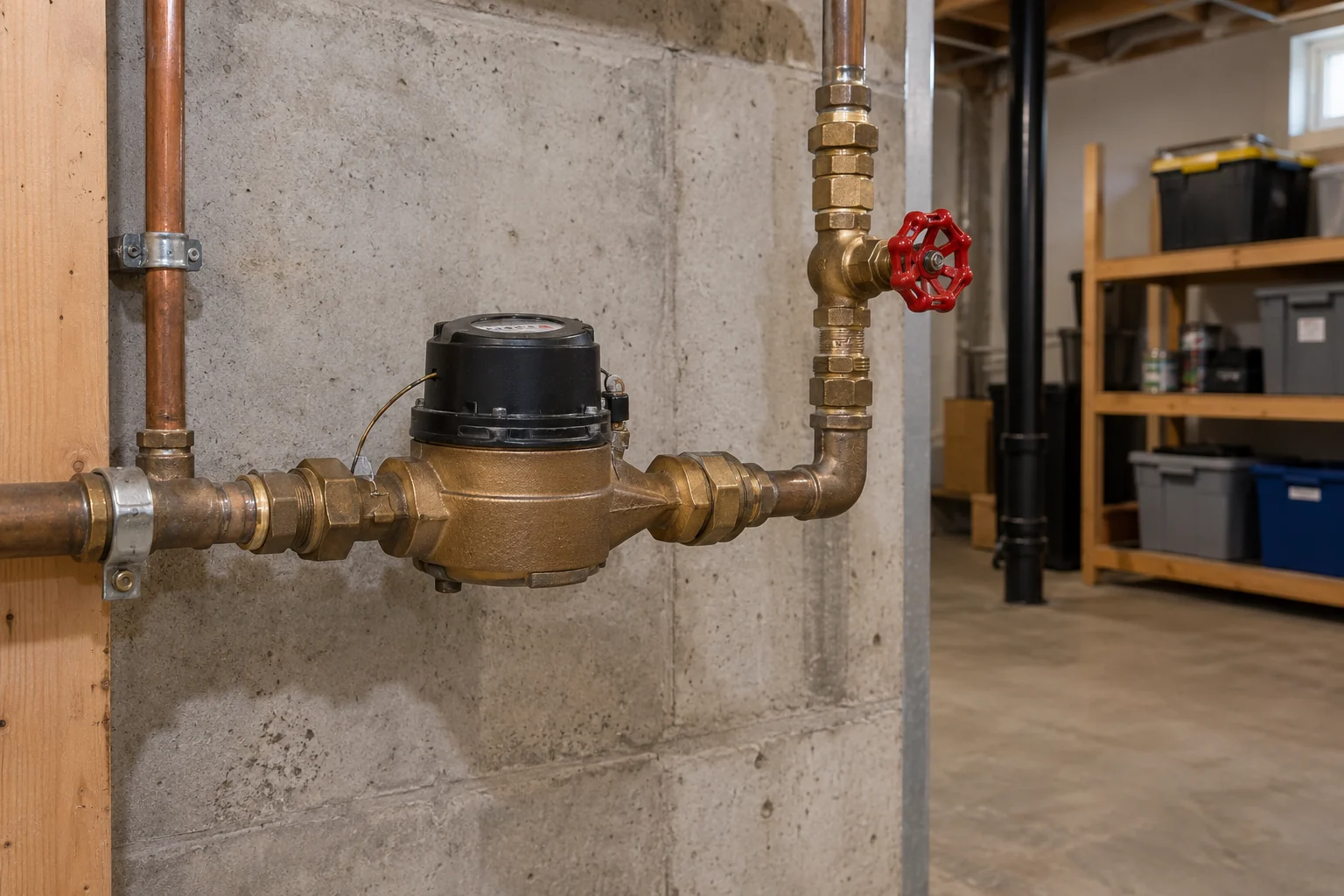
In many Calgary homes the indoor main water shutoff is near where the water service enters the building, often in a basement or utility area near the meter. Layouts differ, and condos may use suite or building controls. Find and identify the valve before an emergency; never enter water or operate unfamiliar outdoor infrastructure to search for it. If the handle is stuck when you find it, follow the precautions for a main shutoff that will not turn.
Look for the incoming water service
Start in a dry utility area and locate the water meter or the pipe entering through the foundation. Follow only the visible arrangement. The main control is associated with the incoming domestic water supply, not automatically the closest valve to a furnace, water heater or appliance. A pipe serving one fixture may look important without controlling the whole home.
If a previous renovation enclosed the meter area, check whether there is an accessible service panel. Do not break a finished wall simply to follow the line. When the arrangement is unclear, ask a plumber or the responsible building contact to identify the correct control.
Recognize different valve arrangements
A lever-style valve and a wheel-style valve can operate differently, and age or condition affects how smoothly either one works. The useful task is to have the particular valve identified and its operation explained. A handle being present does not prove the valve closes effectively or is suitable for repeated emergency use.
Ask about any restrictions before testing it. Do not use a wrench to force a reluctant household handle. If water appears around the stem or body, stop and arrange assessment through shutoff valve repair. A damaged main control is a problem in its own right.
Keep the indoor valve distinct from City service controls
Calgary also has water service controls associated with the property line. Those are not a substitute for a homeowner locating the indoor valve, and an unfamiliar outdoor cover should not be treated as an invitation to operate buried infrastructure. Some work requires a coordinated service interruption rather than an improvised shutoff.
The City explains this distinction in its water interruption and disconnection information. Refer to the current City instructions when a service valve needs attention, and let the plumber know if the indoor control cannot reliably isolate the repair.
Confirm the arrangement for suites and shared buildings
In an apartment or condominium, the valve for your unit may be in a utility cupboard, service space or another location controlled by building management. Some piping is shared. Closing a common valve without coordination can interrupt other occupants or equipment and may still fail to isolate the specific leak.
Ask the property manager which valve residents may operate and who provides after-hours access to shared spaces. Keep that contact information with the plumbing plan. A printed label should describe the actual identified control, rather than relying on an assumption that every suite has the same arrangement.
Make the control usable when time matters
Once the correct valve is identified, keep its approach clear of stored boxes and furniture. Household members should know where it is and how to describe it to a plumber. A simple photograph of the dry valve area can be helpful, especially if someone else needs to explain the layout while you are away.
Do not confuse emergency preparation with dismantling a valve. If the handle is corroded, access is poor or the valve has never been confirmed, arrange a planned assessment. A working accessible control can reduce uncertainty during a future release, but it does not eliminate the need to repair the source.
Use the location information safely during a leak
If a burst pipe occurs, the known valve is useful only when the route remains safe. Water near electrical equipment, slippery access or a damaged ceiling may prevent reaching it. In that situation, describe the hazard when seeking help and keep people away rather than entering the room to complete a checklist.
Our illustrated main shutoff guide expands on the domestic supply layout. For an active release, burst pipe repair addresses the source after isolation. Tell the plumber which valve was used and how the flow changed.
Create a household shutoff reference before an incident
- Confirm the control: have the indoor domestic valve identified if the arrangement is unclear. Do not label a nearby appliance valve as the main by appearance.
- Record the location: use the room and accessible landmark rather than a vague note such as downstairs. Include the service cupboard if there is one.
- Keep a safe photo: show the dry valve and surroundings, avoiding private documents or unnecessary equipment details. The reference is for identification, not repair instruction.
- Clarify operation: ask about the particular valve and any condition limits. A generic diagram cannot establish that an old stiff control will operate reliably.
- Maintain access: do not block the approach with stored items. Accessibility in ordinary conditions makes it easier to recognize when an emergency has made the route unsafe.
- Share the restriction: household members should know which controls they may use and when to call rather than forcing a handle or operating another system.
Questions for a condo or rental property contact
Ask whether the suite has its own identified domestic isolation point and whether residents may operate it. Establish the after-hours contact and who can access shared mechanical spaces. The answer should reflect the actual building; residents should not assume every unit in Calgary has an identical control arrangement.
Clarify what information to provide during a leak between floors. A stain in your suite may involve piping or fixtures elsewhere, and an isolated suite valve may not address that source. Do not enter another unit or operate a common valve to fill an information gap. The responsible contact needs the visible condition and access limitation.
Keep the reference with entry and emergency contact information so someone checking the property can find it. That person should understand that knowing the location does not obligate them to reach it through standing water or beneath damaged finishes. The control reference supports a safe decision; it does not override electrical, contamination or structural concerns.
If the identified valve later becomes stiff, inaccessible or wet around its body, update the plan and arrange assessment. A reference made years earlier can become misleading after renovations or plumbing changes. The useful record is a current identified control, its safe access and the person to contact when the arrangement cannot be used as expected.