Who Do I Call For Water Near An Electrical Panel In Calgary?
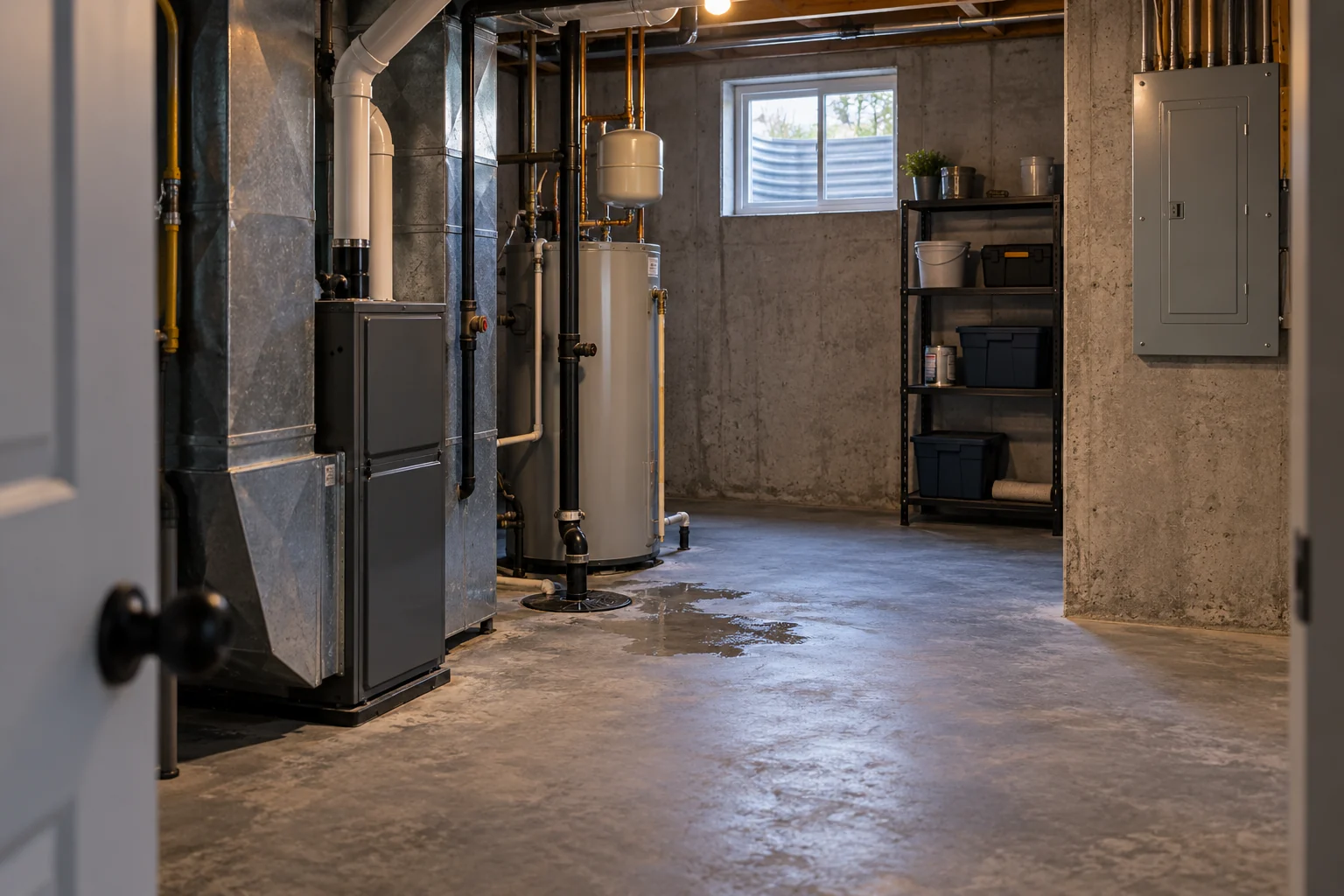
If water is near an electrical panel in Calgary, keep away from the panel and the wet area. Do not enter standing water to switch breakers off. Contact emergency services if there is immediate danger, and arrange the appropriate electrical or utility safety response as well as plumbing help. Closing a leak source does not prove wet electrical equipment is safe. If water is coming through an overhead finish, the ceiling leak shutoff decision also depends on safe access.
Describe the hazard before the plumbing symptom
When seeking help, lead with water near electrical equipment, not just a leaking pipe. Describe whether the panel itself is wet, water is standing on the floor or the route to it passes through the affected area. You do not need to approach the equipment to improve that description. What can be seen safely is enough to establish an access limitation.
If someone is in danger or there are signs of an immediate emergency, call emergency services. A plumbing booking cannot substitute for an urgent safety response. Keep other occupants and pets away from the area while the appropriate responders assess what is required.
Do not assume a dry handle means safe access
The visible front of a panel does not show the condition of everything around or inside it. Water can travel behind finishes, and standing water may create a hazard even if a handle appears dry. Avoid touching wet switches, plugs, appliances or extension leads. Do not test a circuit to see whether it still works.
Alberta's official flood cleanup advice warns about affected electrical systems and the need for inspection. That principle is relevant to an internal supply leak as well as external flooding; the safety question is what the water has reached.
Separate stopping the water from making the room safe
A plumber can assess a leaking supply pipe, fixture or drainage source once safe access is established. Electrical isolation and evaluation may require a different professional or utility involvement. Treat these as coordinated parts of the response rather than asking one trade to certify an unrelated system.
If a known working water valve can be reached in a completely separate dry area, tell the responder where it is. Do not go through the hazard to reach it. For an inaccessible main, explain that water isolation cannot currently be performed safely by the occupant.
Keep household observations limited and useful
From outside the affected area, note whether water is still entering, whether it appears clean or contaminated and which rooms are affected. If a photograph can be taken without changing your safe position, it may help communicate the arrangement. Do not move a wet appliance, remove a panel cover or lift flooring to inspect wiring.
Give the Calgary property address, building type and any shared electrical or mechanical spaces. In a condominium, building management may need to coordinate controlled access and notification. Do not operate common building equipment on the assumption that it belongs only to your suite.
Arrange the correct plumbing follow-up
Once the safety response permits access, Calgary water leak repair can address the supply source. A basement drain backup requires a different assessment, such as sewer backup repair. Describe both the source clues and the electrical proximity so the visit is prepared appropriately.
Ask what was isolated, what remains unavailable and which systems still require assessment. Clear handoff notes reduce the risk that someone restores water or uses an appliance before the related safety work is complete. Keep restrictions visible for household members and building staff.
Restore use only after the relevant assessment
A floor drying out or a pipe repair being completed does not establish that a wet panel, circuit or appliance is safe. Follow the instructions of the qualified professional responsible for that equipment. Do not interpret the absence of a visible spark, smell or trip as a clearance.
The pipe burst response guide can support documenting the plumbing incident. Preserve the repair record and the electrical assessment separately so future maintenance and any claim discussion accurately reflect what each professional confirmed.
Separate the response roles before work resumes
| Question | Relevant response |
|---|---|
| Is a person in immediate danger? | Contact emergency services and describe the water/electrical situation from a safe location. |
| Can electrical equipment be approached or used? | The appropriate electrical or utility safety response must establish the conditions; a dry-looking surface is not clearance. |
| Where is water entering the area? | Plumbing source assessment can proceed once the area is safe and the water can be shut off. |
| What happened to wet finishes or contents? | Material recovery needs separate evaluation; source repair does not certify those items. |
A safe communication sequence for occupants
- Name the location: give the exact Calgary address, affected room and whether the panel, an appliance or another electrical component is involved.
- State what is visible: describe standing water, dripping or water travelling toward the equipment without entering the area to confirm contact.
- Explain people and access: identify whether anyone is currently exposed and which routes must remain out of use.
- Identify known dry controls: tell responders about a water valve in a separate safe area if you already know it, but do not attempt access through the hazard.
- Record restrictions: keep instructions clear so another occupant does not use a wet appliance or enter the room after the first caller steps away.
If the plumbing supply is later isolated, do not tell the household that the electrical concern is resolved. Water already present can remain around equipment, and its effects need the appropriate assessment. Likewise, an electrical safety step does not fix a leaking pipe or explain the extent of material damage.
Write a restriction that the next occupant can follow
A useful notice names a boundary rather than a repair result. For example: “Do not enter the basement utility room. Water reached the area beside the panel. The kitchen water valve is closed; leave it closed. Electrical assessment is still required.” This is an example, not a notice to copy regardless of conditions. Use the actual room, control and instructions given for your incident.
Place that message where people can read it without approaching the wet area. In a shared building, give it to the person handling access and the next staff member on duty. Include a contact name so a resident with a question does not decide to inspect the equipment themselves.
When a responder changes a restriction, record which instruction changed and who gave it. Remove an outdated notice only after replacing it with the current one. A message about a repaired pipe should not erase a separate instruction about electrical equipment that has not yet been assessed.