Why Do Floor Drains Overflow At Busy Times In Calgary?
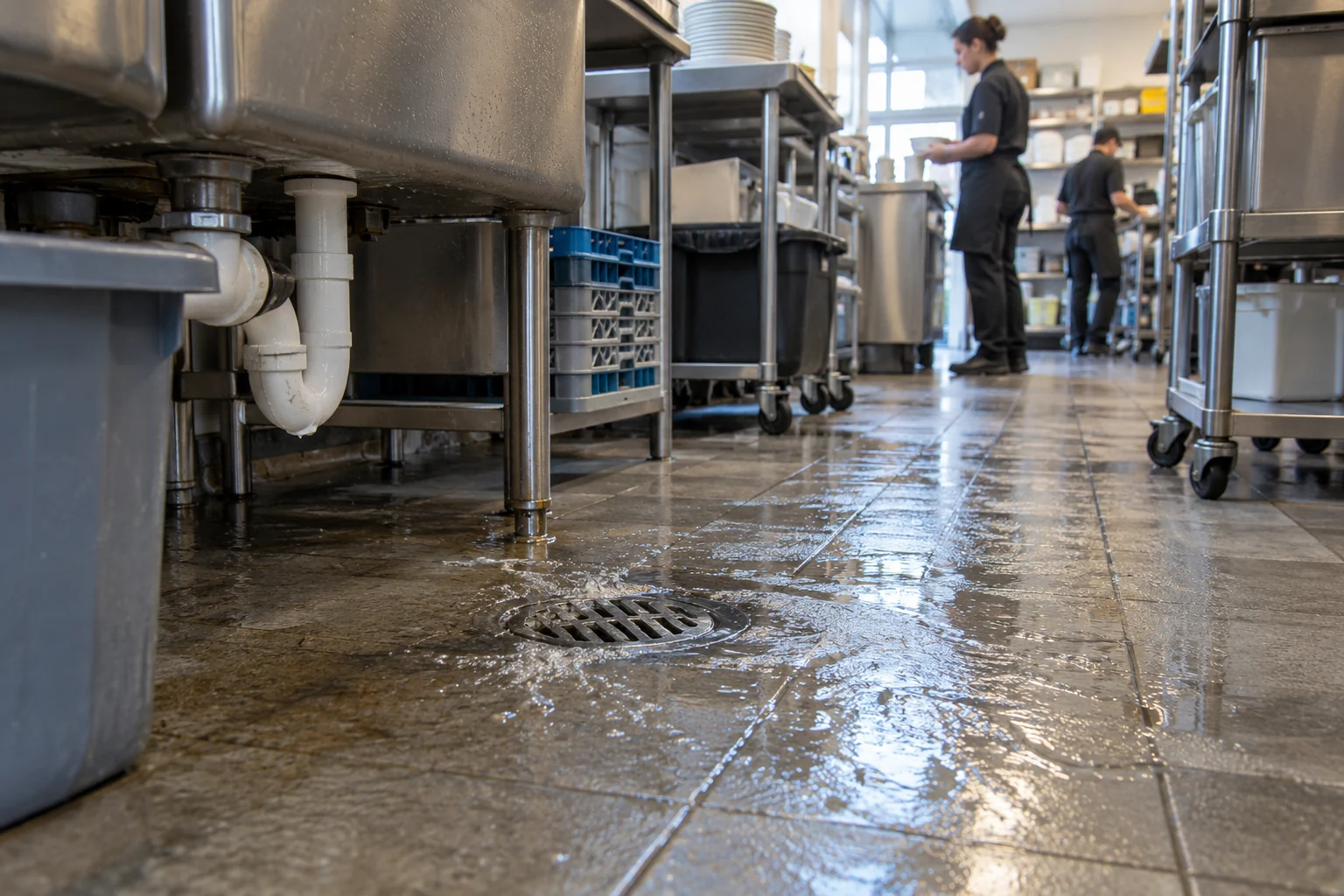
Commercial floor drains can overflow during busy periods in Calgary when wastewater reaches an affected drainage route faster than that route can carry it away. A restriction, a wider sewer problem or an installation issue may be involved; timing alone does not prove the cause. Stop discharges feeding the backup, restrict the affected area and give the plumber the equipment schedule and overflow pattern rather than repeatedly running water to reproduce it.
Connect the overflow to the activities already observed
Record which equipment was operating when the floor drain first rose. A dishwasher emptying, sinks draining and a cleaning activity may occur close together, but staff should not guess which one caused the problem. Note the order as accurately as possible. A short timeline can help the contractor understand the loads reaching the actual route.
Also explain whether the event happens only at peak use or continues after the premises become quiet. Include other slow fixtures or return points. Do not run another machine cycle to make the problem easier to show. The incident already observed provides information, and repeated discharge can spread wastewater farther across the room. Photos of the safely visible return point can supplement the report.
Do not mistake the lowest drain for the source location
A floor drain can be the visible return point when a problem exists farther along the connected route. The obstruction does not have to sit directly beneath its grate. A contractor needs the actual plumbing arrangement and the broader symptoms. Several fixtures can be affected by one restriction, while a local drain issue can have a smaller boundary.
For Calgary commercial drainage repair, identify each fixture known to be affected and provide current diagrams where available. Tell the contractor if those diagrams predate renovations. Do not remove the grate or open an unfamiliar sewer access to investigate while wastewater is returning. Staff observations and professional access work are different tasks.
Consider restricted flow before declaring insufficient capacity
A route that previously carried the normal workload may now have an obstruction or another defect. Conversely, a change in equipment or discharge pattern may need an installation review. Ask what inspection establishes. The fact that an overflow occurs during busy service cannot distinguish those explanations by itself, and increasing a pipe size is not an automatic answer.
Give the contractor records of equipment additions, renovations and earlier clearing. If a drain has been cleared repeatedly without an explanation of the recurring condition, retain that history. It may support further investigation. Avoid labelling every repeat blockage a failed cleaning job or every peak overflow an undersized sewer. The next work should follow evidence from the actual route and operating pattern.
Use a busy-period incident checklist
- Time: record when water began rising and whether it continued after use stopped.
- Equipment: identify machines and fixtures operating nearby in time.
- Other symptoms: list slow sinks, toilets or another drain return.
- Changes: note new equipment, altered routines or renovations without assigning blame.
- History: provide previous clearing, inspection and interceptor service reports where relevant.
- Products: disclose chemicals added to any connected drain.
- Access: identify known service points and obstructions without opening them.
- Site use: explain whether the area handles food, customers or specialist equipment.
Ask one responsible contact to collect staff observations so the contractor receives a consistent sequence. Different shifts may remember different details. Keep those accounts as observations and do not turn an employee's guess into a confirmed cause. A useful record can include uncertainty without being incomplete.
Stop connected discharge and protect the affected area
Restrict use that may feed the backed-up route, including appliances that discharge automatically. Tell incoming staff and cleaners which activity must stop. Do not assume another room is independent when several fixtures are affected. Ask the contractor what use can continue based on the actual installation. Keep people away from returning wastewater and water near electrical equipment.
Calgary's sewage backup guidance describes 311 reporting and triage. Share any City instructions with the private plumber. Our sewer backup response guide helps organize the immediate response. A drinking-water shutoff does not necessarily stop wastewater already in the route or an external source from returning.
Keep operational recovery separate from drain clearing
Clearing the drainage can change the floor drain's behaviour while contaminated material or equipment remains affected. Management needs a cleanup and reopening plan appropriate to the space. In a food facility, consult the applicable Alberta Health Services guidance rather than assume that removing standing water makes preparation areas ready for use. Sensitive stock or equipment may require another qualified decision.
Ask the plumber what was found and what checks were completed. If the source remained uncertain, keep that limitation in the record. A temporary restoration of flow and a demonstrated explanation of recurring busy-period overflow are different outcomes. Management should know which one the visit achieved before setting expectations for the next high-use period.
Investigate a recurring pattern under a defined plan
If inspection or controlled operational testing is proposed, ask what it aims to establish and how the site will be protected. Professional testing should account for the possibility of another overflow; it is not the same as staff running equipment repeatedly without a plan. Clarify who controls the activity and which areas remain restricted during it. When the same floor drain rises again, consider investigation beyond another clearing.
Keep the results and any limitations with the maintenance history. Recommendations might concern an obstruction, defect, discharge arrangement or maintenance need, depending on findings. Ask how the proposed change addresses the diagnosed condition. Do not approve an improvised bypass or disposal route simply to keep service moving; it can introduce other plumbing, sanitation or building concerns.
Turn the finding into a practical maintenance instruction
Once the cause is established, assign the relevant actions to a named role. That may include an equipment service provider, plumbing contractor, facility staff or management. State what warning signs require another call and keep service points accessible in ordinary conditions. Avoid an undefined instruction to clean more frequently when the real issue has not been described.
At the next busy period, staff should know the normal operation and the response to returning wastewater. If it recurs, report the time, equipment pattern and prior findings promptly instead of adding chemicals or running another test. The aim for a Calgary commercial property is a drainage plan grounded in the actual installation, so peak-time use does not repeatedly become an unexplained floor-drain emergency.