Why Do Pipes Freeze Inside Exterior Walls In Calgary?
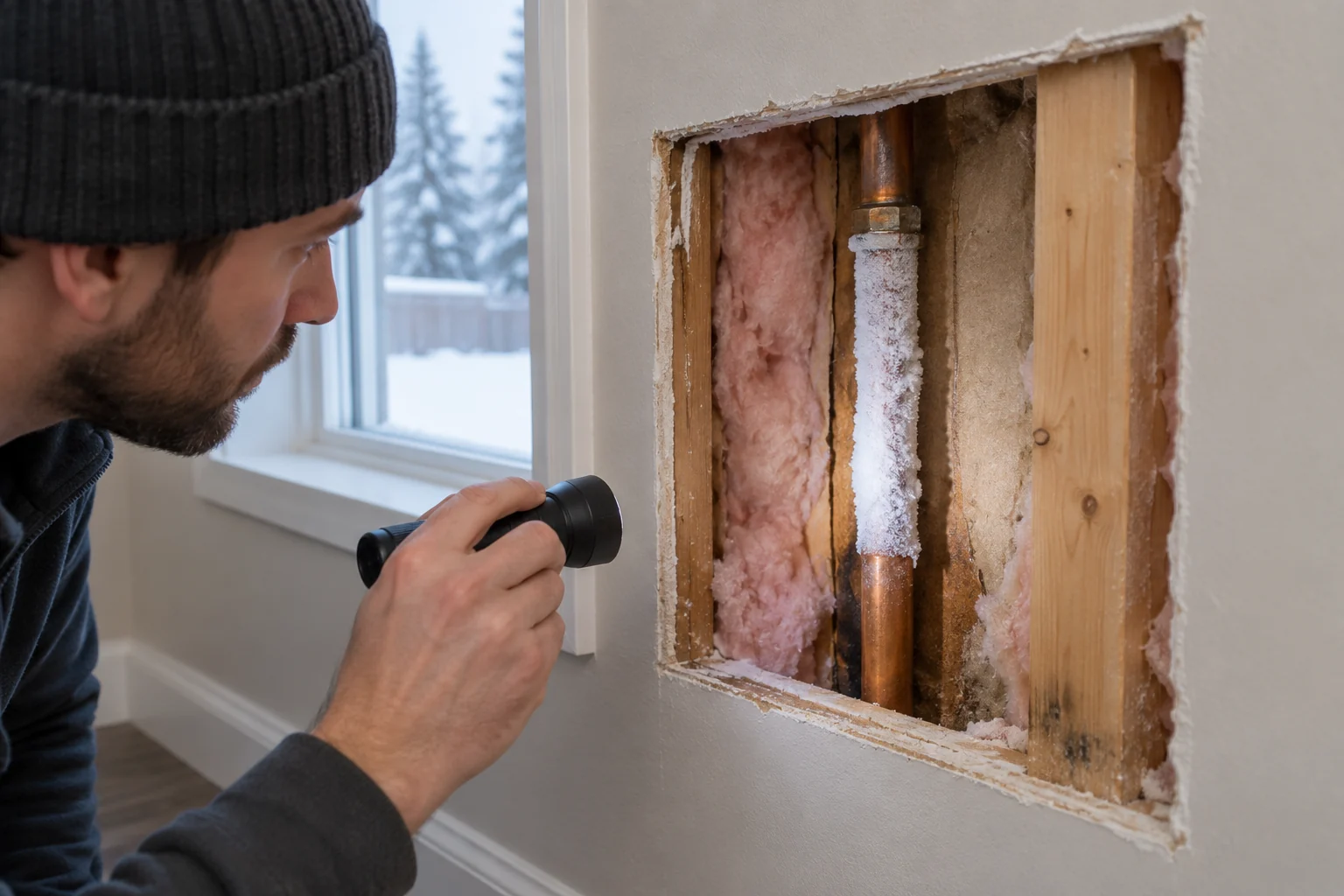
Pipes inside Calgary exterior walls can freeze when the pipe cavity receives too little indoor heat or is exposed to cold air leakage. A warm room does not prove that the concealed line is warm. Pipe placement, insulation gaps, drafts and a loss of building heat can all matter. If a fixture suddenly loses flow in cold weather or wetness appears during warming, arrange assessment instead of opening the wall or applying improvised heat.
Understand the room-to-cavity temperature difference
The thermostat measures its own location, not the temperature around every concealed water line. A pipe installed near the exterior side of a wall may have limited access to room heat. Insulation or cabinetry can further separate it from that heat. An opening carrying cold outside air into the cavity can create a local exposure that is not obvious while standing in the kitchen or bathroom.
This explains why the rest of a Calgary home can feel comfortable while one fixture develops trouble. It does not prove a design defect without inspection. The important observation is the mismatch: normal heating in occupied rooms combined with a cold-weather change at a particular fixture. Describe that pattern to the plumber rather than raising the thermostat repeatedly and assuming the concealed location must respond immediately.
Recognize cold air paths near the affected fixture
An accessible draft beneath a sink or around a nearby exterior penetration can be relevant. The City of Calgary's frozen water line guidance recommends checking unheated areas and places under kitchen and bathroom cabinets for cold exposure. That is a starting point for observation, not permission to dismantle a wall or alter required ventilation. If flow has already changed, check the first signs of a frozen pipe before treating this as a routine insulation project.
Note recent work near the fixture, damaged exterior seals or a door that has been left open. Provide photographs of visible conditions from a safe position. A draft felt in one opening may not reveal the full air path. Building-envelope repairs and plumbing changes can require coordinated work, especially if the problem involves concealed insulation, fire separation or an exterior assembly that must maintain its other functions.
Separate one frozen branch from a broader supply problem
Compare the reported extent without repeatedly operating affected fixtures. If only the bathroom on an exterior wall has little flow, that information suggests a different assessment than the whole property losing water. If neighbours are also affected or the City has announced an outage, report those facts. The timing of a cold spell alone does not identify a private frozen pipe.
Our frozen pipe assessment service can investigate a private plumbing concern. For condos or townhomes, notify management where common supplies or controlled access may be involved. Do not operate a shared shutoff to test a theory. A clear description of which fixtures still work helps the responsible contact narrow the problem without the resident needing to diagnose concealed piping.
Use safe immediate actions while arranging help
- Keep the building's ordinary heating operating and report a heating failure separately.
- Identify whether there is active water release, not merely reduced flow.
- Keep people away from wet outlets, equipment and unstable wall or ceiling finishes.
- Locate a known safe indoor shutoff before a leak becomes harder to control.
- Notify the owner or building manager if access or shared controls are involved.
- Describe the affected fixtures, timing and visible frost or drafts to the plumber.
- Follow current City reporting instructions if a frozen service line is suspected.
Do not force a stiff valve or enter a hazardous space to reach it. If conditions change from no flow to leaking, tell the contact promptly. The response may need to address source control rather than only thawing. Document safe observations so later decisions are based on the actual progression, not a remembered assumption that the line was intact.
Avoid heating methods that create a second emergency
A hidden pipe cannot be safely treated by aiming an open flame at a wall. That can damage materials or start a fire without warming the frozen section effectively. Likewise, an unattended portable heater near cabinetry can introduce risk. Electrical equipment must not be operated where water makes its use unsafe. Uncertainty about the pipe route is a reason to seek help, not a reason to increase the heat source.
The Calgary frozen pipe guide explains the warning signs and limits of household observation. A plumber can determine what access and controlled thawing approach fit the installation. If wall access becomes necessary, ask who will make the opening, what systems are behind it and who handles restoration. An emergency assessment should not assume that a homeowner can safely expose concealed piping themselves.
Watch for leakage as temperatures recover
Ice may temporarily restrict water reaching a damaged section. When the obstruction thaws, that restriction can change and a leak may become apparent. A dry wall during the coldest period therefore is not proof that there is no damage. Report staining, dripping, a bulging finish or new water sounds after warming. Avoid touching electrical fixtures or pushing on a swollen ceiling to investigate.
Keep any temporary isolation instructions in place until the responsible professional advises otherwise. Restored faucet flow is useful information, but it does not inspect the concealed cavity. Ask whether the affected line has been checked for leakage and what remains inaccessible. If water entered building materials, arrange a separate assessment of those materials rather than treating a repaired pipe as complete recovery of the wall.
Ask what a durable correction would change
Repeated freezing at the same exterior-wall fixture warrants a review of the exposure rather than recurring emergency thawing alone. Possible work might involve air leakage, insulation arrangement, pipe routing or heat access, but the appropriate correction depends on what inspection establishes. Do not prescribe a generic extra sleeve as the solution before understanding why the particular line loses heat.
Ask the contractor to explain the proposed work in practical terms: which vulnerable section changes, how it gains protection and what access is needed. Clarify permit requirements for the actual plumbing alteration and who restores finishes. Where several trades are needed, assign responsibility for the final wall assembly. A plumbing repair that leaves the same cold-air path may not resolve the recurring concern.
Keep a useful record for the next winter
Record the affected fixture, date, heating condition and professional findings. Include the repair scope and any remaining limitation. If the cavity was not opened, do not label the entire route inspected. The record should distinguish what was observed from what was inferred. This is particularly helpful when a future owner, tenant or maintenance worker encounters a similar symptom.
Before another cold season, confirm that agreed permanent work is complete and ordinary heating remains reliable. If monitoring is used, consider whether its location actually represents the exposed area. A room sensor cannot establish a concealed pipe's temperature. The useful goal is a documented prevention plan for the vulnerable line, with a clear response if flow loss or wetness recurs.