Why Do Poly B Fittings Leak In Several Places In Calgary?
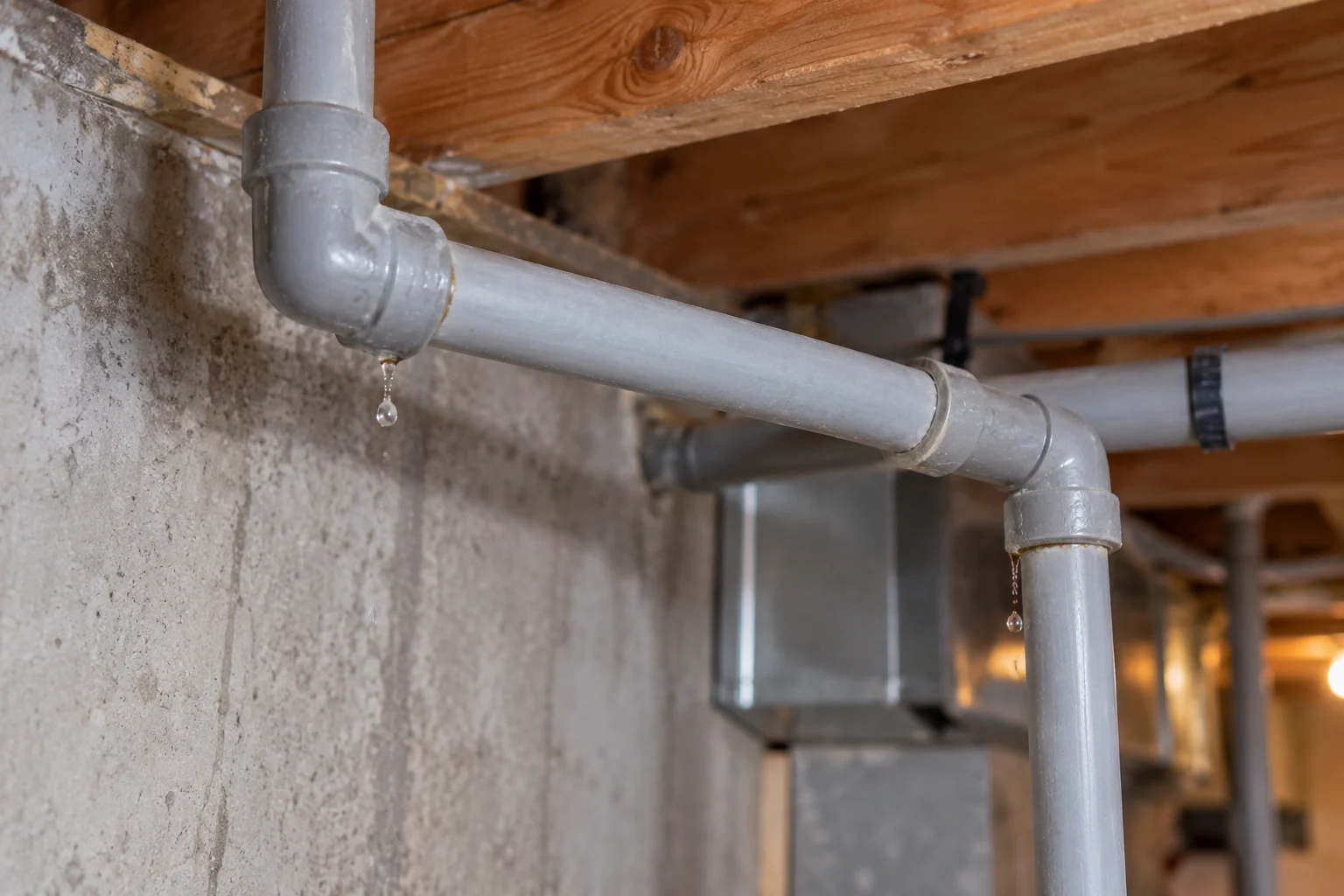
Several Poly B fittings in a Calgary home can leak because more than one fitting has cracked or because a shared condition, such as excessive water pressure, stresses several connections. The City advises checking visible joints for cracks and reducing pressure stress on this piping. That does not prove every leak has one cause. Have the failed parts and operating conditions assessed before choosing another local repair or wider work.
How A Shared Condition Can Affect Several Fittings
The City of Calgary’s Poly B guidance recommends checking visible joints for cracks, considering metal replacements for plastic fittings, and reducing pressure stress. Cracked fittings can release water at separate points. A measured pressure problem deserves consideration across connected components, but the number of leaks does not prove that cause.
Compare the failed parts and their locations. Plastic-fitting failures call for a different explanation than leaks in unrelated fixtures. The City does not recommend automatic replacement of every trouble-free installation. Repeated leaks warrant a property-specific plan, not a prediction that all remaining connections will fail on a particular date.
Build a leak history that identifies components
Start with each incident's location, date and repair invoice. Record whether the failed part was a fitting, tubing, shutoff valve or transition to another material. A dripping faucet and a leaking supply joint are different events, even when both occur in a home containing Poly B. Combining every water incident under one material label makes the pattern harder to understand.
Photographs can help, especially if the failed component was removed. Add the contractor's findings where available. If an older invoice simply says "fixed leak," mark the component unknown rather than inventing a diagnosis. A timeline of confirmed failures lets the next plumber see whether several similar joints have leaked, whether one repaired location keeps recurring or whether the incidents involve unrelated systems.
Ask whether the water is coming from the fitting itself
A wet fitting may be the source, but water can also travel along piping or drip onto it from above. The source needs to be identified before another component is replaced. A useful inspection follows the water and records what was seen, without assuming that the first wet joint is responsible. Concealed piping may require controlled access when visible observations cannot establish the route.
For an active release, arrange Calgary Poly B leak repair and explain the previous incidents. Tell the plumber whether the water continues with fixtures off and whether a known shutoff changed it. Avoid repeatedly disturbing the joint to demonstrate the leak. Pulling an older line or tightening a connection without knowing its condition can complicate the repair.
Review the remaining accessible connections
After controlling the current leak, ask what other exposed fittings were checked and what the check found. Visible cracks, wetness or poor support are different observations and should be recorded specifically. The contractor should explain whether a finding applies to one location or appears repeatedly. "All the pipes are old" is not a detailed inspection record.
Calgary's home maintenance guidance discusses checking visible Poly B joints. That does not mean a homeowner should flex tubing or dismantle fittings to test them. Use ordinary observation from safe accessible locations. If most of the supply is concealed, say so when evaluating a recommendation; an inspection of a few visible joints is not an inspection of every connection in the house.
Check shared operating conditions without adjusting them yourself
Where several supply connections have failed, a plumber may review water pressure, support, temperature exposure and the compatibility of prior repairs. These are possible lines of investigation, not a diagnosis delivered from a blog article. Ask what was measured or inspected and what the findings mean. A statement about high pressure should be backed by an actual check, not inferred solely from a leak.
Do not change a pressure-control device, water-heater setting or unfamiliar equipment in an effort to protect the fittings. Those changes can affect other requirements and may not address the actual failure. Explain recent plumbing work, unusual pressure symptoms or changes in equipment operation to the contractor. The goal is to identify a shared condition where one exists, rather than replace another part while the underlying concern remains unexplained.
Compare recurring locations before deciding on more work
- Same connection: establish whether the earlier repair failed, another nearby component leaked or the water source was misidentified.
- Several similar fittings: ask whether the removed parts show a comparable problem.
- One exposed area: review local support, handling or temperature exposure with the contractor.
- Different rooms: use the documented history to decide whether wider inspection is justified.
- Mixed materials: identify the actual transition and the components used in each repair.
- Unknown concealed routes: keep them listed as unknown instead of assuming they match visible plumbing.
A pattern can justify a wider review without proving that every remaining line is about to fail. Ask how strongly the available evidence supports the recommendation and what additional inspection would change it. This allows a practical discussion of local repair, planned replacement or further checks without false certainty in either direction. Several confirmed fittings change the evidence available for the repair-versus-replacement decision after a Poly B leak.
Do not let temporary control become an undocumented permanent fix
If a line is isolated to stop water, record which fixtures are unavailable and who may restore them. A closed valve controls flow; it does not repair a leaking fitting. Likewise, a temporary measure should come with an explanation of what still needs to be done. Make sure other occupants understand the restriction so someone does not reopen the supply without knowing why it was closed.
Use the pipe leak response guide for the first household actions if water is spreading. Keep away from wet electrical equipment and unstable ceilings. A source repair may be urgent even while the long-term choice is still being considered. The decision about replacing wider portions of the home should not delay controlling the current release.
Compare written repair and replacement scopes
A quote for another joint repair should identify the location and replacement boundaries. A quote for wider work should identify the routes, access, water interruptions and exclusions. Ask who handles wall openings and finish repairs. If a concealed area cannot be reached within the stated scope, find out how that uncertainty is handled rather than assuming it is included.
For a condo or townhouse, management may need to clarify common-system ownership and access. An individual unit's leak does not automatically authorize work on a shared riser or another suite's supply. Keep the contractor, owner and responsible building contact aligned on the scope. Where permits are relevant, clarify responsibility using Calgary's plumbing permit information and the proposed work, not a general assumption that emergency work is always exempt.
Keep the findings useful after the next repair
Ask for a record identifying the failed component, completed repair, any measured operating issue and remaining recommendations. Separate source repair from repair of the wet cabinet, wall or flooring. If water reached concealed materials, drying and restoration need their own evaluation. A repaired fitting does not establish that the surrounding area has recovered.
Retain the records together and use them if another incident occurs. Report the new location instead of assuming it has the same cause. Repeated Poly B fitting leaks deserve a careful explanation of the pattern, but a reliable explanation must come from the property and its components. The best next step is one supported by documented findings, with clear boundaries for what the chosen work will and will not address.