Why Does My Sump Pump Run But Water Stays High In Calgary?
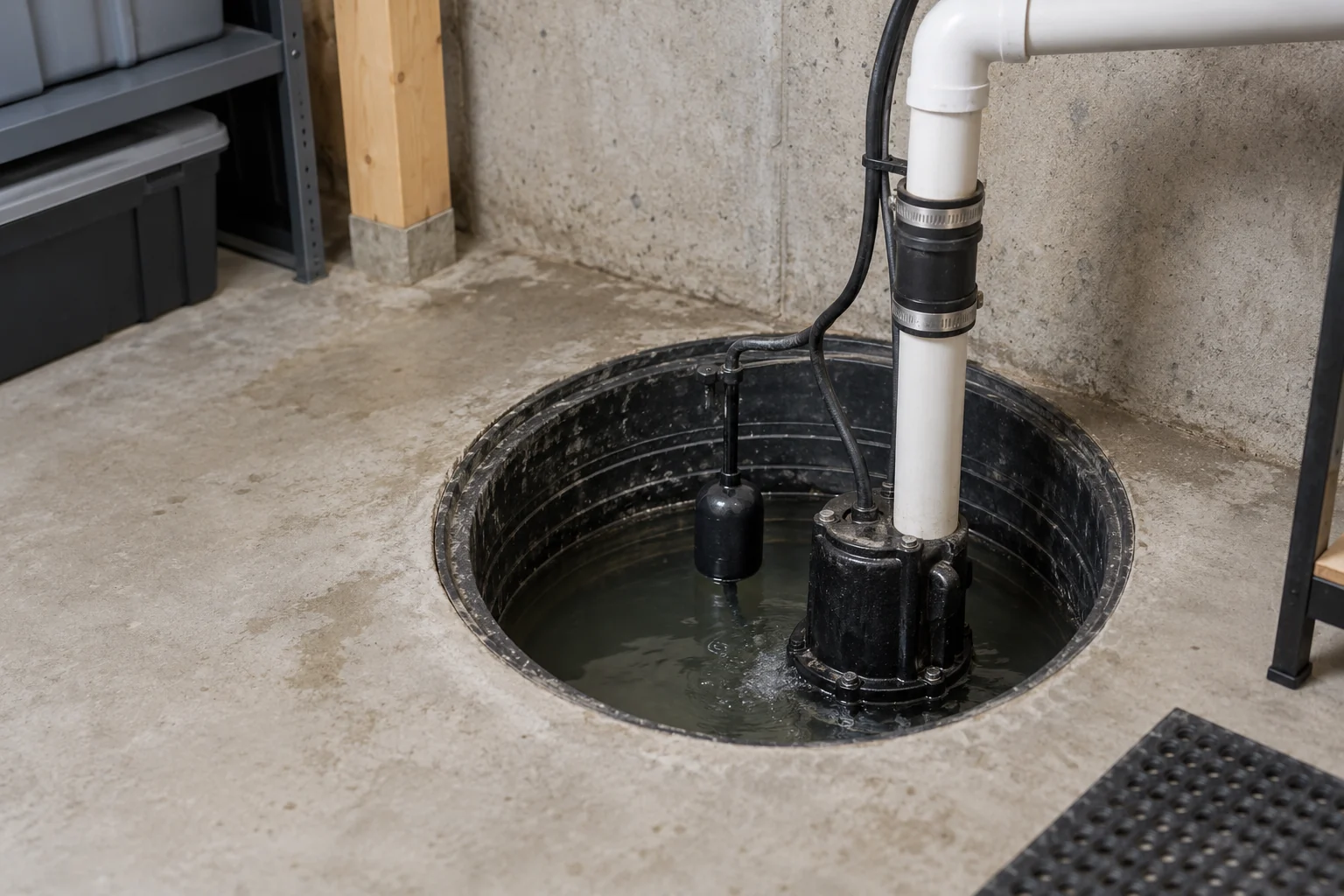
A Calgary sump pump that runs constantly while water stays high may be unable to move water, may be sending it back to the pit, or may be receiving water faster than it can remove it. Shut people out of a wet electrical area and arrange qualified assessment. Do not assume the running sound means the building is protected. Note whether the water level is rising, steady, or falling and whether the discharge outlet shows flow from a safe location.
Separate intake, pump, and discharge problems
A clogged intake, damaged impeller, failing motor, stuck check valve, blocked discharge, or disconnected outlet can produce similar observations. The contractor needs to inspect the full path, not just replace the motor because it is loud. A blocked line may let the pump run against resistance; a failed check valve may let water return immediately when it stops. Report cycling sounds and any visible return flow. Do not open the pit while the equipment is energized.
Consider the inflow rate during rain or thaw
Heavy rain, snowmelt, or changing groundwater conditions can fill a pit faster than the installed system handles. If the discharge line is clear but the level still rises, ask whether the pump’s capacity, intake arrangement, and actual inflow need review. A larger pump is not automatically the answer: the discharge path and destination must handle the flow. Building drainage and exterior water management may also need assessment.
Look at where discharged water ends up
If the outlet releases close to the foundation or a hose has fallen back toward the building, some water may circle into the sump again. Ice, debris, or a crushed line can restrict an outdoor run. Staff can report visible conditions without digging, removing covers, or entering wet electrical spaces. Ask the service provider to verify the permitted discharge destination and whether surface grading or drainage work belongs to another contractor.
Use measurements instead of a running-time guess
Record the pit level at safe reference points, the time, rainfall conditions, alarm state, and whether the pump starts and stops. A short video from a dry position may show rapid cycling or return flow. A pump that runs all night in unusually high inflow and one that runs dry because a switch is stuck require different remedies. Tell the contractor about prior repairs and whether the problem appeared only after a change to the site.
Verify the cause before returning the room to service
Ask the contractor to demonstrate the repaired flow path and explain the test. Check that the level falls under a controlled test and stays appropriate after shutoff. If water damaged finishes or stored contents, arrange cleanup and electrical assessment separately. Keep the maintenance log current and revisit capacity or backup planning if the system barely kept up. A normal sound alone is not the completion check.
Compare Flow Failure With Excess Inflow
| Pattern already observed | What the technician should distinguish |
|---|---|
| Motor runs; little outlet flow | Pump performance, intake restriction and discharge obstruction. |
| Water returns after stopping | Check-valve behaviour and the route back to the basin. |
| Outlet flows; basin still rises | Inflow versus delivered capacity under actual conditions. |
| Motor runs at a low level | Controls and whether the pump is operating as intended. |
| Frequent short cycles | Start/stop control, basin arrangement and returning water. |
These patterns guide an inspection; they are not reliable part orders. For example, seeing water at the outlet establishes some discharge, not enough capacity for every inflow. Likewise, a quiet outlet may be inaccessible or difficult to observe rather than blocked. Tell the contractor which part of the route could actually be seen and which remained hidden.
Give The Service Team Comparable Observations
- The identified basin and pump, plus whether another pump was operating.
- Two observed level descriptions with their times, using the same visible reference.
- The period the motor was heard running and whether it stopped at any point.
- Any observed outlet flow, return flow or alarm sequence.
- Weather and site changes that coincided with the complaint.
Do not reach into a basin to create a measurement reference. A description such as “water rose from below the visible inlet to above it during the observation” can be useful when obtained safely. If a reference is not visible from dry access, explain that the level could not be compared. The Calgary sump pump repair provider can establish suitable test observations during the visit.
A Replacement Quote Should Explain The Flow Path
Before approving a new pump, ask what evidence connects the proposed component to the high level. If the outlet is obstructed, changing a working motor may leave the same problem. If verified discharge is insufficient during unusually high inflow, the review may need the basin, controls and outlet arrangement as well as pump capacity. Request the finding behind the recommendation, not only the replacement model.
The guide to sump pump failure and basement water can help organize those questions. Ask whether the visit established flow at the intended destination, whether water returned after stopping and whether all installed pumps were included in the check. If the outlet could not be reached or the storm conditions were absent, preserve that limit and assign the remaining check.
Use The Result To Address Recurrence
If the contractor finds returning water, have the repair note identify the actual path involved. Water emptying backward through the discharge and water reaching the foundation again from the outside are different findings. The first concerns the pumping arrangement; the second may involve site drainage. A note saying “recycling water” without a location makes it difficult to arrange the right follow-up.
If the level falls during a controlled test but rose during the storm, retain both observations. A functional test can show that equipment operates under those test conditions without settling capacity at peak inflow. Management should ask which additional measurements or design review would clarify the storm complaint. Avoid recording a dry-day pass as proof that every heavy-rain scenario has been resolved.
For water already outside the basin, use Alberta’s flood cleanup guidance in the separate recovery discussion. The service record should preserve the running/high-level complaint and its outcome, while cleanup records describe the affected rooms and materials. Keeping them distinct helps the next manager see whether pumping was corrected even if building recovery took longer.