Why Does My Hose Bib Leak Indoors In Calgary?
An outdoor hose bib can leak inside a Calgary house when the pipe, tap body or concealed connection behind the wall is damaged. A frost-free tap that split during freezing may leak indoors only when someone opens it outside. Stop using the tap, safely close its known indoor isolation valve if available, and have the concealed supply and fixture inspected before using it again.
Notice whether the leak follows outdoor tap use
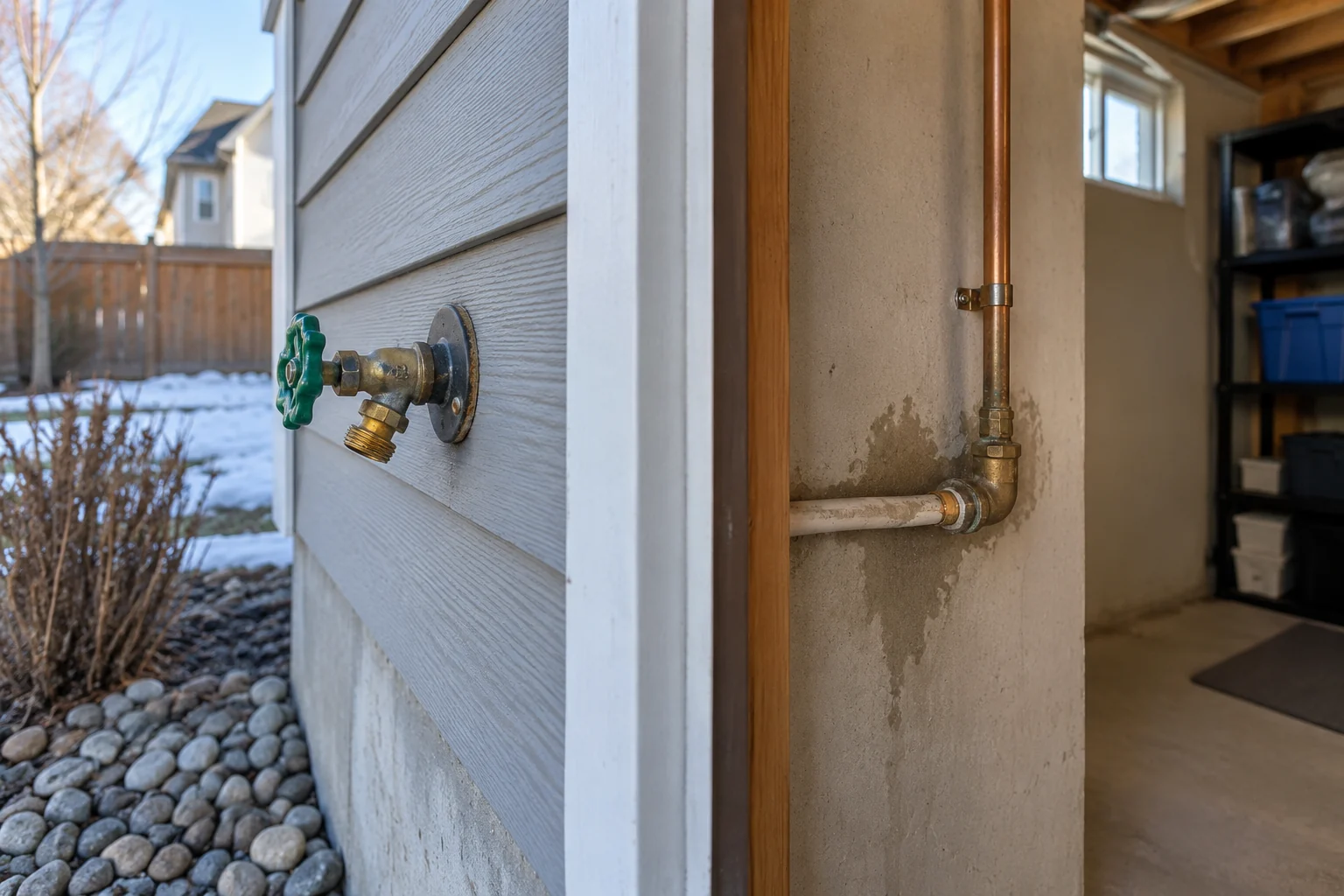
Water appearing indoors when the garden tap runs is an important clue. Record whether the moisture starts immediately, how long the tap has been open and which interior area becomes wet. A crack farther along the tap body can release water into the wall instead of visibly dripping outdoors. Water can then follow framing or a pipe penetration and appear below the actual break. A split that first leaks when the hose is used can follow freeze damage in a frost-free outdoor tap.
Do not keep reopening the tap to reproduce the leak for a video. One clear account of the pattern is useful; repeated testing can send more water into hidden materials. A photograph of the visible stain from a safe, dry position is sufficient for the initial conversation.
Understand where a frost-free tap actually closes
Many frost-free taps place their working shutoff farther inside the building. The exterior handle operates that internal mechanism through a long body. This arrangement helps when the device is correctly installed and able to drain, but it does not make every part immune to freezing. A damaged body can remain unnoticed until water flows through it again.
An indoor drip that continues even when the outdoor handle is closed may point to a different fault, such as a supply connection or an internal seal. The plumber needs to inspect the arrangement rather than assuming every springtime leak is a frozen tap.
Close the known indoor supply valve, if you can reach it safely
If you know the indoor valve serving that outdoor tap and can reach it safely, close it gently. Label or communicate the isolation so someone else does not turn it on. Stop if the valve resists normal operation or starts leaking. A damaged isolation valve can turn a localized problem into an active indoor supply leak.
Some homes have no separate accessible hose-bib shutoff. Use our household water shutoff guide to understand the main valve, and tell the repairer whether broader isolation will affect the property. Do not operate shared building valves without the responsible building contact.
Inspect the inside connection as well as the tap
Replacing the visible outdoor fitting may not address a cracked pipe or an unsupported connection inside. Give the plumber access to the nearest safe interior area, including a utility room or basement ceiling where relevant. Mention recent renovation, a hose left attached through winter or a previous repair, because those details help identify what should be examined.
The City of Calgary's frozen water lines information provides local cold-weather context. It does not diagnose a specific fixture. A repair plan still needs to account for the actual pipe route, installation and condition.
Check the wet area beyond the obvious stain
A small mark can hide a larger moisture path. Tell the plumber if water reached insulation, drywall, flooring or a finished ceiling. Keep people away from sagging material and do not remove wet ceiling panels yourself. Where electrical equipment is involved, stay out of the affected area until it has been made safe by the appropriate professional.
Hose bib leak repair in Calgary addresses the fixture and supply fault. Ask separately about moisture assessment if building materials stayed wet after isolation. Stopping the water and restoring damaged finishes are different scopes.
Verify normal use before putting the hose back
After repair, the installer can check operation and the accessible indoor connections while the fixture runs. Ask how the tap should be winterized and whether an indoor branch valve forms part of that process. Keep the fixture's instructions with the repair record. A frost-free label is useful only when the assembly is installed and used in the conditions it was designed for.
Details worth writing down
- Before use: was the interior area dry, already stained or damp from an earlier incident?
- During use: did water appear as soon as the tap opened, after several minutes or only when a spray attachment was used?
- After closing: did the visible flow stop, slow down or continue unchanged?
- During isolation: was a known indoor branch valve closed, and did that valve remain dry?
- Other fixtures: did nearby plumbing also show moisture, or was the issue closely tied to this outdoor connection?
Use what has already happened to answer these points; do not recreate the leak. A brief timeline can help the plumber plan the inspection, especially when the wall has dried by the time of the visit. Keep visible damage photographs alongside the timeline without assuming that a dry surface proves the cavity is dry.
What different leak patterns can tell you
| Observation | What needs checking | What to do now |
|---|---|---|
| Indoor leak only while the outdoor tap runs | Tap body and the flow path inside the wall | Keep that fixture out of use |
| Water continues with the outdoor handle closed | Supply connection, internal shutoff and other nearby sources | Report the continuing release promptly |
| Exterior drip with no visible indoor moisture | Handle, seals and exterior connection; indoor condition may still need inspection | Do not overtighten to hide a fault |
Tell the plumber which pattern you noticed; they will still need to inspect the tap and connections. Water can continue moving through building materials after its source stops, and several connections may share the same wall area. The inspection should establish the source before a replacement is chosen.
For a finished room, also ask how much access is necessary and who restores any opening. A small exterior repair may require indoor access to a concealed connection. Clarifying that before work begins helps the owner prepare the room and understand which finishing work belongs outside the plumbing repair.
Tell the installer if the exterior fixture moves when a hose is attached. Movement can place strain on its concealed connection and deserves assessment before normal use. Describe the observation without pulling on the tap to demonstrate it.