What Must A Site Manager Check Before Pumping In Calgary?
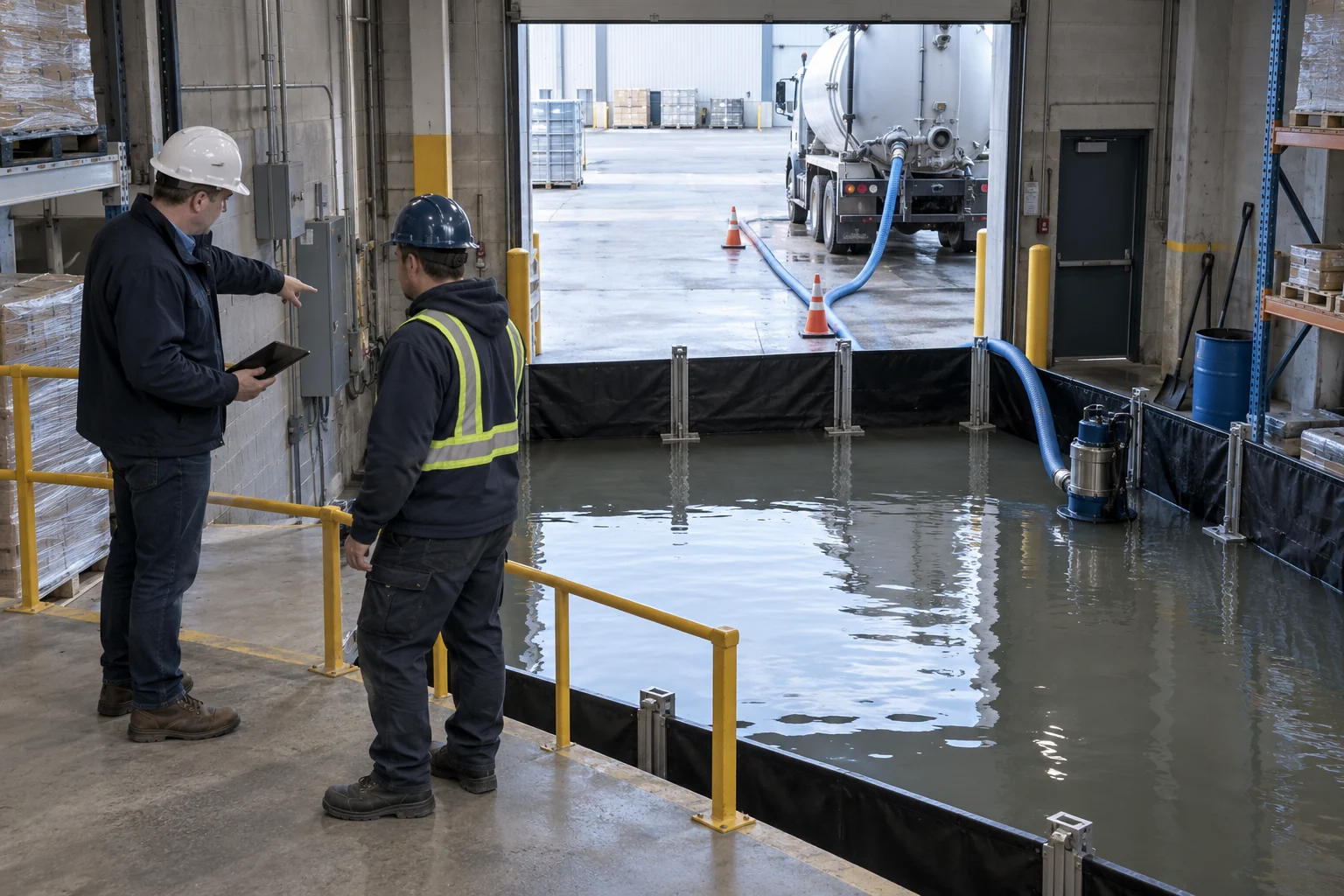
Before bulk removal starts, a site manager should confirm the known material and source, current hazards and access, the contractor’s scope and receiving plan, and who authorizes work and receives the handover. Keep unknowns visible and assign outstanding source or equipment checks. Staff should not enter unsafe water to complete a booking checklist.
Before an emergency pump truck arrives, confirm the water source status, contents, access route and the site contact authorized to coordinate removal.
Describe The Known Material And Origin
Give the contractor the established origin and known contents, and mark the rest as unknown. A building manager should not classify a load from its appearance just to complete a form. If product or site records are safely available, provide them. The information affects handling and the receiving route, so disclose it before equipment is selected or collection begins.
Confirm Safe Work Access Through The Right People
Name the electrical or other appropriate contact dealing with unsafe access. Tell the removal crew what has been established and what remains unresolved. Do not have employees walk through water to provide a cleaner access route or inspect an outlet. A site checklist helps coordinate qualified work; it is not permission for management to certify the room’s electrical or structural condition. See wastewater for the related question.
Clarify The Source Status
Record any control used, its authority and the observed effect on inflow. If affected fixtures remain closed, make sure occupants know that restriction. The removal contractor needs the current condition rather than an outdated report from when the liquid was first discovered. If source repair is separately arranged, provide that contact so the work stages can be coordinated.
- Identify a site contact who can approve the defined scope and coordinate access.
- Give the crew the safest known route, floor level, water extent and any vehicle limitations.
- Report energized equipment, chemicals, sewage or unknown material before anyone enters the affected area.
- Confirm where removed material will go and how the team will document what remains after collection.
Agree On The Contractor’s Actual Scope
Ask the contractor to explain the intended result and which tasks are outside the visit. A scope might involve a named collection area without including drying, plumbing diagnosis or every contaminated surface. Do not equate an extensive truck operation with a comprehensive building recovery. Put outstanding tasks into the incident record with a contact responsible for each one.
Confirm Handling And Receiving Responsibility
Confirm that the material and intended destination are being handled through the applicable process. Calgary’s hauling guidance does not accept every kind of waste, and other receiving arrangements may apply. Do not suggest that staff open a drain to provide a convenient outlet. Keep collection, transport and receiving responsibility clear instead of leaving the final decision until the liquid has been gathered.
Arrange Authority Keys And Occupant Notices
Choose a reachable contact who can meet the crew and obtain any further authorization. Explain tenant or shared-area access requirements before arrival. Notify affected users about the actual work route and operations restriction without giving an unconfirmed reopening time. The person with keys and the person authorized to approve work may be different; the crew needs to know both arrangements.
Keep An Incident Record With Named Tasks
Use the record to track the next action, not just list everyone contacted. For each remaining task, name the responsible person, the condition it addresses and the current restriction. Keep customer and tenant information limited to what the work needs. A clear factual record helps later contractors and shifts without including speculative liability or insurance conclusions.
Bulk collection can clear a work area without resolving electrical or material hazards. Alberta’s flood cleanup and utility-safety guidance helps the site manager plan those additional assessments before normal access resumes.
Define The Handover And Reopening Decision
Ask the contractor to state what was completed and which area or operation is cleared by that result. If electrical, contamination or material work remains, carry those restrictions forward. The manager should not reopen simply because the bulk liquid has gone. Assign the final decision to the appropriate building process and professional findings rather than to the employee who sees the truck depart.
Before the truck is positioned, confirm who can authorize a changed plan if the crew finds a different material or unsafe route. Record the contact name, affected rooms and any shared-building notice needed. A brief call before collection can prevent staff from reopening an entrance or restarting a fixture that sends more water into the work area.
Use A Pre-Start Decision Record
Before collection, ask the responsible contacts to confirm the current entries in one shared record. This is a coordination check, not a staff inspection of the flooded area. Information may have changed since the original booking: a supply may now be restricted, another room may be affected or a receiving decision may still be pending.
| Decision | Record before the crew starts |
|---|---|
| Material | Known origin and contents, with uncertainty and safely available product records. |
| Access | Route established for the work and the contact handling unresolved hazards. |
| Collection objective | Named area and result agreed with the contractor. |
| Handling | Person establishing the receiving route for the actual material. |
| Authority | Reachable person who can approve a changed scope. |
| After collection | Source, equipment and recovery tasks still assigned to other providers. |
If an entry is unresolved, tell the contractor rather than fill it with an assumption. A booking note saying “water only” should be corrected if process contents are later identified. A note saying “access ready” should be updated if the electrical condition remains unaddressed.
Use the same record at handover to identify what changed. Record the area collected and carry forward unfinished tasks with their contacts. That lets the manager distinguish a completed removal scope from the separate conditions controlling ordinary use of the site.
Give the Calgary removal crew a single site contact, the known contents, safe access route and current restrictions. Ask for a written handover of remaining tasks. Request service or call (587) 333-7742.